
The right of the child to be heard: legislative restrictions and practical obstacles
Children are most vulnerable to violations of their rights, as the path to protecting them is often complicated by restrictions on independent appeals, conflicts with parents, the uncertain status of representatives, gaps in access to free legal aid, and other circumstances.
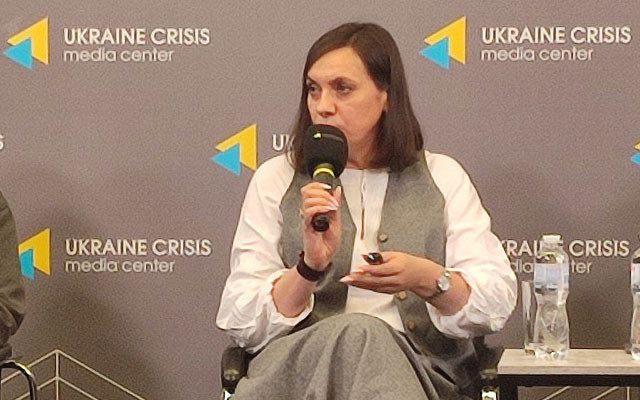
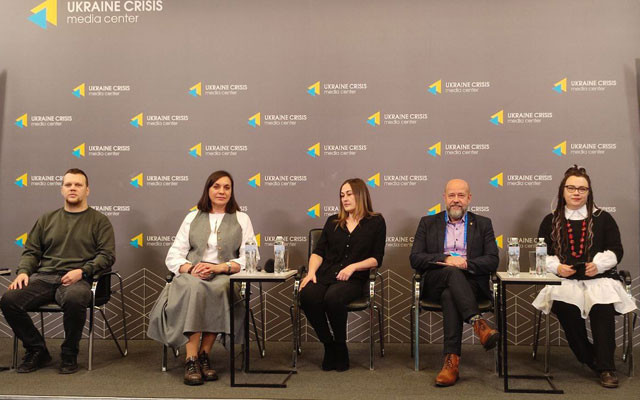
The problematic aspects of children's right to appeal were examined by the chairman of the UNBA Committee on family law Larysa Gretchenko during the All-Ukrainian round table «Children of an unbreakable country». The event, organized by the Ukrainian State Center for Extracurricular Education on the occasion of Children's Day, took place on November 19 at the Ukrainian Crisis Center.
L. Gretchenko pointed out that laws define the age at which a child can exercise certain rights in different ways. She cited examples of the right to engage in entrepreneurial activity from the age of 16, the right to freely choose one's place of residence from the age of 14, and access to medical information about oneself from the age of 18. At the same time, Article 12 of the UN Convention on the Rights of the Child and the Law «On the protection of children» do not set an age limit for a child to appeal, and attention to their views should be determined by their age and maturity.
According to her, there is currently a «legal vacuum» in teaching children about their rights. Children often do not know what their rights are, what documents they need, and where to turn, and the opportunities to exercise their right to appeal differ between large cities and small towns. In practice, a child's right to appeal is limited not only by age but also by a lack of information and access to the necessary services.
The advocate emphasized that legislation often assumes that appeals are made through legal representatives — parents — which creates additional difficulties when there is conflict within the family. She asked how a child should act if their rights are violated by their parents, if they are afraid of punishment and hide information, or if they are in a situation of conflict between their parents. She also mentioned the problem of families separated by war, when, for example, a mother and child are abroad and the father is serving in the military.
At the same time, the law places the responsibility for representing the rights of the child on the parents, and the child's interests can be represented by an advocate or attorney authorized by the free legal aid system. L. Gretchenko reminded that Ukraine has an FLA system that guarantees children the right to consult an advocate, receive their assistance and legal information, as well as the right to information from officials of authorities and institutions.
The advocate separately noted that Ukrainian legislation provides for what she called a «revolutionary» approach to enshrining the right of children aged 14 and older to independently apply to the court on important issues related to the right to a family, in particular in cases of deprivation of parental rights. At the same time, L. Gretchenko asked a natural question: does the child have actual access to officials and employees who should explain this right to them and help them file a petition?
Speaking about the status of persons who actually care for children, the speaker cited examples of situations where children live with older brothers and sisters, aunts, godparents, or are under the supervision of neighbors. She emphasized that these are people who constantly care for children and also have the right to apply and report such children to the relevant authorities.
L. Gretchenko identified the multiplicity of authorities and institutions responsible for children's rights as a significant challenge. Among them, she mentioned guardianship and custody authorities, child welfare services, juvenile police, juvenile prosecutors, as well as the extensive institution of ombudsmen – educational, the Verkhovna Rada Commissioner for Human Rights, language and military ombudsmen. She stressed that with such a «diversity» of ways to exercise the right to appeal, it is important that children do not get lost.
In this context, L. Gretchenko linked the child's right to appeal with the concept of child-friendly justice. She noted that this applies not only to court proceedings, but also to any administrative procedures – from appeals to educational or health care institutions to communication with authorities, where the system must listen to the child, take their opinion seriously, and guarantee the protection of their interests.
© 2025 Unba.org.ua Всі права захищені
"Національна Асоціація Адвокатів України". Передрук та інше використання матеріалів, що розміщені на даному веб-сайті дозволяється за умови посилання на джерело. Інтернет-видання та засоби масової інформації можуть використовувати матеріали сайту, розміщувати відео з офіційного веб-сайту Національної Асоціації Адвокатів України на власних веб-сторінках, за умови гіперпосилання на офіційний веб-сайт Національної Асоціації Адвокатів України. Заборонено передрук та використання матеріалів, у яких міститься посилання на інші інтернет-видання та засоби масової інформації. Матеріали позначені міткою "Реклама", публікуються на правах реклами.