
In Edinburgh discussed the war in Ukraine and the rule of law
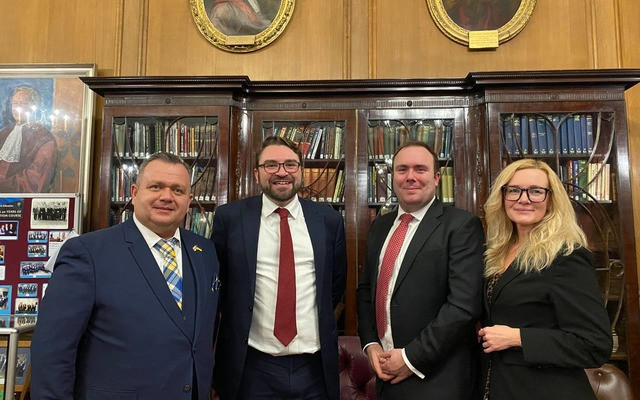
On November 21, the Faculty of Advocates, one of the oldest bar associations in Europe, hosted a professional discussion entitled «War in Ukraine and the rule of law». The event brought together leading Ukrainian and British lawyers, who discussed key challenges for justice systems in times of war, aggression, and threats to democracy.
The discussion was attended by Oleksandr Chernykh, representative of the Ukrainian National Bar Association in the United Kingdom, Larisa Zhdanikina, Doctor of Law and lecturer at the University of Glasgow, and Stephen Neff, professor at the University of Edinburgh Law School. The event was organized by Kenneth Young and Rob Marrs, who created a platform for professional dialogue on the role of law in countering contemporary challenges.
O. Chernykh outlined the range of threats faced by the Ukrainian legal community on a daily basis: pressure on the courts and advocacy, corruption risks, shelling and missile strikes, energy instability, as well as information pressure from the media and bloggers. He emphasized that despite these factors, advocates continue to ensure access to justice and respect for human rights.
The advocate paid special attention to the Convention for the Protection of the Profession of Lawyer adopted by the Council of Europe — the first international document that enshrines the independence of advocates, attorney-client confidentiality, freedom of access to the profession, and the strengthening of the role of professional self-government. He highlighted Ukraine's key contribution to the development of the document, in particular the participation of the Vice President of the UNBA, BCU Valentin Gvozdiy.
L. Zhdanina began her speech by saying that it is necessary to talk about war because, as Arthur Dron noted, silence is impossible, and emphasized that talking about peace is no less important. She stressed that the rule of law must remain an unchanging value both in peacetime and during war. Drawing on the works of Joseph Raz, Lord Bingham, and the criteria formulated by the Venice Commission, L. Zhdanina highlighted three fundamental principles: personal freedom, human dignity, and statehood as a form of self-determination of the people. She also outlined the significance of Ukraine's accession to the Rome Statute and stressed that the abduction of Ukrainian children of the new generation should be considered an act of genocide.
S. Nef focused on the UN International Court of Justice's consideration of Ukraine's case against Russia regarding the interpretation of the Convention on the Prevention of Genocide. He emphasized the legal fallacy of Russia's position, which attempted to use the Convention as a political cover for the invasion without providing any evidence. According to the scholar, Ukraine's argument is based on the purpose, content, and spirit of the Convention, which is intended to prevent manipulation and abuse.
The discussion at the Faculty of Advocates showed that the Ukrainian advocacy continues to perform its functions even in the extremely difficult conditions of war, and also confirmed the importance of international support, the development of legal instruments for the protection of advocates, and the strengthening of the principles of the rule of law. The event was another step towards deepening international cooperation and strengthening the professional unity of the legal community, which opposes aggression and defends freedom, dignity, and the fundamental values of the democratic world.
© 2026 Unba.org.ua Всі права захищені
"Національна Асоціація Адвокатів України". Передрук та інше використання матеріалів, що розміщені на даному веб-сайті дозволяється за умови посилання на джерело. Інтернет-видання та засоби масової інформації можуть використовувати матеріали сайту, розміщувати відео з офіційного веб-сайту Національної Асоціації Адвокатів України на власних веб-сторінках, за умови гіперпосилання на офіційний веб-сайт Національної Асоціації Адвокатів України. Заборонено передрук та використання матеріалів, у яких міститься посилання на інші інтернет-видання та засоби масової інформації. Матеріали позначені міткою "Реклама", публікуються на правах реклами.