
How to properly record a child's opinion for court: advice for advocates
In family disputes concerning the determination of residence, participation in upbringing, deprivation or restoration of parental rights, it is the method of obtaining and documenting the child's statements that influences whether the court will accept such an opinion as authentic, voluntary and free from adult pressure. However, the lack of a unified approach to ascertaining children's opinions, involving psychologists, using audio or video recording, and reflecting this data in case materials creates risks of formal «hearing» and distortion of the child's real will.
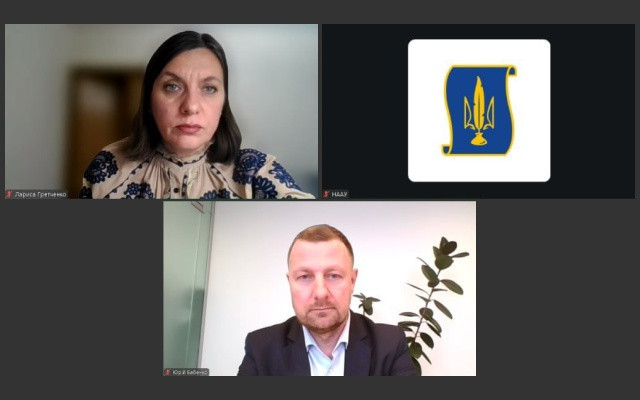
Ways to solve this problem were discussed by advocates during the webinar «The child's opinion in the justice system: practical advice for advocates on recording methods», organized by the UNBA Committee on family law.
Don't lose your voice
The key problem today is not so much the proclamation of the child's right to be heard, but rather the lack of a unified approach to how to correctly ascertain, record, and present this opinion to the court, emphasized Committee chairman Larysa Gretchenko. In practice, advocates face various obstacles: it is not always possible to ensure that a child appears in court (especially in wartime), and there is a need to involve a psychologist and organize hearings using audio or video recording.
She stressed that neither the UN Convention on the rights of the child nor European acts contain an age limit, but are based on the criterion of sufficient understanding: the child is a full participant in the process who must be informed about the content of the case, the possible consequences of decisions, and the right to appeal.
The National strategy on justice for children explicitly addresses the problem of the lack of a mechanism for ascertaining the child's opinion and a uniform hearing practice, and provides for the development of such a mechanism and the legislative enshrinement of the mandatory participation of a psychologist. L. Gretchenko drew attention to the position of the Supreme Court and the Guidelines for child-friendly justice: hearing a child is different from questioning a witness, does not involve an oath or responsibility, should take place in a child-friendly environment, with video or audio recording, through child welfare agencies, psychologists, another court, and in some cases even with the involvement of consular offices abroad.
Therefore, the advocate's task is to choose a safe format for communicating with the child, ensure proper documentation of their position, and justify the relevant petition to the court with reference to international standards, national legislation, and current legal positions.
Without the «right of veto»
Deputy Committee chairman Yuriy Babenko explained how the child's opinion is heard in practice. He recalled that the Family Code only refers to the child's right to be heard. At the same time, the Code of Civil Procedure does not contain a special procedure for hearing, only Article 232 on the examination of minor and juvenile witnesses. Using an example from his own practice, he showed that courts sometimes mechanically focus on this provision and require the participation of child welfare authorities, although in a specific situation it is more appropriate to involve a child psychologist, who was present during the hearing of the child.
In reviewing the conclusions and positions of the Supreme Court, the speaker noted that children have the right to be heard on all matters affecting their interests, but their opinion is not a «right of veto» and must be evaluated along with other evidence. The court takes into account how the opinion was expressed, whether the child was confident, whether they could justify it, and whether they were influenced by one of the parents. As an example, he cited a case where a child stated their desire to live with their father, but it was established that the father had in fact deprived them of communication with their mother.
Y. Babenko emphasized that the Supreme Court recognizes the possibility of recording the child's opinion not only by hearing it directly at the hearing, but also through the conclusions of guardianship and custody authorities, psychological expertise, written materials, electronic evidence, video and audio recordings. In practice, he said, courts are increasingly hearing children via videoconference, especially when the child lives abroad. He specifically mentioned cases where a «green room» is used, where a psychologist talks to the kid in a specially equipped room, and a video recording of this conversation is added to the case file as proof of how the kid's position was figured out and documented.
What drawings say
L. Gretchenko also presented practical recommendations on interacting with children in a child-friendly environment, developed by her colleagues on the Committee, in particular, Svitlana Savitska's approach to multidisciplinary work with children.
Thus, in a «green room» or other friendly environment, a psychologist can find out information about the event and the child's attitude to the situation through drawing, playing, modeling situations with the help of special toys and anatomical dolls, and observing behavior. These observations and the results of the work are then translated into professional language that is understandable to the court, advocates, and parents. Using examples from her practice, she pointed out that the placement of figures in a drawing or play scene, the «role» of each family member, and the child's own place can reveal the real configuration of relationships and experiences, including violence or psychological pressure.
At the same time, the use of a «green room» or video recording does not exempt one from paying attention to technical details: the quality of lighting, the location of microphones, and the quality of sound and image affect the possibility of further use of such a recording as evidence, and defects in recording (when, for example, the child's emotional reactions are not visible) can cast doubt on the results of a one-time interview.
The speaker emphasized that a child's opinion can be recorded not only orally: depending on their age, they can express their position in a written statement, as was the case in an administrative case concerning the right to education and family-based learning, where the child was heard and their written appeal was accepted.
In any case, being heard is a child's right, not their duty, and adults should explain not only the possibility of expressing an opinion, but also how it can influence decisions and be appealed in the future.
***
Summing up the event, L. Gretchenko urged advocates not to rush to take a child to court, but first to remind parents of the child's interests and to use child-focused mediation tools.
She explained that both child-focused mediation and mediation with the direct involvement of the child are designed to help parents make responsible decisions about the child's life and well-being, giving the child a voice but not involving them in the conflict. Questions that force parents to look at the dispute through the eyes of their child significantly change their behavior, and the agreements that the parties reach on their own are the ones that are best implemented.
Y. Babenko emphasized that the interests of children should prevail in processes that concern them and recommended that advocates use the approaches outlined to properly implement the child's right to be heard.
The speakers' presentations and an overview of the legal positions outlined in the webinar will be published on the Committee's website.
© 2026 Unba.org.ua Всі права захищені
"Національна Асоціація Адвокатів України". Передрук та інше використання матеріалів, що розміщені на даному веб-сайті дозволяється за умови посилання на джерело. Інтернет-видання та засоби масової інформації можуть використовувати матеріали сайту, розміщувати відео з офіційного веб-сайту Національної Асоціації Адвокатів України на власних веб-сторінках, за умови гіперпосилання на офіційний веб-сайт Національної Асоціації Адвокатів України. Заборонено передрук та використання матеріалів, у яких міститься посилання на інші інтернет-видання та засоби масової інформації. Матеріали позначені міткою "Реклама", публікуються на правах реклами.