
Conclusions of the ECHR and the ECSR in labor disputes: problems of application by courts
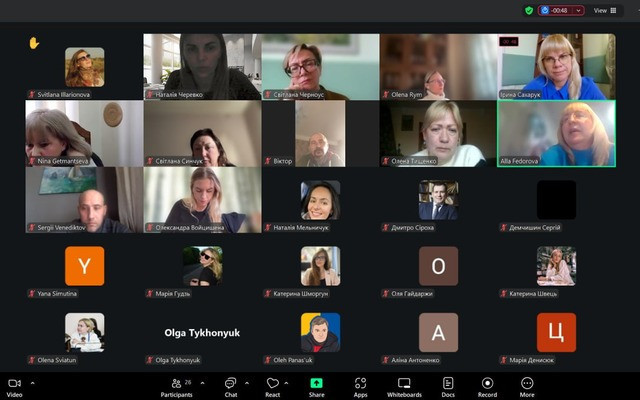
On November 14, the Taras Shevchenko National University of Kyiv's Educational and Scientific Institute of Law hosted a nationwide interdisciplinary scientific and practical conference entitled «Labor and social rights in Ukraine: European integration, martial law and post-war recovery».
The event brought together scholars, judges, advocates, mediators, representatives of government agencies, trade unions, and public organizations from different regions of Ukraine.
Natalia Cherevko, a member of the labor law Committee of the Ukrainian National Bar Association, participated in the conference. She presented a report on the integration of the standards of the European Court of Human Rights and the European Committee of Social Rights into the resolution of labor disputes in Ukraine.
The speaker noted the increased attention to social rights in the context of war, in particular, the protection of the rights of internally displaced persons, military personnel, and their families. In recent years, the number of references to the provisions of the European Social Charter in national court decisions has increased significantly. At the same time, there are cases in practice where courts refer to provisions of the Charter that Ukraine has not officially ratified. This creates additional legal uncertainty.
N. Cherevko also noted that courts are increasingly using the practice of the ECHR as a guideline for the application of the Convention for the Protection of Human Rights and Fundamental Freedoms. However, the conclusions of the ECHR are applied sporadically, without a unified approach.
Therefore, among the key problems of integrating European social standards, the advocate named the lack of consistency in the use of the Charter and the conclusions of the ECHR. The second problem is the lack of specialized methodological materials for judges and lawyers. The third set of difficulties is related to the uncertain place of the ECSR's practice in the national legal system: formally, it is not binding, although it follows from Ukraine's international obligations.
Among the possible solutions, N. Cherevko mentioned the normative consolidation of the obligation to take into account the ECSR's practice when deciding cases in the field of labor and social security. This involves developing standard legal positions with reference to the provisions of the European Social Charter and the Committee's conclusions, which could be applied by courts of various instances in disputes concerning guarantees for workers and vulnerable groups of the population.
N. Cherevko named the improvement of the qualifications of judges and advocates as another important area. The inclusion of special modules on the practice of the ECtHR and the ECSR in training programs and workshops will contribute to a more informed and consistent use of these sources in labor disputes.
Other issues raised during the conference included:
- European integration in the field of labor, EU requirements for reforming Ukrainian labor legislation, implementation of directives on working time, leave, flexible forms of employment, and ensuring equality;
- the impact of martial law and restrictions on labor and social rights, the Supreme Court's practice of suspending labor relations, guarantees for military personnel, mobilized persons, and internally displaced persons;
- gender equality and prevention of discrimination, as well as effective tools for preventing harassment and psychosocial risks;
- the digitalization of labor relations, the risks of remote work, and the need to modernize legal regulation.
Participants emphasized that the transition to a modern system of labor and social rights guarantees is an integral part of Ukraine's movement toward EU membership and an important component of post-war recovery.
© 2025 Unba.org.ua Всі права захищені
"Національна Асоціація Адвокатів України". Передрук та інше використання матеріалів, що розміщені на даному веб-сайті дозволяється за умови посилання на джерело. Інтернет-видання та засоби масової інформації можуть використовувати матеріали сайту, розміщувати відео з офіційного веб-сайту Національної Асоціації Адвокатів України на власних веб-сторінках, за умови гіперпосилання на офіційний веб-сайт Національної Асоціації Адвокатів України. Заборонено передрук та використання матеріалів, у яких міститься посилання на інші інтернет-видання та засоби масової інформації. Матеріали позначені міткою "Реклама", публікуються на правах реклами.