
Why preventive measures have turned into preventive punishment in Ukraine: round table discussion

The European approach, enshrined in the CPC, provides for detention as an exceptional preventive measure: courts must prove the impossibility of milder alternatives and carefully assess the risks. In practice, however, it is increasingly being applied almost automatically, eroding standards of freedom.
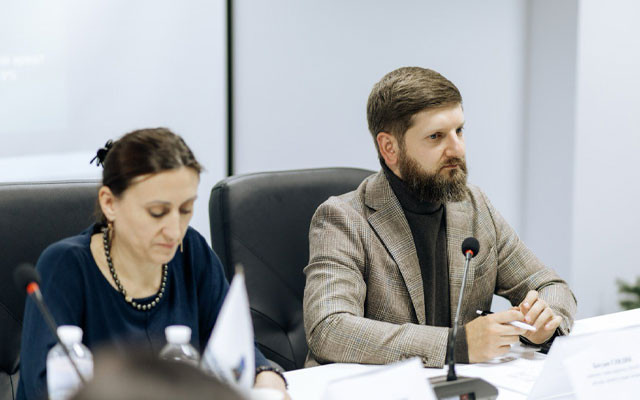
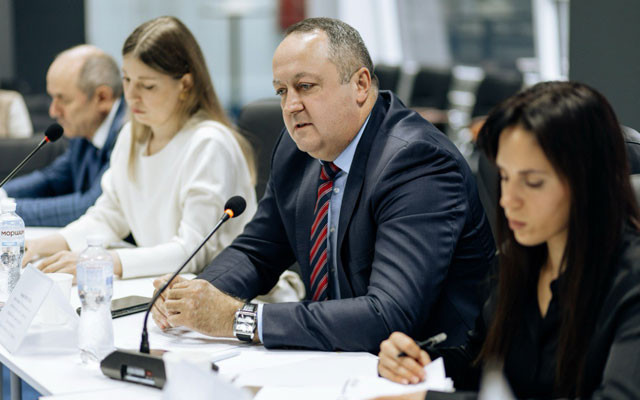
The reasons for this transformation and ways to ensure the principles of criminal procedure were discussed by advocates, judges, human rights defenders, and representatives of the Office of the Ukrainian Parliament Commissioner for Human Rights during the round table «Detention: an exception that has become the rule».
The event was organized and conducted by the human rights protection Committee of the Ukrainian National Bar Association.
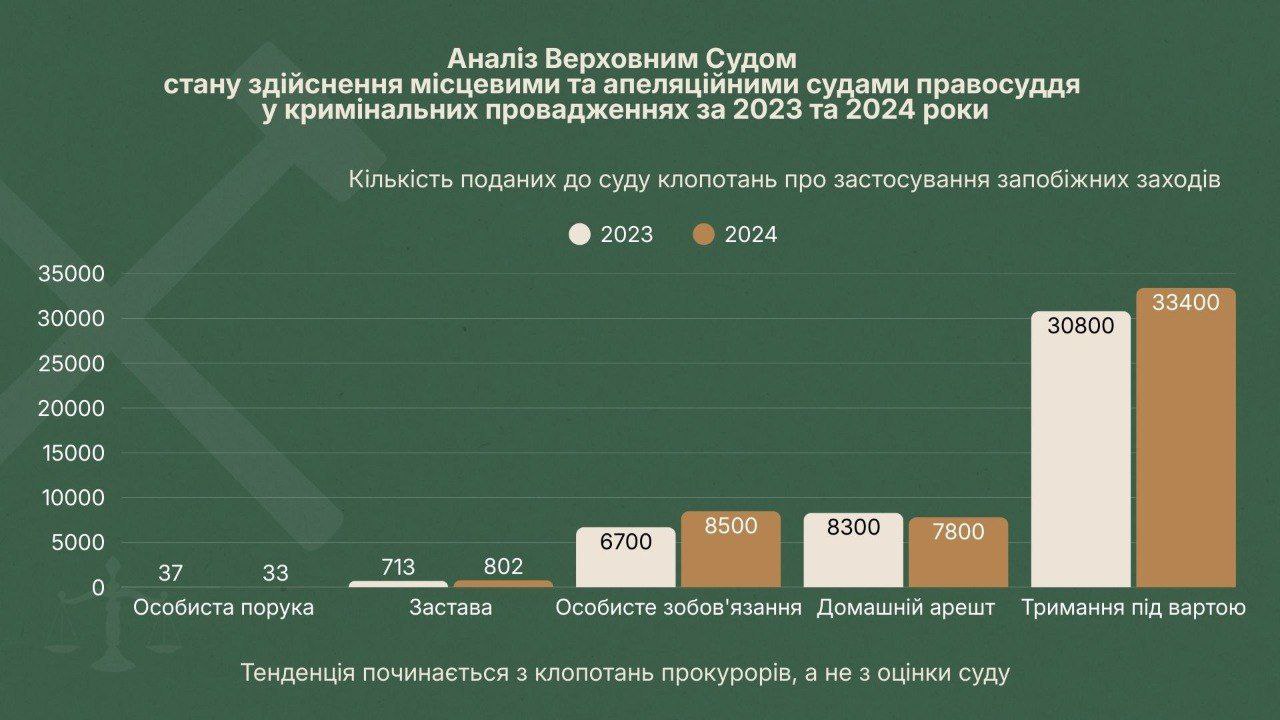
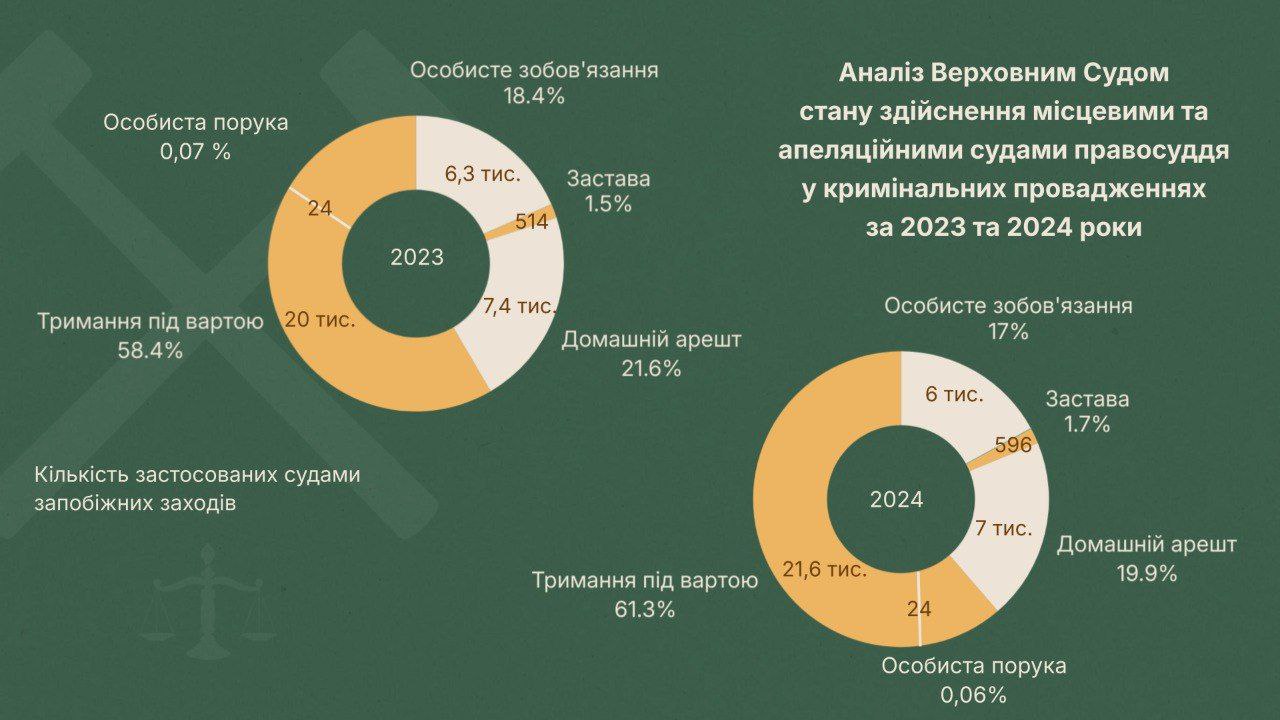
Statistical data on the issue was presented by Bogdan Hlyadik, a member of the UNBA Committee. According to the Supreme Court, in 2023, courts considered 30,800 motions for detention, of which almost two-thirds — about 20,000 — were granted. In 2024, the number of such motions increased to 33,400, and the percentage of those granted remained virtually unchanged. The comparison with other preventive measures is even more striking: in 2023, detention accounted for 58.4% of all preventive measures applied in local courts, while bail accounted for only 1.5% and house arrest for 21.6%. In 2024, the share of detention increased to almost 62%, indicating the actual dominance of this measure among the available instruments.
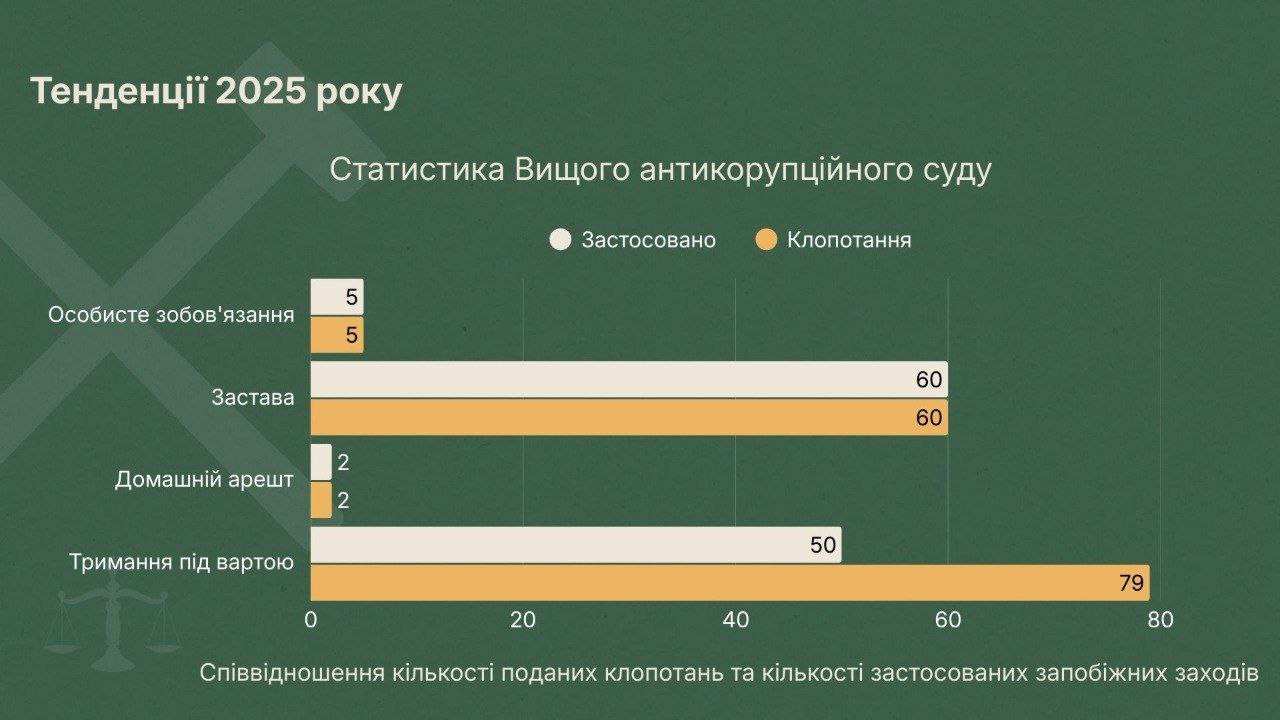
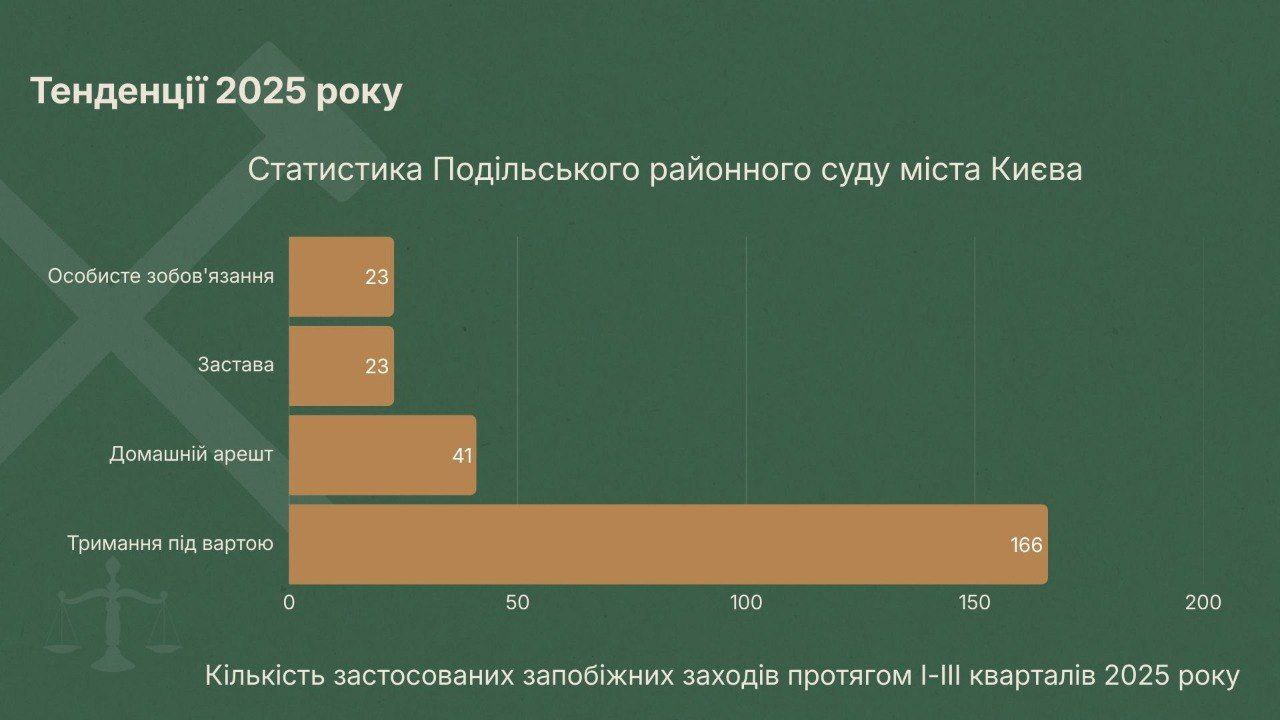
The statistics of the High Anti-Corruption Court are indicative, where in 2023, 83% of arrest warrants were granted, and in 2024, 62.5%. The dynamics for the first three quarters of 2025 also showed a significant difference in approaches between courts: the High Anti-Corruption Court granted 50 requests for detention (43% of all preventive measures chosen), while the Podilskyi District Court of Kyiv granted 166 requests (almost 66%). This difference demonstrates not only the lack of a consistent standard, but also the significant dependence of decisions on the established practices of a particular court.
Anastasia Alekseeva, the coordinator of the IAC ISHR monitoring mission, drew attention to the conceptual gap between the Ukrainian and European paradigms of freedom. According to the results of monitoring in Ukraine, a presumption of detention has effectively been established: if the defense fails to prove that there are grounds that clearly preclude detention, the person is usually deprived of their liberty. In the practice of the European Court of Human Rights, the opposite approach applies: if the state, represented by the prosecutor, fails to prove the urgent need for detention, the person must be released. According to the speaker, this inversion of presumptions creates a situation where alternative preventive measures are seen not as real options, but as additional, almost optional mechanisms that are rarely chosen.
Andriy Ovsienko, a representative of the Ombudsman, drew attention to a separate aspect of the problem. In particular, the speaker noted that although the number of complaints about human rights violations in the selection of preventive measures is relatively small (only 25 in 2024), even this sample demonstrates recurring and alarming trends of a tendency to choose the most severe preventive measure when there are significant violations of the law.
At the same time, according to him, a significant part of the problem lies not so much in the court decision itself, but in what precedes it. This is because the court does not initiate the application of detention - this is requested by the investigating authority or the prosecutor's office. Thus, the first level of the problem is the practice of investigation, where detention is often seen as an effective way to ensure the «comfort» of pre-trial investigation or court proceedings.
After examining the practice of the European Court of Human Rights, the participants identified three key aspects of the exceptional nature of detention. First, alternativeness: the ECHR finds a violation of the Convention when national courts do not analyze the possibility of applying alternative preventive measures and do not justify why milder measures are insufficient. Second, necessity: a violation is found when courts do not provide adequate, specific grounds that actually justify the deprivation of a person's liberty. Third, special diligence: regardless of the complexity of the case, public resonance, or demands for expediency, national courts are obliged to assess the need for detention with the utmost care and responsibility, as this is the most significant interference with the right to liberty.
Therefore, turning detention into the norm is primarily an institutional problem that requires a systematic approach. The most severe preventive measure cannot be a tool used out of inertia or as a way to minimize risks by depriving a person of their liberty without sufficient evidence. Restoring the presumption of liberty is only possible by rethinking the role of pre-trial investigation bodies and prosecutors in the application of preventive measures, raising the standards for proving risks, developing a culture of individualization of procedural instruments, and strengthening the reality and effectiveness of alternative measures.
Today, the Ukrainian justice system faces a serious challenge: to restore confidence in the procedure for selecting preventive measures as an institution designed to ensure justice, not repression. Detention cannot and should not become a form of preliminary punishment. Therefore, professional discussions such as this one form the intellectual foundation for a reform that should return criminal justice to its basic principles: respect for human dignity, freedom, and the presumption of innocence.
© 2026 Unba.org.ua Всі права захищені
"Національна Асоціація Адвокатів України". Передрук та інше використання матеріалів, що розміщені на даному веб-сайті дозволяється за умови посилання на джерело. Інтернет-видання та засоби масової інформації можуть використовувати матеріали сайту, розміщувати відео з офіційного веб-сайту Національної Асоціації Адвокатів України на власних веб-сторінках, за умови гіперпосилання на офіційний веб-сайт Національної Асоціації Адвокатів України. Заборонено передрук та використання матеріалів, у яких міститься посилання на інші інтернет-видання та засоби масової інформації. Матеріали позначені міткою "Реклама", публікуються на правах реклами.