
Detention as a rule: the UNBA discussed standards for proving risks


The state interferes most intensively with the human right to liberty when choosing a preventive measure. At this stage, the standard of proof of risk becomes the actual measure of the real meaning of the presumption of innocence.
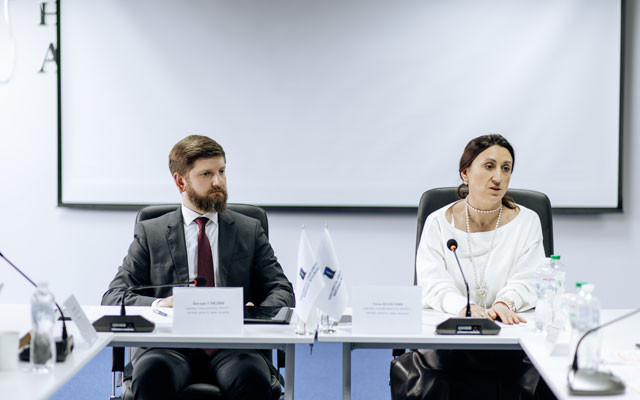
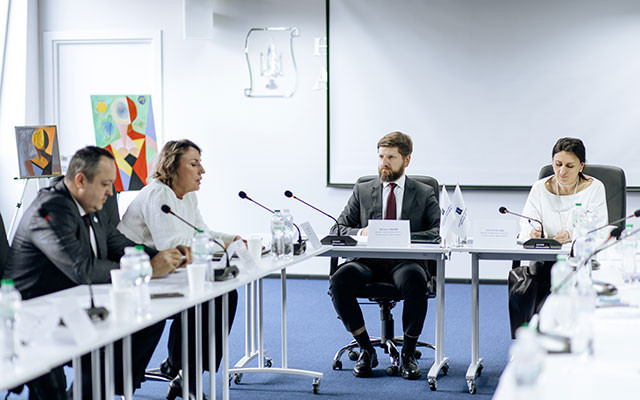
This was discussed by participants in the round table «Standards of proof when choosing preventive measures in the light of national practice and the practice of the European Court of Human Rights», which was held on February 27 by the UNBA Committee on human rights.
Article 177 of the Code of Criminal Procedure contains a list of risks, but does not define a clear standard for proving them. As a result, there is room for broad discretion, where the line between proven risk and assumption is often blurred, and the court's motivation is replaced by a repetition of the wording of the prosecution's motion. In practice, this manifests itself in formulaic rulings, a formal analysis of alternative preventive measures, and the actual use of reasonable suspicion as a universal basis for isolation. This issue was highlighted by the event's moderator, advocate Bogdan Hlyadik. He outlined the sad statistics: detention accounts for about 65% of all preventive measures applied. These figures contradict the very idea of the exceptional nature of detention: a preventive measure applied in most cases ceases to be extraordinary by its very nature. Hence the conceptual shift: instead of proving a specific risk, a presumption of risk is formed, and the prediction of a person's behavior is increasingly based not on individual facts, but solely on the severity of the alleged crime.
The issue of the application of preventive measures in Ukraine is already on the radar of international mechanisms. This was confirmed by the chairman of the UN Working Group on Arbitrary Detention Hanna Yudkivska, who recalled the powers and instruments of the special procedure of the UN Human Rights Council.
Reference was also made to the Working Group's thematic report on alternative preventive measures, which has become an official UN document and which explicitly expresses concern about the imposition of unrealistic and burdensome financial conditions that effectively render freedom illusory.
The financial conditions of bail should not become a form of pretrial detention based on a person's economic status or the severity of the crime. Their purpose is to ensure appearance in court, not to serve as a hidden punishment before sentencing. The key message was unequivocal: detention is an exception to the rule, and alternative measures are the rule.
Judge Nadiya Stefaniv of the Grand Chamber of the Supreme Court emphasized that relying solely on external control by the ECHR does not solve the problem. The procedure in Strasbourg is lengthy, and by the time a decision is made, the preventive measure may have long since expired, the case may have moved to another stage, or it may have ended with a verdict. In such a situation, the restoration of the violated right becomes symbolic. That is why the main function of guaranteeing freedom lies with the national courts. Judicial discretion must have limits, and these limits are determined by the quality of reasoning, the individualisation of risks and a realistic analysis of alternatives.
Separate attention was drawn to the possibility of applying Article 206 of the CPC as a mechanism for immediate response to unlawful detention, which indicates the existence of instruments in national law capable of ensuring effective protection, provided they are actively used.
The discussion was continued by an investigating judge of the Podilsky District Court of Kyiv Lesya Budzan, who recalled three elements that must be verified when deciding on a preventive measure: reasonable suspicion, the proven existence of at least one risk under Article 177 of the CPC, and the impossibility of applying a more lenient measure.
She emphasized that the standard of reasonable suspicion is not the same as proof beyond a reasonable doubt, but it must meet the standard of sufficient persuasiveness. At the same time, risks cannot be confirmed by the prosecutor's unsubstantiated statements. And referring only to the severity of the sanction is not sufficient to prove the risk of absconding — specific facts are necessary.
At the same time, the judge emphasized the role of the defense. A well-prepared position with evidence of family circumstances, health status, characteristics, and reputation data can influence the court's decision and ensure the application of an alternative to detention. However, the lack of time at the stage of the initial selection of a preventive measure remains an objective problem, which in fact complicates the full implementation of adversarial proceedings.
The systematic nature of the problem was confirmed by the coordinator of the IAC ISHR monitoring mission Anastasia Alekseeva, who reported that during 2025, 197 court hearings were monitored and 336 situations were recorded that may not comply with Articles 5 and 6 of the Convention for the Protection of Human Rights and Fundamental Freedoms.
Most often, the monitoring mission recorded problems such as identical motions by the prosecution and court rulings, failure to verify the relevance of risks, the court setting disproportionate bail, the prosecution providing questionable evidence, and the use of a formal approach to verifying the possibility of determining alternative preventive measures. These are not isolated mistakes, but rather an established practice of formalizing judicial control.
The representative of the Verkhovna Rada Commissioner for human rights Andriy Ovsienko, emphasized that the enforcement of ECHR judgments cannot be limited to the payment of compensation to a specific person.
If the Strasbourg court finds a violation of Article 5 of the Convention, the state must respond systematically by changing its approach to the application of preventive measures and standards of proof of risk, as these are institutional problems rather than random procedural errors.
A member of the UNBA Committee on human rights Irena Ostrozka-Sangushko drew attention to the fact that the key factor in fairness remains the internal resilience of the judge — the ability not to succumb to procedural or psychological pressure from the prosecution. It is the independence of judicial thinking that allows a formal procedure to be transformed into real control. The advocate also emphasized a painful reality: in practice, there are cases when people do not live to see the end of their detention.
«A person's freedom in criminal proceedings begins not with the verdict, but with the first court decision on preventive measures. It is at this moment that the court's ability to separate assumptions from facts, risk from abstraction, and the severity of the crime from real danger is tested. And it is the standard of proof that determines whether detention will be an exception, as required by the Convention, or will remain the dominant practice, - commented B. Hlyadik on the results of the event. - Therefore, thematic round tables in this context are of practical importance, as they form a common language for advocates, judges, legislators, and human rights defenders, allow for the comparison of national practice with international standards, and create the basis for the gradual evolution of judicial culture».
© 2026 Unba.org.ua Всі права захищені
"Національна Асоціація Адвокатів України". Передрук та інше використання матеріалів, що розміщені на даному веб-сайті дозволяється за умови посилання на джерело. Інтернет-видання та засоби масової інформації можуть використовувати матеріали сайту, розміщувати відео з офіційного веб-сайту Національної Асоціації Адвокатів України на власних веб-сторінках, за умови гіперпосилання на офіційний веб-сайт Національної Асоціації Адвокатів України. Заборонено передрук та використання матеріалів, у яких міститься посилання на інші інтернет-видання та засоби масової інформації. Матеріали позначені міткою "Реклама", публікуються на правах реклами.