
Standards for the social protection of military personnel: a compilation of ECSR decisions presented
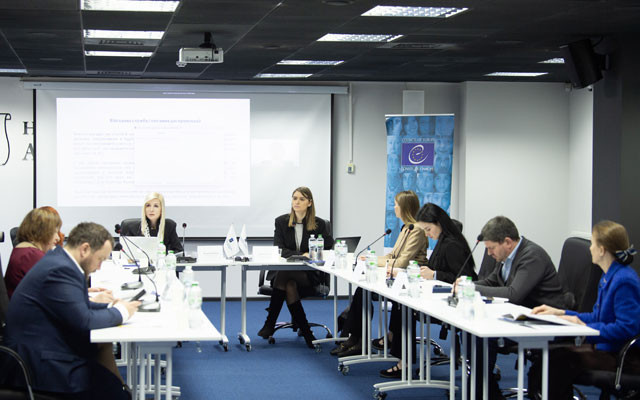
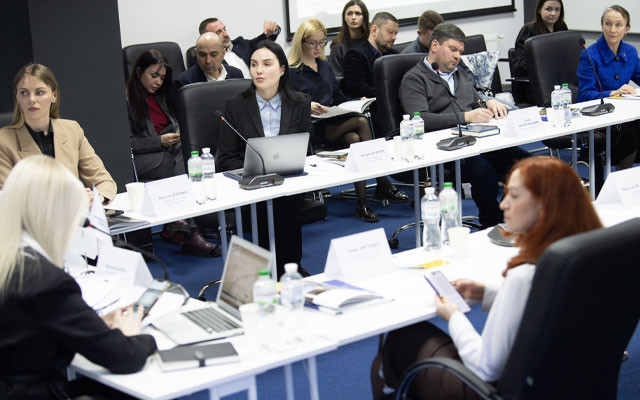
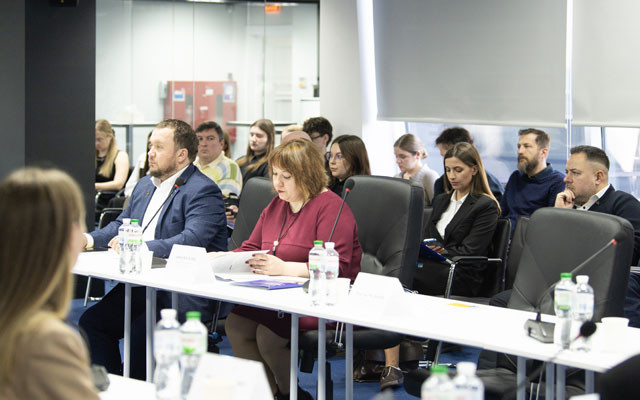
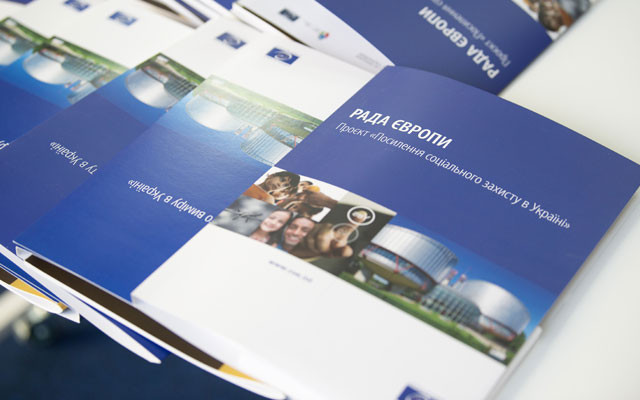
On March 12, 2026, the krainian National Bar Association hosted a presentation of a collection of decisions by the European Committee of Social Rights (ECSR) concerning the social and labor rights of military personnel and veterans.
The event brought together advocates, academics, and labor law experts to discuss practical issues in this field.
Iryna Ostapa, head of the Council of Europe’s «Strengthening the social dimension in Ukraine» project, noted that the Committee’s decisions provide important guidelines for interpreting the provisions of the European Social Charter and help ensure an adequate level of human rights guarantees, including for military personnel. The expert emphasized the need for more active application of the Charter’s provisions in national practice. According to her, this will help strengthen the system of rights protection and bring Ukrainian legislation and judicial practice closer to European legal standards.
She was supported in this by Savva Kuzmenko, the director of the Higher School of Advocacy of the UNBA. He emphasized that the practice of the ECSR serves as an important guide for Ukrainian advocates. He also described the compiled collection of decisions as a practical tool for advocates and judges in applying the provisions of the Charter.
The ECSR’s practice in the context of military service was discussed by Viktoria Polishchuk, chairman of the UNBA Committee on labor law, who outlined the mechanisms for monitoring compliance with the provisions of the European Social Charter. In particular, she addressed the system of state reports and the collective complaints procedure, which ensure monitoring of states’ compliance with established standards. The advocate analyzed the ECSR’s practice regarding discrimination, conscientious objection to military service, length of service, and the protection of collective rights of military personnel.
Natalia Kaida, a member of the Committee’s Council, who also moderated the event, examined the Charter as a guide for reforming labor and social legislation. She highlighted key provisions of the international instrument, particularly the articles on the right to fair remuneration, safe and healthy working conditions, social security, protection in the event of dismissal, and the right to freedom of association and collective bargaining.
At the same time, the speaker emphasized that not all provisions of the Charter have been ratified by Ukraine, particularly Article 24 on the right to protection in the event of dismissal. The advocate cautioned that references to unratified provisions could lead to errors in court decisions, as courts often reproduce the parties’ arguments in the reasoning section.
N. Kaida proposed a logical structure for arguments in procedural documents: a provision of national law — an article of the Charter — the position of the European Court of Social Rights (ECSR) — a conclusion regarding its application in a specific case. In her view, this approach will contribute to the development of systematic international legal argumentation and may serve as a guide for further reform of labor and social legislation.
Hanna Lysenko, a member of the Committee’s Council, focused on the issue of preserving the labor rights of employees performing military service, as well as on the specifics of law enforcement amid changes to labor legislation during martial law.
She recalled the basic guarantees provided by law for military personnel, volunteers, and war veterans, in particular: Special attention was paid to the practice of the Supreme Court. Specifically, in Case No. 320/10955/23, a conclusion was formulated regarding the application of Article 119 of the Labor Code: if a judge performs military service, their job and position are retained until the end of the special period or actual discharge from service, while judicial remuneration is not paid. Other Supreme Court decisions were also cited, concerning the preservation of average earnings for teaching staff called up during mobilization, as well as the impossibility of dismissing employees called up for military service until the end of the special period.
- preservation of the job and position, and in certain cases — average earnings;
- counting military service time toward work experience;
- payment of temporary disability benefits;
- the right to leave and other social guarantees;
- priority to remain employed in the event of downsizing;
- a prohibition on dismissal at the employer’s initiative or due to the expiration of a fixed-term employment contract.
Natalia Cherevko, a member of the Committee’s Council, spoke about the right to housing for military personnel and internally displaced persons. She focused on issues of access to housing, as well as the Armed Forces’ practices regarding housing provision, payment of monetary compensation, and grounds for eviction from service housing. The speaker drew attention to the ECSR’s conclusions regarding Ukraine’s implementation of Article 31 of the Charter and emphasized the need to improve state policy in the area of ensuring housing rights for vulnerable groups.
Valeria Dolgoyer, a member of the Committee’s Council, also spoke about the role of judicial practice in the realization of social rights. According to her, Supreme Court decisions emphasize the priority of special legislation regarding pension provision for military personnel and the inadmissibility of narrowing the scope of the right to social protection. This practice indicates the gradual implementation of international standards in the application of law in Ukraine.
A digest of the European Committee on Social Rights’ case law can be downloaded via this link.
© 2026 Unba.org.ua Всі права захищені
"Національна Асоціація Адвокатів України". Передрук та інше використання матеріалів, що розміщені на даному веб-сайті дозволяється за умови посилання на джерело. Інтернет-видання та засоби масової інформації можуть використовувати матеріали сайту, розміщувати відео з офіційного веб-сайту Національної Асоціації Адвокатів України на власних веб-сторінках, за умови гіперпосилання на офіційний веб-сайт Національної Асоціації Адвокатів України. Заборонено передрук та використання матеріалів, у яких міститься посилання на інші інтернет-видання та засоби масової інформації. Матеріали позначені міткою "Реклама", публікуються на правах реклами.