
New Labor Code: advocates highlight the strengths and risks of the draft
The draft Labor Code contains a number of progressive provisions aimed at modernizing labor legislation: digitizing procedures, expanding forms of employment, and increasing transparency in wage payments. At the same time, certain systemic issues require further refinement.
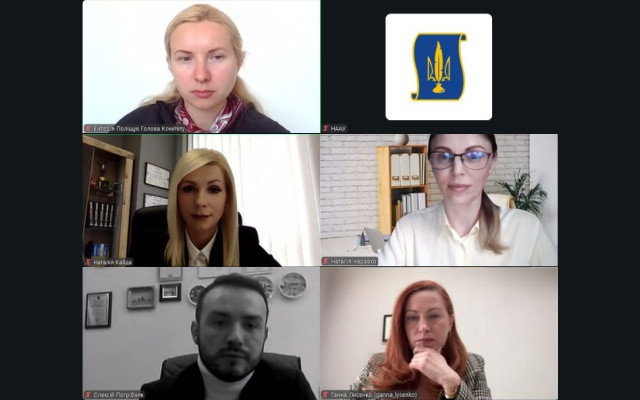
The balance of interests between employees and employers in the draft Labor Code of Ukraine (draft No. 14386 dated January 15, 2026) was discussed at a thematic roundtable organized by the Labor Law Committee of the Ukrainian National Bar Association. The event brought together advocates, academics, and experts in the field of labor law to conduct a comprehensive analysis of the proposed legislative changes and their impact on legal practice.
The event was moderated by the Committee chairman Viktoria Polishchuk. She emphasized that updating labor legislation is important for all of Ukraine, as it is linked to the European integration course and the implementation of over 30 EU directives. She also outlined the topics of discussion: labor relations, types of employment contracts, wages, individual and collective labor disputes, as well as occupational safety.
V. Polischuk noted that the UNBA supports the very idea of updating labor legislation and adopting a new code, as the current regulations are outdated, and a new law is necessary for progress toward European integration. At the same time, the Committee chairman also cautioned that an analysis of the draft revealed systemic risks, including: potential non-compliance with international standards, a narrowing of labor guarantees, excessive expansion of local and contractual regulation without sufficient safeguards, broad discretionary powers for employers, weak regulation of procedures for terminating employment contracts, mass layoffs, non-standard forms of employment, and employee representative participation in decision-making.
Committee Council member Natalia Cherevko focused on how rest periods are defined in the draft Labor Code and whether certain formulations create risks for employees. First and foremost, she criticized the definition in Article 127, where rest periods are linked to the possibility of using them «at one’s own discretion». In her view, this is inaccurate because an employee may not be formally working but may not be free to manage their own time, particularly while «on call» at home. Therefore, she proposed a simpler definition: rest time is any period that is not working time. The advocate then drew attention to Article 129 regarding daily rest between shifts of at least 12 hours. She cautioned that such a provision could limit the right to work for those who combine their primary job with part-time work, teaching, or research activities, and proposed using an 11-hour standard as a guideline.
Another comment concerned Article 130 regarding 42 hours of weekly uninterrupted rest. N. Cherevko effectively pointed out the mathematical inconsistency of this provision with a six-day workweek and proposed clarifying it in line with the European approach: 24 hours of weekly rest in addition to 11 hours of daily rest.
A separate report by N. Cherevko was devoted to the issue of resolving individual labor disputes.
Committee Council member Natalia Kaida outlined the draft’s strengths regarding remuneration. In her view, the draft systematically defines types of wages, their components, the procedure for indexation, surcharges, and compensation, and also establishes guarantees for the minimum wage, increased rates for work in hazardous conditions, night work, work on holidays, and overtime, as well as the principle of equal pay for men and women for work of equal value.
At the same time, she placed the main emphasis on the gaps. In her opinion, the draft should more clearly regulate the minimum wage for part-time, remote, and mobile workers, as well as transparently define additional payments for holding multiple positions and temporarily performing the duties of other employees. Separately, N. Kaida drew attention to the risks associated with wage payments: compensation for delays should not be limited to six months; instead, interest for late payment and the payment of all amounts should be provided for, regardless of any dispute over their amount. Another of her points is that an employee must receive a clear breakdown of all accruals and deductions with each payment.
Committee Council member Oleksiy Pogribnyak spoke about collective labor disputes as one of the most complex parts of the draft. He noted that the draft describes all participants in social dialogue and their roles in a dispute in greater detail than current regulations, but at the same time, in his view, this section is in places overloaded with provisions effectively transferred from the legislation on the National Mediation and Conciliation Service.
At the same time, he positively assessed the fact that the draft clearly distinguishes between disputes over rights and disputes over interests. The former concern non-compliance with already established norms, while the latter concern new requirements not explicitly guaranteed by law, such as additional wage coefficients.
This also explains the difference in procedures: for disputes over interests, negotiations and labor mediation are mandatory, while for disputes over rights—negotiations, mediation, labor arbitration, and, under certain conditions, court proceedings. He also pointed out an inconsistency: mediation is described as voluntary, although in certain cases the draft effectively makes it mandatory.
Committee Council member Oksana Zaitseva focused on the fact that the draft Labor Code addresses worker safety and health issues too sparingly. She noted that instead of an entire section, as found in the current Labor Code, the draft effectively contains only two articles, and these are largely declaratory in nature.
In her view, important safeguards are being removed from the draft without adequate replacement: provisions regarding the obligations of employees and employers in the field of occupational safety, medical examinations, and the provision of protective clothing.
At the same time, O. Zaitseva noted a positive aspect: the draft introduces new protections for employees who have been deprived of their personal liberty as a result of armed aggression, as well as during the performance of state or public duties. Separately, the advocate praised the updates to the section on material liability, particularly the clearer definition of direct actual property damage, liability for disclosure of trade secrets, and provisions regarding moral harm in cases of harassment.
Committee Council member Hanna Lysenko outlined the provisions of the draft that will simplify labor relations. In her view, the draft «resolves» many specific issues that currently have to be addressed through judicial practice, particularly the positions of the Supreme Court.
She cited the mandatory written form of individual employment contracts as one of the main advantages: without a signed contract, an employee cannot be allowed to work, and thus the usual uncertainty will disappear — where there is only a statement or order but no agreed-upon terms of employment, work schedule, vacation, or rights of the parties. Separately, Lysenko highlighted Article 48, which effectively provides employers with a ready-made structure for a written contract, and also supported the move toward simplified procedures, electronic HR documents, and clearer definitions of basic HR concepts important for day-to-day operations.
In conclusion, V. Polischuk noted that the draft Labor Code proposes a new approach to regulating labor relations, to which both employers and employees will have to adjust. She rejected the argument that such a reform is untimely: in her view, it is precisely in the context of European integration that updating labor legislation is timely, and therefore lawyers and advocates must be prepared for its future application. In closing, she thanked the participants in the discussion and emphasized that the Committee is open to further comments and proposals regarding the draft.
© 2026 Unba.org.ua Всі права захищені
"Національна Асоціація Адвокатів України". Передрук та інше використання матеріалів, що розміщені на даному веб-сайті дозволяється за умови посилання на джерело. Інтернет-видання та засоби масової інформації можуть використовувати матеріали сайту, розміщувати відео з офіційного веб-сайту Національної Асоціації Адвокатів України на власних веб-сторінках, за умови гіперпосилання на офіційний веб-сайт Національної Асоціації Адвокатів України. Заборонено передрук та використання матеріалів, у яких міститься посилання на інші інтернет-видання та засоби масової інформації. Матеріали позначені міткою "Реклама", публікуються на правах реклами.