
How to prove discrimination in labor disputes: a seminar in Prague
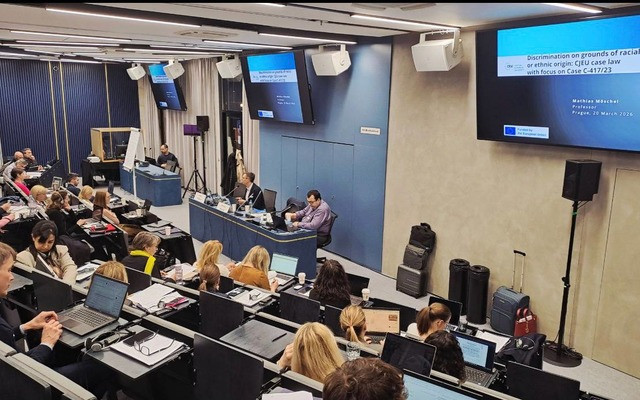
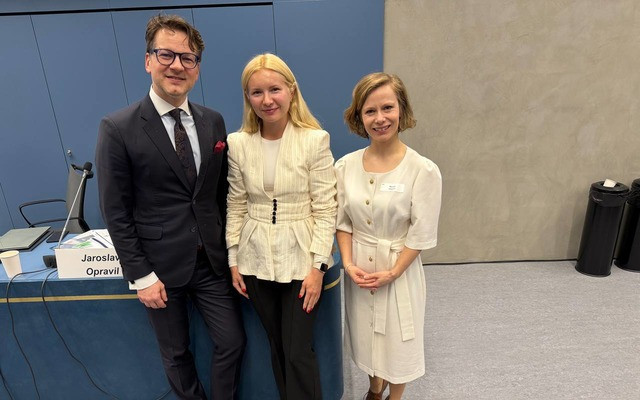
An international seminar titled «The application of EU anti-discrimination law» was held in Prague. The event was organized on March 19–20 by the Academy of European Law (ERA) as part of the Citizens, Equality, Rights and Values program, with the support of the Czech Bar Association.
For advocates working on labor disputes, the most relevant topics were indirect discrimination, the shift in the burden of proof, religious discrimination in the workplace, disability and reasonable accommodation, as well as new risks associated with algorithms and automated decisions.
The organizers defined the seminar’s goal as teaching the correct application of EU anti-discrimination legislation in national disputes, primarily in the context of Directives 2000/43/EC and 2000/78/EC. The focus was not on abstract standards, but on how to handle such cases in the ordinary course of proceedings — from identifying the violation to developing an evidentiary strategy.
On the first day, participants discussed the legal framework for equality in the EU, specifically the significance of Article 21 of the Charter of Fundamental Rights of the EU and the Court of Justice of the EU’s approaches to its application, followed by the basic concepts of direct and indirect discrimination and harassment. A separate session was devoted to the burden of proof: when a presumption of discrimination arises and under what conditions the burden of proof shifts to the defendant. For labor disputes, this is one of the key practical messages, as it is often at this stage that it is determined whether a claim has a realistic procedural prospect.
A separate section focused on artificial intelligence, algorithms, and automated decisions. The discussion covered how to identify and legally assess discrimination in this context. For the labor sector, this topic is becoming increasingly important given automated candidate screening, internal evaluation systems, and other digital tools that may appear neutral but produce unequal results in practice.
On the second day, the seminar focused on vulnerable situations. Participants examined discrimination on the basis of disability and the relationship between EU law and the UN Convention on the Rights of Persons with Disabilities. They also separately analyzed religious discrimination in the workplace, including the latest case law of the Court of Justice of the European Union regarding the wearing of religious symbols and the status of religious employers. The program also covered issues related to the rights of LGBTIQ individuals and discrimination based on racial or ethnic origin.
The lawyers agreed that labor anti-discrimination disputes under EU law have long since ceased to be limited to classic conflicts between employees and employers, but now require advocates to be well-versed in the broader case law of the Court of Justice of the European Union regarding the boundaries of equality and permissible differences in treatment.
«In labor disputes, discrimination increasingly manifests not in the form of direct prohibitions, but through the employer’s formally neutral rules — selection criteria, internal policies, approaches to evaluation, or the allocation of duties. And the seminar in Prague showed that in such cases, the decisive factors are the analysis of the actual effect of these rules, the correct establishment of a presumption of discrimination, working with evidence, and the ability to apply the practice of the Court of Justice of the European Union. Discussions on cases involving disability, religious expression in the workplace, and algorithmic decisions in the labor sector were particularly interesting», - shared Viktoria Polishchuk, chairman of the UNBA Committee on labor law, who participated in the seminar.
For reference: ERA maintains a dedicated resource on EU anti-discrimination law, which compiles training materials, speaker presentations, video recordings, and training courses. For Ukrainian advocates, this is a useful resource not only for preparing specific cases but also for systematically updating arguments in labor disputes, where it is increasingly necessary to go beyond purely national practice.
© 2026 Unba.org.ua Всі права захищені
"Національна Асоціація Адвокатів України". Передрук та інше використання матеріалів, що розміщені на даному веб-сайті дозволяється за умови посилання на джерело. Інтернет-видання та засоби масової інформації можуть використовувати матеріали сайту, розміщувати відео з офіційного веб-сайту Національної Асоціації Адвокатів України на власних веб-сторінках, за умови гіперпосилання на офіційний веб-сайт Національної Асоціації Адвокатів України. Заборонено передрук та використання матеріалів, у яких міститься посилання на інші інтернет-видання та засоби масової інформації. Матеріали позначені міткою "Реклама", публікуються на правах реклами.