
The right of minors to marry: how judicial oversight works
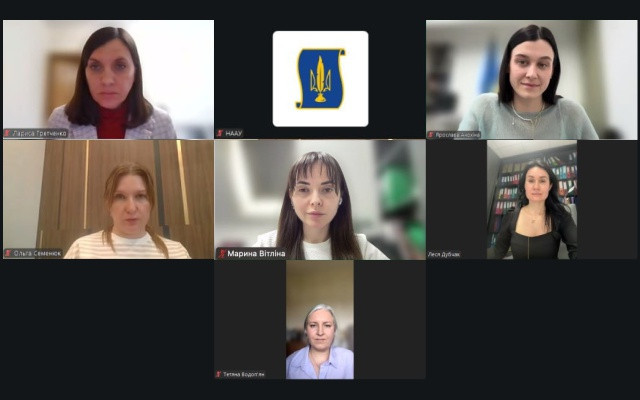
The issue of granting minors the right to marry lies at the intersection of family law, child protection, and judicial discretion. The UNBA Committee on family law dedicated a webinar held on March 30 to this very topic.
The topic of the balance between the right to marry and the protection of children’s rights was raised by Committee Council member Yaroslava Anokhina. She emphasized that this issue is becoming increasingly acute in the context of the recodification of civil legislation. At the heart of the discussion lies the clash of two values: an individual’s right to privacy and the state’s duty to ensure adequate protection of the child as a holder of rights subject to special protection, and thus the need for proper legal procedures at all stages.
The court reviews the validity of applying an exception to the minimum age for marriage and its compliance with the purpose of the law — to safeguard the interests of the minor. At the same time, the effectiveness of judicial review is directly linked to a number of related factors, in particular the proper procedural engagement of the parties (Supreme Court ruling of December 1, 2025, in Case No. 159/125/25), ensuring that the minor has genuine access to legal assistance free from outside influence, and, in the presence of risks or vulnerability, also with the need to involve specialists.
Committee Council Member Lesya Dubchak focused on the criteria for sufficient grounds and the specifics of evidence in cases regarding the granting of the right to marry. She emphasized that for such an application to be granted, the minor’s mere desire to marry or the existence of a close relationship between the applicant and the person with whom they intend to marry is insufficient. It is crucial for the court to determine whether such a marriage is in the applicant’s best interests, and thus whether there are sufficient grounds for applying this exception.
According to the speaker, in this category of cases, the court must take an active role and ascertain not only the voluntary nature of the expression of will but also the level of the minor’s psychological, moral, and social maturity, their understanding of the legal consequences of marriage, as well as the absence of risks to their rights and well-being. She drew particular attention to the fact that not every life situation or domestic difficulty in and of itself indicates the necessity of an early marriage.
L. Dubchak also emphasized the procedural aspects of such cases. In her view, it is important that the child’s own position be properly heard in court, and that the participation of parents and other interested parties help clarify the circumstances of the case.
According to Committee Council member Marina Vitlina, early marriage should be viewed as a complex social risk that negatively impacts the health, education, and psychological development of minors.
In Ukraine, the court plays a key role in resolving issues related to granting permission for marriage; however, its powers are exercised primarily in response to circumstances that have already arisen.
Although the law provides the court with relevant tools — including the ability to grant marriage permission, declare a marriage invalid, and apply protective measures — their effectiveness is limited by the lack of clear criteria for assessing the child’s best interests and an insufficient evidentiary basis. Additional challenges include the difficulty of establishing the voluntariness of consent and the insufficient level of cooperation between the court and social services. Under such circumstances, judicial intervention is not preventive but situation-specific in nature and aimed at legally formalizing de facto existing relationships.
Often, a conflict of interest may arise between the petitioner (the minor) and the interested party (the parents or partner). Committee member Olga Semenyuk addressed this aspect of the problem, where parental or partner pressure is the primary driving force behind the marriage. In such cases, the minor is only formally the applicant. In reality, the initiative, funding, and control over the matter almost always belong to the parents or future partner, who attempt to dictate the rules not only to the child/partner but also to their advocate. The speaker advised her colleagues to always hold a separate meeting with minors — without parents or partners — to ask open-ended questions: whether this is their own desire, how long ago the decision was made, whether there is any pressure, and to assess their level of understanding of the consequences of marriage (legal, financial, and personal). And to act in the best interests of the child to protect their rights, not those of others.
The presentation by the Committee’s representative in the Rivne region Tetyana Vodopyan focused on the specifics of international regulation regarding marriage, particularly the concepts of child and early marriages, as well as an analysis of the minimum marriage age in European countries. The advocate noted that the international community is actively raising the issue of the inadmissibility of child, early, and forced marriages, especially in the context of implementing the Sustainable Development Goals after 2014. In particular, the UN and its relevant bodies, as well as international organizations for the protection of children’s rights, such as UNICEF, consistently emphasize in their documents the need to set the minimum marriage age at 18 years, taking into account the provisions of the UN Convention on the Rights of the Child.
Analyzing the approaches of European countries, T. Vodopyan noted that the number of countries setting the minimum marriage age at 18 years without any exceptions is increasing every year. Among such countries are, in particular, Sweden, the Netherlands, Denmark, Portugal, as well as England and Wales.
At the same time, there is a group of countries where lowering the marriage age is permitted, typically to 16 years, in exceptional cases and with the consent of parents, a court, or an administrative body. Albania is perhaps the only country in Europe where legislation provides for the possibility of marriage before the age of 18 by court decision in exceptional cases without a clearly defined minimum age threshold.
The chairman of the Committee Larisa Gretchenko spoke about the consequences of granting permission to marry. Does such a right create an illusion of adulthood without the child actually being ready for it? The advocate noted that this mechanism combines elements of child rights protection with the risks of premature maturation. To support this, the speaker cited court statistics for 2021–2025, which show a decrease in the number of cases regarding the granting of the right to marry, but at the same time — a consistently high rate of approval for such applications.
L. Gretchenko emphasized that registering a marriage before reaching the age of majority entails acquiring full legal capacity, which remains even after the marriage ends, and therefore may create additional legal and financial risks for the minor. This refers, in particular, to the difficulty of exercising parental, inheritance, and other rights, as well as to situations where the formal attainment of adult status does not yet imply a real readiness to independently bear the associated responsibilities.
In conclusion, the speaker noted that early marriage creates not only new opportunities but also a range of legal, economic, and social risks for which a minor is often unprepared. The issue lies not so much in the granting of rights as in the ability to effectively exercise them.
© 2026 Unba.org.ua Всі права захищені
"Національна Асоціація Адвокатів України". Передрук та інше використання матеріалів, що розміщені на даному веб-сайті дозволяється за умови посилання на джерело. Інтернет-видання та засоби масової інформації можуть використовувати матеріали сайту, розміщувати відео з офіційного веб-сайту Національної Асоціації Адвокатів України на власних веб-сторінках, за умови гіперпосилання на офіційний веб-сайт Національної Асоціації Адвокатів України. Заборонено передрук та використання матеріалів, у яких міститься посилання на інші інтернет-видання та засоби масової інформації. Матеріали позначені міткою "Реклама", публікуються на правах реклами.