
Can an advocate demand an apology from a judge?
Where does the line lie between unacceptable extrajudicial communication with a judge and an advocate’s right to publicly respond to a judge’s conduct if it raises questions about professional ethics?
This issue has become the focus of a conflict in Houston, where a judge summoned an advocate to court following a critical letter from the advocate.
The basis for the conflict, which the Houston Chronicle reported on, was a video that went viral on social media. In it, Judge Harris Nathan Milliron of the 215th District Court of Harris County was seen treating a court IT employee rudely as the employee attempted to resolve a technical issue with the sound system in the courtroom. After the video surfaced, Houston criminal advocate James Stafford sent the judge an email questioning his behavior and urging him to apologize to the employee.
In response, the judge accused the advocate of extrajudicial communication — that is, contacting the judge without the knowledge of the other parties within the context of court proceedings — and ordered him to appear in court. The advocate himself contested this position. He insisted that he was not a party to any proceedings before this judge, had never practiced in his court, and therefore his email could not be considered a procedural document in the case.
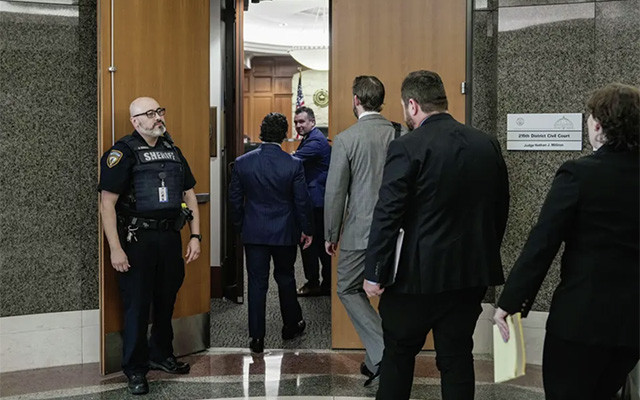
In support of D. Stafford, about a dozen advocates from the Harris County Criminal Defense Lawyers Association arrived at the courthouse on the scheduled day. They expected the court clerk to summon their colleague before the judge, but this never happened. The judge entered the courtroom and conducted the hearings scheduled for that day.
After waiting for an hour and a half, the President of Association Brent Meyer stated that the judge was no longer engaging in any unlawful actions. According to him, the advocates had come to court not only to support their colleague but also to see whether criticism of the judge would be used as a basis for further procedural pressure.
Following the wave of criticism, H. Milliron did not publicly comment on the situation, stopped live-streaming hearings, and deleted his Facebook account.
Despite the sharp reaction from the legal community, no disciplinary complaint was filed against the judge. At the same time, the advocates publicly insisted that the judge apologize not only to the advocate himself, but also to the court employee and the residents of the district.
© 2026 Unba.org.ua Всі права захищені
"Національна Асоціація Адвокатів України". Передрук та інше використання матеріалів, що розміщені на даному веб-сайті дозволяється за умови посилання на джерело. Інтернет-видання та засоби масової інформації можуть використовувати матеріали сайту, розміщувати відео з офіційного веб-сайту Національної Асоціації Адвокатів України на власних веб-сторінках, за умови гіперпосилання на офіційний веб-сайт Національної Асоціації Адвокатів України. Заборонено передрук та використання матеріалів, у яких міститься посилання на інші інтернет-видання та засоби масової інформації. Матеріали позначені міткою "Реклама", публікуються на правах реклами.