
Missing in action: advocates explain the procedure to the families of servicemembers
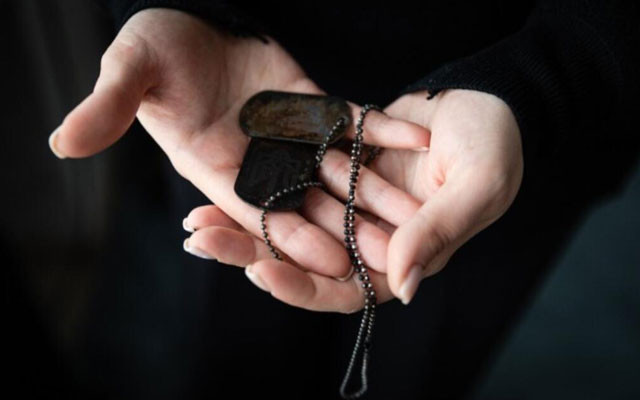
As part of the «Advocate+» pilot project, advocates continue to work with military personnel in the brigades, helping to resolve practical legal issues — ranging from social benefits and payments to undergoing medical examinations and processing paperwork.
On April 13, a meeting was held with the families of missing and deceased servicemen from one of the brigades. Representatives of the military unit — lawyers, representatives of the finance department, and the claims review commission — also joined the discussion.
The event focused on issues that most frequently arise for families of missing and deceased servicemen during the implementation of state guarantees. Specifically, the discussion covered what to do if a soldier does not respond to calls, where to turn if he goes missing, how to process the necessary documents and payments, and what details to pay attention to during the soldier’s medical treatment.
Notification from the TCC and SP
Advocate Polina Marchenko presented a step-by-step guide on what to do if a servicemember goes missing. First and foremost, the family must obtain an official notification from the TCC and SP. This notification must include the servicemember’s personal information, the date, and the location where or near which they went missing.
If the family already has information about the servicemember’s disappearance but has not received such a notification, they should contact the TCC and SP at their place of residence with a written request for its issuance.
Separately, the advocate noted that families should not publish photos or information about the missing servicemember in the public domain. Such data could be exploited by enemy intelligence services or fraudsters.
Reporting to the Police and DNA Samples
After receiving the notification, a family member must contact the local office of the National Police and file a missing person report. The report must include all known details regarding the servicemember’s whereabouts, the circumstances of their disappearance, and any distinguishing features.
After the report is registered, the family should receive an extract from the Unified Register of Pre-trial Investigations (URPI) containing the investigator’s details. Next, the closest relative must provide biological DNA samples.
At the same time, the family may contact the TCC and the Service of Ukraine for Refugees (SP) at their place of residence with a written request addressed to the commander of the military unit. The request should ask for an extract from the order confirming the disappearance or a certified copy of the official investigation report. If the report is not received within 30 calendar days, a request for its issuance may be submitted to the General Staff of the Armed Forces of Ukraine.
Coordination Headquarters, SSU and NIB
The next step is to register in the personal account of the Coordination Headquarters’ information system for the treatment of prisoners of war. In the relevant section, the family can provide additional information and track the status of the application.
If there is information suggesting that a servicemember may have been taken prisoner, the family should contact the Joint Center for the Coordination of Search and Release of Prisoners of War and Persons Illegally Deprived of Liberty as a Result of the Aggression Against Ukraine, which operates under the Security Service of Ukraine.
You can also submit a request to the National Information Bureau to verify information regarding possible captivity.
This can be done online via the National Information Bureau’s website.
Searching Open Sources
A separate section of the consultation focused on searching for information in open sources. Families can use specialized monitoring services; however, the advocate noted that such searches are not recommended for people with sensitive psyches, as the materials may contain distressing content.
If a missing servicemember is recognized in a photo or video, the family should contact the investigator handling the criminal case with a request for a facial recognition analysis. The request should include any available photos and videos that can be used to identify the person, as well as materials found in open sources.
After the examination is conducted, the family should review the case materials, obtain a copy of the expert’s conclusion from the investigator, and submit it to the Commissioner for Persons Missing Under Special Circumstances, as well as to the National Information Bureau.
Processing of benefits
To apply for the appropriate benefits, family members must contact the TCC and SP at their place of residence and submit a standard application form. Attached to the application are copies of the passports of adult family members, documents confirming residence registration, a marriage certificate if available, birth certificates of the children, copies of certificates of individual tax identification numbers, and a bank statement showing the account number.
After the documents are submitted, the TCC and SP forward them to the military unit for review by the commander. The review period is up to 15 days from the date the commander receives the application from the family member or members of the missing person.
Distribution of financial support
During the meeting, they also discussed amendments to Article 9 of the Law «On social and legal protection of servicemen and members of their families», which take effect on February 1, 2025. If there is no personal directive from the missing serviceman, 50% of the financial support is distributed in equal shares among the first-order beneficiaries. These include the spouse, the legal guardian of minor children, children with disabilities from childhood or their legal guardians, as well as the servicemember’s parents, excluding those receiving child support from him, and parents deprived of parental rights.
If there are no first-order beneficiaries, 20% of the allowance is distributed in equal shares among the second-order beneficiaries — adult children, biological brothers or sisters, whose legal representative is the servicemember.
If a family member declines the benefits to which they are entitled, a notarized statement of refusal must be included with the documents submitted to the TCC and the SP.
Where families should turn
Families were also provided with a list of agencies and organizations with which they may need to interact.
These include the Coordination Headquarters for the Treatment of Prisoners of War, the Ministry of Internal Affairs hotline for relatives of deceased, captured and missing-in-action servicemen, the Commissioner for Persons Missing under Special Circumstances, the International Committee of the Red Cross in Ukraine, the National Information Bureau, the Joint Center under the SSU, the Verkhovna Rada Commissioner for Human Rights and the UN Human Rights Council Working Group on Enforced or Involuntary Disappearances.
© 2026 Unba.org.ua Всі права захищені
"Національна Асоціація Адвокатів України". Передрук та інше використання матеріалів, що розміщені на даному веб-сайті дозволяється за умови посилання на джерело. Інтернет-видання та засоби масової інформації можуть використовувати матеріали сайту, розміщувати відео з офіційного веб-сайту Національної Асоціації Адвокатів України на власних веб-сторінках, за умови гіперпосилання на офіційний веб-сайт Національної Асоціації Адвокатів України. Заборонено передрук та використання матеріалів, у яких міститься посилання на інші інтернет-видання та засоби масової інформації. Матеріали позначені міткою "Реклама", публікуються на правах реклами.