
Advocate vs. patent attorney: similarities and differences in professional status, challenges and practical aspects of practice
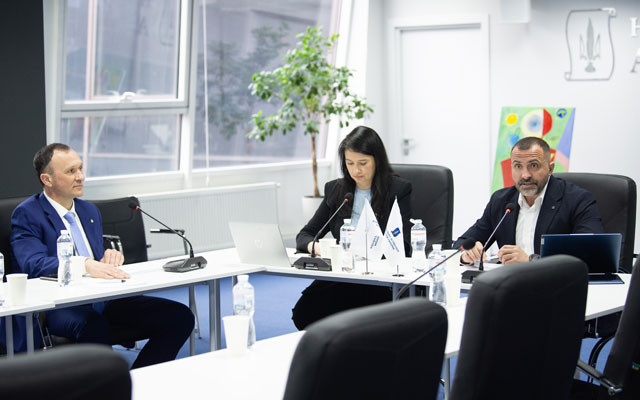
In observance of World Intellectual Property Day, celebrated on April 26, the Ukrainian National Bar Association hosted a thematic working meeting between representatives of the UNBA’s relevant Committee and the National Association of Patent Attorneys of Ukraine (NAPA).
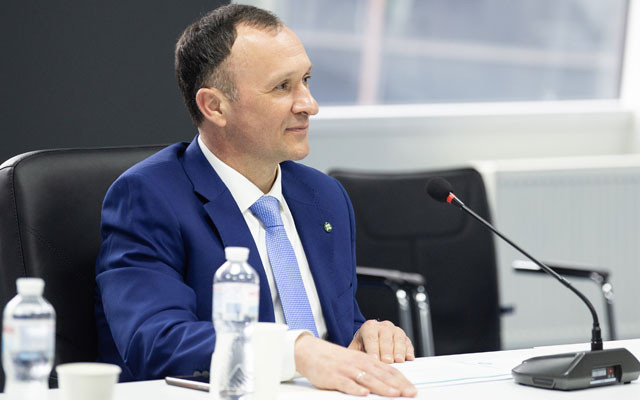
The chairman of the UNBA Committee on intellectual property Yuriy Romanyuk described the event as a discussion about advocates in the field of intellectual property, patent agents, and the combination of these two professional roles. He described patent attorneys as intermediaries between rights holders and the national intellectual property authority and noted that, according to his information, over 80% of patent attorneys also hold the status of advocate.
Y. Romanyuk also noted that last year was eventful in terms of certification, following which 76 candidates became patent attorneys. That is why he urged event participants to discuss the qualification requirements for obtaining this status and how it combines with the status of an advocate.
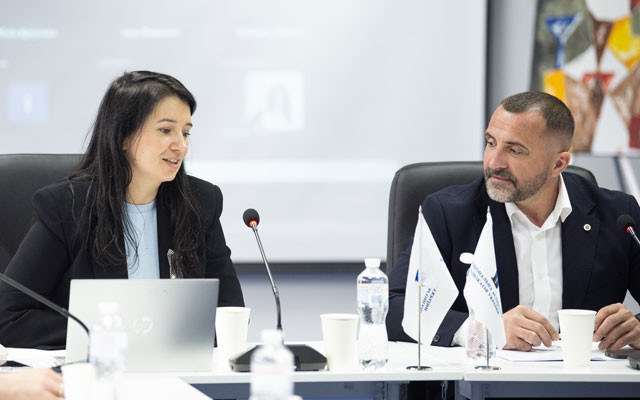
The chairman of the NGO «National Association of Patent Attorneys of Ukraine» Daria Kaplunenko reminded the audience that the status of a patent attorney is defined by the Regulations on representatives in intellectual property matters, the latest version of which has been in effect since 2024. This act regulates the legal status and professional activities of patent attorneys, the requirements and procedure for certifying candidates, the procedure for maintaining the state register, the rights and obligations of attorneys, as well as the grounds and procedures for suspending or terminating their activities.
A member of the NAPA Board, advocate, mediator and patent attorney Pylyp Bilytskyi drew attention to the difference in the statuses of legal professions. He noted that advocates can represent various individuals, including foreigners, within Ukraine, but not before the patent office, where a patent attorney has priority. At the same time, it is advocates who have the right to represent clients in criminal, civil, commercial, and administrative proceedings. On this basis, the expert raised the question of how a patent attorney can fully protect intellectual property rights if court representation is off-limits to them.
Separately, the speakers compared access to the professions of advocate and patent attorney. According to one possible assessment, the path to becoming a patent attorney is more complex, as it requires specialized education, a verified five-year work experience, and — for work with inventions and utility models — technical training as well. To become an advocate, one must have a full higher legal education, at least two years of experience, pass a qualifying exam, and, as a general rule, complete a six-month internship.
During the discussion, P. Bilytskyi also objected to reducing the work of a patent attorney to merely technical tasks: a patent attorney works with creative clients, prepares descriptions of inventions, trademarks, and industrial designs, and—if qualified to provide legal services—drafts contracts, applications, and other legal documents.
Another practical point of emphasis was placed on professional tools. In particular, it was noted that an advocate has the right to issue an advocate’s inquiry, failure to respond to which entails administrative liability, whereas a patent attorney does not have such a tool and typically uses inquiries based on information legislation. Commenting on the combination of statuses, he explained that many patent attorneys obtained the status of advocate after the introduction of the advocate monopoly on court representation, since otherwise they would not have been able to continue representing clients in court.
A member of the UNBA Committee on Intellectual Property Oleg Chernobay urged against contrasting the status of an advocate and a patent attorney based on criteria of «better—worse» or «fair—unfair». An advocate is a legal professional authorized to provide legal assistance in various fields, whereas the status of a patent attorney is primarily associated with specialized technical knowledge, experience, and training in the field of patenting. In this context, the advocate raised the question of the appropriateness of separate certification for patent attorneys in the field of legal services: if a person is certified only in this field, the question arises as to how such a status differs from that of an advocate.
During the discussion, O. Chernobay clarified that he does not reduce the work of a patent attorney to purely technical activities, but considers it primarily related to the specifics of patenting: the correct description of the subject matter, the identification of essential features, the preparation of application materials, and the selection of the subject matter for legal protection. At the same time, he noted that a different situation arises when it comes to intellectual property agreements, the transfer of rights, licensing, or the fulfillment of obligations, where the issues are often purely legal. Separately, a representative of the relevant Committee of the UNBA raised the issue of disciplinary liability for patent attorneys, specifically the lack of a procedure similar to that for lawyers, where complaints against a member of the profession are reviewed by a professional self-regulatory body.
A member of the Certification Commission and a member of the National Association of Patent Attorneys of Ukraine (NAPA) Myroslava Koval-Lavok drew attention to the practical application of requirements for candidates for patent attorneys who declare a specialization in inventions and utility models.
According to her, experience working with applications for inventions and utility models does not constitute experience in the field of technical sciences but rather falls under experience in the field of intellectual property. Therefore, if a candidate lacks a relevant technical education and submits only experience working with intellectual property objects to demonstrate technical expertise, such experience will not be relevant to this requirement.
Separately, M. Koval-Lavok responded to the discussion regarding the boundaries of the legal work performed by advocates and patent agents. She noted that a patent attorney’s legal specialization requires a higher legal education, and therefore such a person may draft contracts, analyze legally significant documents, and advise clients on intellectual property rights. At the same time, she distinguished this from the procedural rights of an advocate, emphasizing that not all lawyers in Ukraine are advocates, but this does not mean that they cannot perform legal work outside the scope of court representation.
At the end of the meeting, D. Kaplunenko noted that the first discussion on combining the statuses of advocate and patent agent highlighted many topics for further discussion. Among them are the appropriateness of the current model, under which a specialist must effectively obtain both the status of an advocate and the status of a patent attorney to fully practice in the field of intellectual property, as well as the issue of conflict of interest, which requires a separate practical discussion.
Y. Romanyuk described the roundtable as the first meeting to identify problematic and contentious issues. According to him, advocacy and patent attorneys are closely intertwined in matters of intellectual property rights protection, so the discussion can be continued, particularly through future joint events.
© 2026 Unba.org.ua Всі права захищені
"Національна Асоціація Адвокатів України". Передрук та інше використання матеріалів, що розміщені на даному веб-сайті дозволяється за умови посилання на джерело. Інтернет-видання та засоби масової інформації можуть використовувати матеріали сайту, розміщувати відео з офіційного веб-сайту Національної Асоціації Адвокатів України на власних веб-сторінках, за умови гіперпосилання на офіційний веб-сайт Національної Асоціації Адвокатів України. Заборонено передрук та використання матеріалів, у яких міститься посилання на інші інтернет-видання та засоби масової інформації. Матеріали позначені міткою "Реклама", публікуються на правах реклами.