
Lidiya Izovitova: In the context of European integration reforms, advocacy is a partner of the state, not a target of reform
The war has significantly altered the working conditions for advocates, while European integration has presented the profession with new institutional challenges. The ongoing negotiation process covers issues such as the rule of law, judicial independence, fundamental rights, justice, freedom and security.
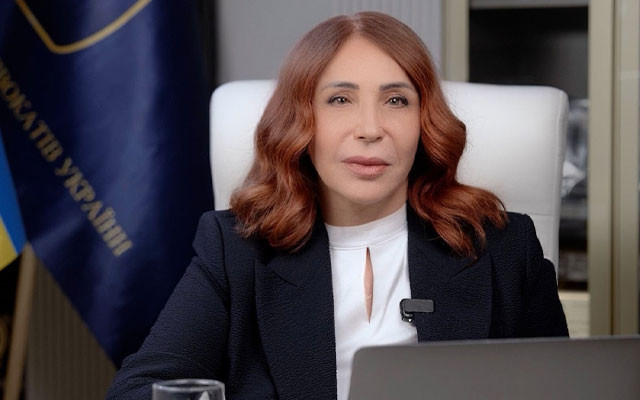
The President of the UNBA, BCU Lidiya Izovitova spoke about the Ukrainian advocacy profession in Cluster 1 — caught between the war and the European choice — during the II International Lawyers’ Forum «Kharkiv Unbreakable – 2026», which is taking place simultaneously in several Ukrainian cities on May 14–15.
The event was organized by the Yaroslav Mudryi National Law University, the Ukrainian National Bar Association and the Kharkiv Regional Bar Association.
L. Izovitova noted that organizing the forum amid the ongoing war is a statement by the professional community of its commitment to the rule of law and human rights. In Kharkiv, it is particularly evident that the rule of law is a matter of protecting specific individuals — military personnel, civilians, prisoners of war and those missing in action, IDPs, and victims of war crimes.
According to the President of the UNBA, BCU, the Ukrainian legal profession currently operates in two dimensions. The first is linked to the war, war crimes, the defense of military personnel, and assistance to those who have lost their homes, health, or loved ones. The second is linked to European integration, the opening of negotiation clusters with the EU, and the implementation of the Roadmap on the Rule of Law.
And in the reform of advocacy, which has become part of the negotiation process within Cluster 1 «Foundations of the EU accession process», the UNBA has been designated an equal co-implementer of the relevant tasks alongside the Verkhovna Rada and the Ministry of Justice. Therefore, the bar association acts not as an object of reform, but as a partner of the state, L. Izovitova is convinced.
At the same time, L. Izovitova noted, the Roadmap cannot be interpreted as a mandate to dismantle the current model of advocacy. After all, the current model — a single national professional organization with mandatory membership, a two-tier system of self-governance, and disciplinary bodies formed by the profession itself — is the result of Ukraine’s fulfillment of its obligations to the Council of Europe. Its creation was supported at the time by the Venice Commission and the Council of Europe’s Directorate General of Human Rights and the Rule of Law in a joint opinion. The model was subsequently enshrined in 2012 by the Law «On the advocacy and the practice of law» and later in Article 131-2 of the Constitution of Ukraine. The Council of Europe Convention on the Protection of the Profession of Advocate, in the drafting of which the Vice President of the UNBA, BCU Valentin Gvozdiy, participated, marked a new level of affirmation of European standards.
Thus, the Roadmap’s objective is the evolutionary improvement, enhancement of transparency, accountability, and effectiveness of the institution without revising constitutional foundations or weakening self-governance. The changes envisaged by the Roadmap should strengthen trust in advocacy but not become a mechanism for state interference in the profession’s internal decisions.
«The Ukrainian advocacy profession is undergoing reform today under unique circumstances. Simultaneously, there is a full-scale war, the technical opening of six negotiation clusters with the EU, and a profound transformation of the justice system, - emphasized the President of the UNBA, BCU. - Under these conditions, advocacy is not a passive entity. It proposes its own program, participates in lawmaking, and co-develops international standards for the protection of the profession».
She also outlined three key tasks for the near future: At the same time, L. Izovitova emphasized the need to uphold fundamental «red lines»: the unity of the profession, membership in the UNBA, genuine self-governance, and the inadmissibility of returning disciplinary powers to the state.
- completion of work on the new draft of the Law on Advocacy, taking into account all the requirements of the Roadmap;
- ratification of the Convention and the nomination of a Ukrainian candidate to the GRAVO Expert Group;
- further digitization of the Unified Register of Advocates of Ukraine and the «Advocate’s Personal Account» with integration into state registries.
«When we say «Kharkiv is unbreakable» — referring to the city — we are simultaneously saying this about the profession. About the legal profession, which in Ukraine has proven strong enough to prevent neither war nor political manipulation from destroying the foundation of the rule of law», - concluded the President of the UNBA, BCU.
© 2026 Unba.org.ua Всі права захищені
"Національна Асоціація Адвокатів України". Передрук та інше використання матеріалів, що розміщені на даному веб-сайті дозволяється за умови посилання на джерело. Інтернет-видання та засоби масової інформації можуть використовувати матеріали сайту, розміщувати відео з офіційного веб-сайту Національної Асоціації Адвокатів України на власних веб-сторінках, за умови гіперпосилання на офіційний веб-сайт Національної Асоціації Адвокатів України. Заборонено передрук та використання матеріалів, у яких міститься посилання на інші інтернет-видання та засоби масової інформації. Матеріали позначені міткою "Реклама", публікуються на правах реклами.