
Co-parenting shouldn't be reduced to a 50/50 formula, — roundtable discussion
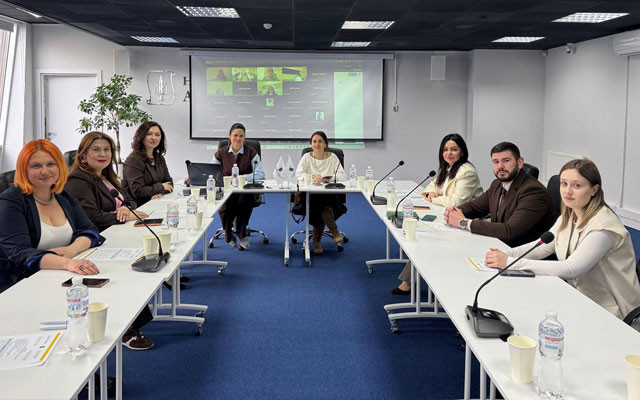
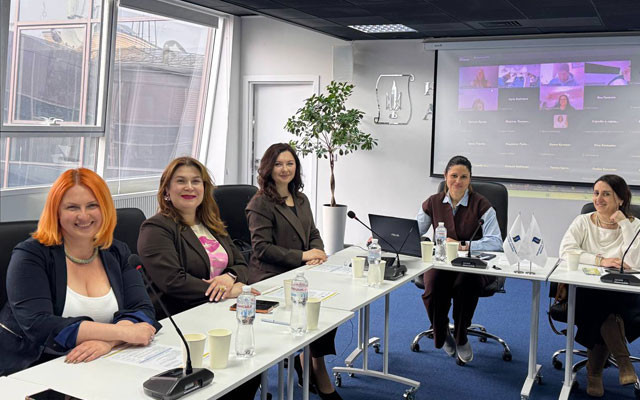
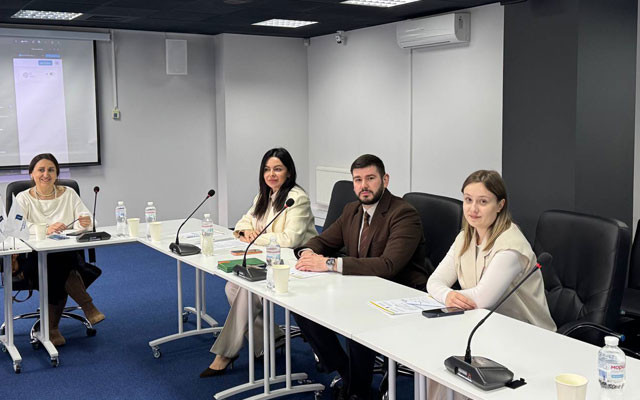
Following a divorce, joint custody can serve as a mechanism for ensuring equal parental rights. However, this model requires clear criteria and cannot be applied automatically without taking into account the child’s age, the level of conflict between the parents, the risk of violence, and the feasibility of enforcing the future decision.
This was discussed during the roundtable «Joint parental custody as a guarantee of children’s rights», organized by the UNBA Committee on human rights. Opening the event, deputy chairman Tetyana Hnatiuk noted that draft laws aimed at regulating the procedure for determining a child’s place of residence following parental divorce are currently before the Verkhovna Rada: Committee member Myroslava Soroka pointed out that current family law already enshrines parental equality. In particular, Article 141 of the Family Code provides for equal rights and obligations of the mother and father regarding the child, and Article 157 stipulates that issues concerning the child’s upbringing are decided jointly by the parents. At the same time, following the termination of the marital relationship, a practical question arises: exactly how each parent will participate in the child’s upbringing.
- No. 12123 dated October 15, 2024, «On amendments to the Family Code of Ukraine regarding joint parental custody of children»;
- No. 12132 dated October 17, 2024, «On amendments to the Family Code of Ukraine regarding the introduction of a model of joint parental custody of a child after divorce as the primary model».
According to the attorney, the decision regarding the child’s place of residence is not limited to determining with whom the child will live. In practice, it often establishes a model in which one parent assumes a dominant role in the child’s daily life, while the other is dependent on that parent’s discretion regarding communication, participation in upbringing, and decision-making. This applies, in particular, to issues of education, medical care, development, and other important aspects of the child’s life.
In this context, M. Soroka explained that the draft laws propose different approaches: one views joint custody as an alternative method of resolving family conflict, while the other treats it as the primary model for resolving such situations. In her view, a flexible model, in which joint parenting is one of the options, is more adaptable to real-life circumstances and poses fewer risks to the child’s interests.
The speaker emphasized that the primary model is more difficult to implement, as the court must assess the specific circumstances in each case: the child’s attachment, the financial means of each parent, psychological impact, the parenting role, and other factors. The court should not be limited to a single option but must choose a decision that serves the child’s best interests: determining the child’s residence with one parent, joint custody, an alternative visitation schedule, or another model.
Chairman of the Subcommittee on family and children’s affairs of the Verkhovna Rada Committee on humanitarian and information policy Tetyana Skrypka reported that the committee recommended that both draft laws under consideration be sent back for further refinement. According to her, a working group was established in December 2025 because neither document fully addresses the issue of how parents should participate in the joint upbringing of a child.
The MP also drew attention to the terminology. She noted that the concept of «joint custody» regarding children who have parents requires careful use, since under current legislation, custody is associated with orphans and children deprived of parental care. Therefore, it is first necessary to define the meaning of the new concept in the law, and only then use it as a legal term.
The argument that formal equality between parents does not always mean actual balance in raising, communicating with, and making decisions regarding the child was supported by a member of the UNBA Committee on human rights protection Iryna Smirnova. She noted that after determining the child’s place of residence, one parent often gains greater influence, while the other is effectively reduced to the role of someone who «visits» on a schedule. Among the challenges, the speaker cited limited mechanisms for ensuring equal participation in child-rearing and the lack of a developed culture of shared parenting.
Separately, participants discussed mediation as a tool for resolving disputes between parents. A representative of the Association of Family Mediators of Ukraine Natalia Petrenko noted that mediators support the inclusion of mediation in relevant regulations. According to her, one of the draft laws already provides for the right of parents to resolve contentious issues by turning to a mediator and subsequently concluding an agreement based on the results of mediation. At the same time, the draft of the new Civil Code refers to the obligation of parents to first attempt peaceful methods of resolving issues of parental responsibility.
A member of the UNBA Committee on human rights protection Olena Haidai drew attention to the role of child welfare authorities in disputes. According to her, these authorities currently operate primarily within the paradigm of determining which parent is better for the child to live with. Joint parenting, however, requires a different approach—organizing a stable life for the child between both parents. O. Haidai noted that under current regulations, guardianship authorities are effectively forced to choose the «better» parent, while the possibility of a flexible division of time and responsibility between them is not sufficiently taken into account.
A separate segment of the discussion focused on safety issues. T. Hnatiuk emphasized that in cases of domestic, physical, or sexual violence, the key guiding principle for the court should not be the equality of the parents, but the best interests of the child. According to her, the child’s safety takes priority over any form of exercising parental rights, and courts must assess not only the proven fact of violence but also the risk of its impact on the child.
Among the risks that must be considered were re-traumatization, psychological harm, physical danger, the risk of escalating violence, pressure and manipulation, as well as a conflict of loyalty, where the child is forced to choose between parents. In this context, joint custody cannot be applied automatically and is permitted only in the absence of risks to the child.
© 2026 Unba.org.ua Всі права захищені
"Національна Асоціація Адвокатів України". Передрук та інше використання матеріалів, що розміщені на даному веб-сайті дозволяється за умови посилання на джерело. Інтернет-видання та засоби масової інформації можуть використовувати матеріали сайту, розміщувати відео з офіційного веб-сайту Національної Асоціації Адвокатів України на власних веб-сторінках, за умови гіперпосилання на офіційний веб-сайт Національної Асоціації Адвокатів України. Заборонено передрук та використання матеріалів, у яких міститься посилання на інші інтернет-видання та засоби масової інформації. Матеріали позначені міткою "Реклама", публікуються на правах реклами.