
Not just punishment: the UNBA discussed the issue of the AWOL
The issue of desertion from a military unit, in addition to its criminal-law implications, requires a separate analysis of its underlying causes. These include unaddressed reports, problems with rotation and medical care, psychological exhaustion, and the lack of effective mechanisms for appealing the inaction of the command.
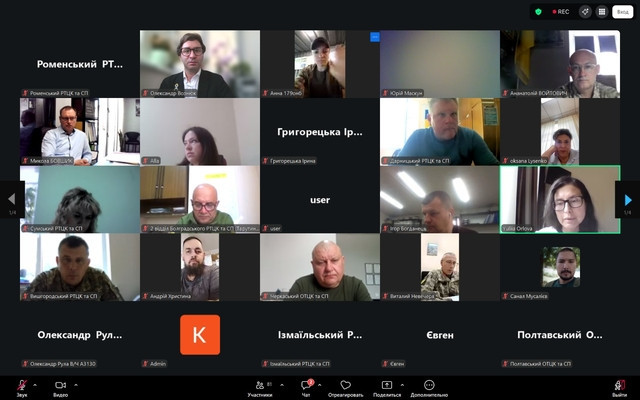
These issues were discussed on May 19 during the roundtable «Problematic aspects of the AWOL, ways to resolve them», initiated by the UNBA Committee on the protection of the rights of persons with disabilities in collaboration with civil society organizations.
Discipline and trust
Opening the discussion, chairman of the Committee Oleksandr Voznyuk highlighted the connection between military discipline, respect for the individual, and trust in state institutions.
According to him, a servicemember’s motivation cannot be based solely on fear of accountability. If a person faces humiliation, disregard for their rights, or the inability to resolve a legitimate issue within the service, this does not strengthen discipline; on the contrary, it erodes trust in the system.
O. Voznyuk cited the example of Israel, where military service is viewed as an element of civic responsibility, and the status of a soldier is upheld by the state’s respect. In his view, Ukraine also needs not only a mobilization-based approach but also a different quality of attitude toward military personnel—one that respects the individual, their family, and their dignity.
The AWOL as a consequence
During the roundtable, statistics were also cited that had previously been discussed in the public sphere: during the full-scale war, approximately 235,000 cases were opened under Article 407 of the Criminal Code regarding unauthorized absence from a military unit, and about 54,000 cases under Article 408 of the Criminal Code regarding desertion.
Committee Council member Yulia Orlova noted that desertion is not the cause but the consequence of systemic problems. Among these, she cited personnel overload, lack of proper rotation, problems with medical care and psychological exhaustion.
According to her, focusing solely on punishment is not an effective tool, as this approach does not address the root causes of the problem. In the long term, this could lead to its recurrence.
Participants in the discussion also noted that the state has increased liability for such offenses. This included raising fines under the Code of Administrative Offenses, eliminating the possibility of plea agreements with investigators in criminal proceedings regarding desertion, and prohibiting the use of parole for such acts. At the same time, the issue of commanders’ liability for violations of subordinates’ rights has effectively remained without an adequate mechanism for enforcement.
Unanswered reports
Separately, the discussion addressed situations where a service member has grounds for discharge, leave, or transfer but cannot exercise their rights due to reports not being reviewed or the absence of an adequate response.
According to the Procedure for Handling Reports from Military Personnel within the Ministry of Defense of Ukraine, approved by Ministry of Defense Order No. 531 of August 6, 2024, a report must contain specific information. However, military personnel do not always even have their commanders’ full contact details, particularly due to personnel changes.
Alternative submission methods do not always work. Paper reports sent by mail may be returned after the retention period expires, and the «Army+» app records instances of missed review deadlines without a written response.
During the discussion, the advocates cited several situations that have arisen in practice. In particular, they mentioned a servicemember whose brother had gone missing, but whose commander did not review the report requesting short-term leave to support his parents. Another example involved a volunteer who has three minor children and, due to family circumstances, raised the issue of discharge from service. They mentioned a servicemember who is the sole caregiver for a father with a Group II disability, but whose request and the lawyers’ inquiries went unanswered for a long time. They also cited a situation involving the expiration of a contract, where a servicemember refused to renew it due to non-payment of the stipulated funds but was not discharged.
What needs to be changed
Following the discussion, roundtable participants, including Committee Council member Mykola Boshchyk and other experts, spoke about the need for a comprehensive approach to resolving the issue of the Armed Forces.
Among the proposals was the introduction of independent oversight of military units’ activities and the morale and psychological well-being of personnel. Such oversight should be conducted on an extraterritorial basis — without subordination to local command and without creating new staff units.
The mechanism for transferring military personnel through «Army+» was discussed separately. It was proposed that a report be reviewed by an independent individual if the immediate commander blocks it or the established review period has expired. This procedure should include hearing the current commander, the future commander, and the service member themselves.
The roundtable also discussed the need for expedited appeals against the actions, decisions, or inaction of commanders — particularly the failure to review reports — within a shortened timeframe.
Another proposal concerned amendments to the Criminal Code: to provide for exemption from criminal liability for desertion in cases where a service member had indisputable legal grounds for discharge from military service in accordance with Article 26 of the Law «On military duty and military service», but was unable to exercise them due to the inaction of authorized officials.
© 2026 Unba.org.ua Всі права захищені
"Національна Асоціація Адвокатів України". Передрук та інше використання матеріалів, що розміщені на даному веб-сайті дозволяється за умови посилання на джерело. Інтернет-видання та засоби масової інформації можуть використовувати матеріали сайту, розміщувати відео з офіційного веб-сайту Національної Асоціації Адвокатів України на власних веб-сторінках, за умови гіперпосилання на офіційний веб-сайт Національної Асоціації Адвокатів України. Заборонено передрук та використання матеріалів, у яких міститься посилання на інші інтернет-видання та засоби масової інформації. Матеріали позначені міткою "Реклама", публікуються на правах реклами.