
The UNBA analyzed legal tools for protecting businesses during wartime
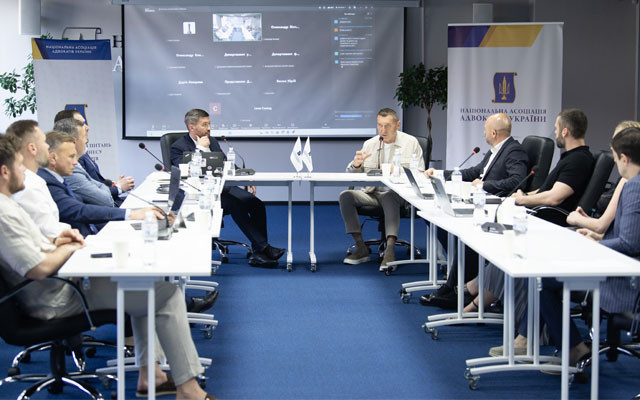
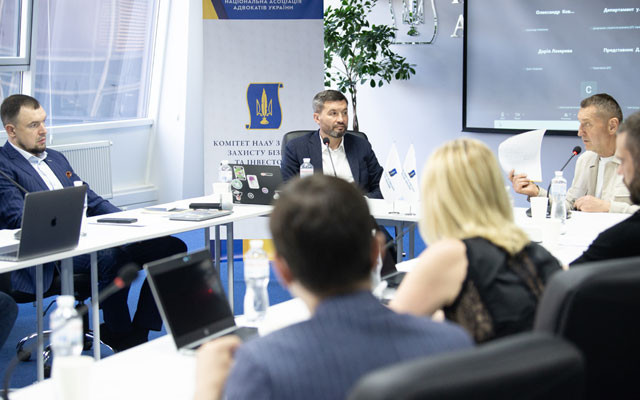
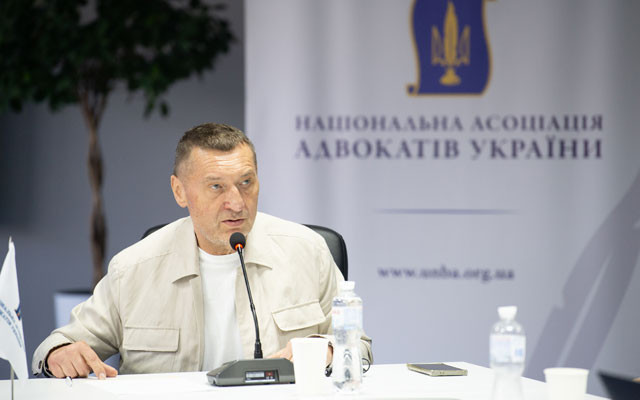
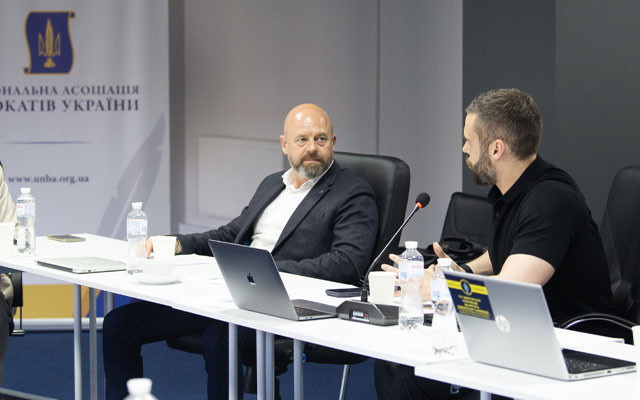
Ukrainian businesses are operating amid a war, a lack of funding, pressure from law enforcement agencies, regulatory uncertainty, and a challenging legal environment. The legal tools that can help businesses preserve assets, attract investment, document risks, and recover losses were discussed during the roundtable «Challenges facing business in 2026».
The event was organized by the UNBA Committee on business and investor protection. The discussion was moderated by the Committee’s deputy chairman Serhiy Lysenko.
Risk market
Committee deputy chairman Yuriy Shulika noted that the Committee plans to develop cooperation in several areas: with the Ukrainian chamber of commerce and Industry on issues of state property and privatization, as well as in collaboration with the National Securities and Stock Market Commission.
Among the issues relevant to business, he cited compensation for losses, voluntary insurance against war risks, maintaining investment activity in war-affected territories, transparency of regulatory and law enforcement agencies, judicial reform, protection of investors’ and owners’ rights, as well as the preservation of small and medium-sized businesses.
During the discussion, participants emphasized that for an investor, it is important not only to acquire an asset in Ukraine but also to be able to preserve and protect it after acquisition. In this context, S. Lysenko noted that without the proper functioning of the judicial system, rights will not be protected, especially given the overburdening of the courts and the shortage of judges.
Committee Council member Yevhen Bohdanov delivered a presentation on the legal barriers to investing in Ukraine and the factors that currently deter or restrict foreign investors. The presentation focused not only on security risks related to the war but also on a range of legal and regulatory challenges: currency restrictions, insurance and compensation mechanisms, issues of capital repatriation, asset protection, access to land, investment screening, corporate governance, and the predictability of government regulation.
Particular attention was paid to the fact that Ukraine remains a market of significant opportunities, yet one that carries a complex set of unusual risks. To fully attract foreign capital, it is necessary to strengthen confidence in the legal system, state institutions, and investor protection mechanisms.
Advocacy can and should serve as the very bridge that, by balancing the interests of foreign investors, local businesses, and the state, facilitates their effective collaboration and adaptation to current realities.
Documents for disputes
First Vice President of the Ukrainian Chamber of Commerce and Industry Mykhailo Nepran spoke about the practical tools businesses use in wartime conditions. He cited the example of a drone manufacturer’s appeal regarding a material change in the circumstances of contract performance and noted that the CCI’s conclusion served as the basis for initiating a negotiation procedure.
Among the common documents the CCI works with, its representative listed confirmation of a material change in circumstances, force majeure, price certificates, confirmation of the status of sole manufacturer of military products, as well as documents regarding the origin of goods within the Ukraine Facility. Regarding the latter, M. Nepran explained that works, goods, and services financed under this mechanism must be of Ukrainian or European origin. To confirm origin, the CCI, together with the European Commission, uses certificates, and the processing depth must be 50% + 1%.
He also highlighted the need to document a business’s position before a dispute arises. In the realm of public procurement and defense contracts, risks can be minimized by documenting every step, including price references, market research, or assessments depending on the situation.
Losses without warning
Speaking about losses during the war, Committee Council member Sviatoslav Bolinsky noted that businesses often do not seek protection because they do not know how to do so, do not see effective tools, and do not have time for the relevant procedures.
According to him, in legal disputes, companies file claims against the aggressor state, its Ministry of Defense, the Prosecutor General’s Office, the National Bank, and other entities; however, once a ruling is obtained, the issue of actual enforcement arises.
The speaker identified one potential avenue for legal protection as filing claims against sanctioned individuals, who may be considered joint defendants in cases seeking compensation for war-related damages. At the same time, the judiciary is not always ready to accept such a legal framework, and among the challenges are court fees, proving causation, and the general novelty of the practice.
Although judicial practice regarding sanctioned individuals is still developing, there are already individual rulings on joint and several recovery of damages caused by the war. S. Bolinsky also emphasized that when assessing damages, businesses should consider not only direct losses and lost profits but also the value of corporate rights, which may depreciate due to the loss or destruction of the business.
Time as a risk
Committee Council member Dmytro Mamchyk dedicated his presentation to the impact of litigation timelines on business stability. According to him, the duration of commercial and administrative proceedings in Ukraine remains significant and affects both domestic businesses and foreign investors.
He cited data from the State Tax Service, according to which, as of December 2025, there were 70,000 cases pending in the courts involving claims against tax authorities totaling 477 billion UAH. Of these, only 18,000 cases totaling 172 billion hryvnias were resolved, while nearly 52,000 cases totaling 300 billion hryvnias remained pending for the following year.
The speaker noted that, according to Supreme Court statistics, the average duration of commercial case proceedings in courts of first instance in 2024 was 86 days, and 77 days on appeal. At the same time, the full cycle of case consideration from the filing of a lawsuit to cassation in standard disputes can take from 6 to 18 months, and in complex cases—even longer.
Among the consequences of lengthy litigation for businesses, D. Mamchik cited frozen capital, the inability to plan, difficulties in attracting investors, banks’ refusal to grant loans, and additional expenses for advocates, court fees, expert opinions, and other procedural costs. He also mentioned the psychological pressure on business leaders, who lose focus on their core activities and make decisions under the pressure of uncertainty.
The veteran segment
Committee chairman Serhiy Khilchenko noted that veteran entrepreneurship has become a segment of the economy that is gradually emerging as a factor in the country’s defense capability. He reminded that the law on veteran entrepreneurship came into force on February 26, 2026. Entities engaged in veteran entrepreneurship may include male or female veterans with sole proprietor status, self-employed individuals under private law, as well as legal entities whose authorized capital is 100% owned by veterans. Prior to the law’s adoption, there were proposals to lower the requirement for veterans’ participation in the authorized capital to 60%, but the final version retained 100% participation, which the Committee considers controversial.
The law provides for financial assistance, grants, repayment of interest on loans, assistance with leasing and factoring payments, as well as the right of veteran-owned businesses to receive state and municipal property for use on a priority basis without an auction.
It also addresses quotas for veteran-owned businesses in industrial parks, support for investment projects, and reserved contracts amounting to up to 5% of the state budget. At the same time, the regulatory framework is still being developed, and the issues of reserved contracts and industrial parks currently remain general in nature and are under further refinement.
Among the gaps, S. Khilchenko cited the five-year limit on veteran business status, the restriction to using only one type of assistance, the exclusion of family members of veterans and fallen soldiers, the lack of tax incentives, and the difficulty veterans face in accessing credit.
***
Summarizing the role of the legal community in protecting business, S. Lysenko noted that the UNBA Committee on business and investor protection, and the Association’s committees in general, can serve as a bridge between entrepreneurs and the state. The goal is to help government authorities listen to the business community and to help lawyers explain its needs in the language of legal procedures.
© 2026 Unba.org.ua Всі права захищені
"Національна Асоціація Адвокатів України". Передрук та інше використання матеріалів, що розміщені на даному веб-сайті дозволяється за умови посилання на джерело. Інтернет-видання та засоби масової інформації можуть використовувати матеріали сайту, розміщувати відео з офіційного веб-сайту Національної Асоціації Адвокатів України на власних веб-сторінках, за умови гіперпосилання на офіційний веб-сайт Національної Асоціації Адвокатів України. Заборонено передрук та використання матеріалів, у яких міститься посилання на інші інтернет-видання та засоби масової інформації. Матеріали позначені міткою "Реклама", публікуються на правах реклами.