
Accountability for denying the Holodomor requires clear boundaries – UNBA
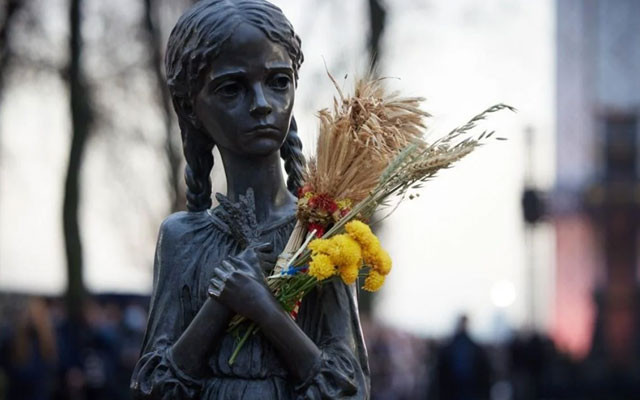
Criminal liability for denying the Holodomor as genocide must be formulated in a way that avoids the risk of arbitrary interpretation of the law. Otherwise, it becomes possible to criminalize not only unlawful acts but also scientific or historical debate.
At the request of the Verkhovna Rada Committee on law enforcement, the Ukrainian National Bar Association analyzed Draft Law No. 15192 of April 24, 2026, «On amendments to the Criminal Code of Ukraine regarding liability for public denial of the 1932–1933 Holodomor in Ukraine and desecration of the memory the memory of the millions of victims of the Holodomor».
The authors of the legislative initiative link the need for legislative changes to national security challenges in the context of armed aggression and information and psychological operations against Ukrainian identity. The draft proposes to amend Article 442 of the Criminal Code to include liability for justifying and publicly denying genocide, as well as to introduce a separate Article 442-2 regarding the public denial of the Holodomor as genocide against the Ukrainian people.
Without denying the societal need to protect national memory and national interests, the UNBA Committee on criminal law and procedure emphasized that the expansion of criminal law regulation must comply with the principles of legality, the rule of law and legal certainty.
The advocates’ key concern relates to the wording of the objective elements of the proposed criminal offenses. Phrases such as «regardless of the purpose» of producing or disseminating materials, as well as «minimizing the severity of criminal acts», are overly broad and subjective. As a result, the line between a criminally punishable act and permissible speech or research may become blurred.
It is also emphasized that criminal liability must be based on a clearly defined act, intent, and the scope of prohibited conduct. If the law allows for broad interpretation, this may lead to excessive criminalization, manipulative application of the law, and interference with the freedom of expression guaranteed by Article 34 of the Constitution and Article 10 of the Convention for the Protection of Human Rights and Fundamental Freedoms.
The ECHR considered the limits of freedom of expression regarding historical events in the case of Perinçek v. Switzerland, where it held that the denial of historical events is not in itself a crime in the absence of incitement to violence or hatred.
Another risk lies in the fact that the proposed wording could formally encompass scientific research, educational, or publishing activities. In particular, discussions regarding the number of victims, documents, and actions of officials from that period could be equated with «minimizing the gravity of criminal acts».
In its current form, the UNBA cannot recommend Bill No. 15192 for adoption, as it contains elements of legal uncertainty and falls into the category of «vague provisions». The Association proposed revising the draft with the participation of experts in law and history to establish a clear framework for protecting national interests that meets the high standards of a democratic country governed by the rule of law. The UNBA also expressed its readiness to provide expert support to such a working group.
The full text of the UNBA’s comments and proposals, prepared by Volodymyr Matsko, a member of the UNBA Committee on criminal law and procedure, can be viewed at this link.
© 2026 Unba.org.ua Всі права захищені
"Національна Асоціація Адвокатів України". Передрук та інше використання матеріалів, що розміщені на даному веб-сайті дозволяється за умови посилання на джерело. Інтернет-видання та засоби масової інформації можуть використовувати матеріали сайту, розміщувати відео з офіційного веб-сайту Національної Асоціації Адвокатів України на власних веб-сторінках, за умови гіперпосилання на офіційний веб-сайт Національної Асоціації Адвокатів України. Заборонено передрук та використання матеріалів, у яких міститься посилання на інші інтернет-видання та засоби масової інформації. Матеріали позначені міткою "Реклама", публікуються на правах реклами.