
Advocates on social media: how to showcase cases without crossing ethical lines
Social media can help advocates explain legal issues, build trust, and communicate with potential clients. However, public visibility is directly linked to professional ethics: maintaining attorney-client privilege, not guaranteeing outcomes, and not turning legal arguments into attacks against colleagues.
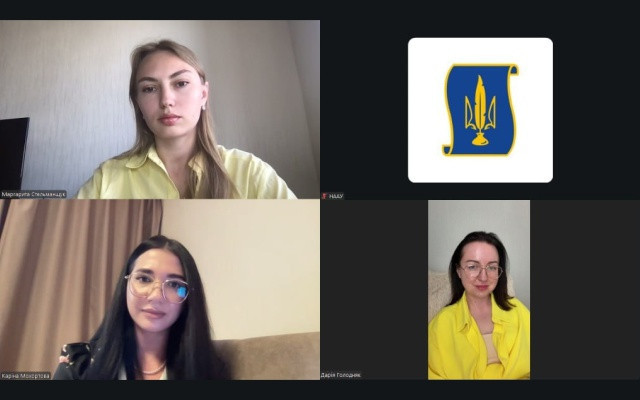
This was discussed during the webinar «Advocates on social media: a necessity or a choice?», initiated by the UNBA NextGen in the Odesa region. The speakers at the event were a member of the UNBA Committee on administrative law and procedure Daria Golodnyak and a marketing specialist Margarita Stelmanchuk.
A blog for an advocate should be a conscious choice. According to D. Golodnyak, being in the public eye requires a willingness to engage in constant communication, face criticism, and handle additional psychological stress. At the same time, through a blog, an advocate can explain current legal issues, share challenging aspects of practice and demonstrate approaches to resolving typical situations.
In particular, the speaker focused on how to discuss one’s own cases without violating attorney-client privilege. If an advocate describes not an individual client’s story but a typical legal problem with initial details that could apply to many people, such coverage does not in itself disclose confidential information. When publishing documents, it is necessary to conceal personal data, contact details, job titles, last names, first names, patronymics, case numbers and other information by which a person or case can be identified.
However, the presentation of cases should not be unsubstantiated. An advocate’s blog should not be based solely on claims of supposedly successful cases without explaining exactly what was done to resolve the issue. Otherwise, followers and colleagues may question whether the advocate is truly drawing on their own professional experience.
The speaker identified another risk of public communication: making guarantees. An advocate cannot promise a client a specific outcome or a specific timeline for resolving an issue if these depend on the court, government agencies, procedural circumstances, or the individual details of the case. Such promises can create false expectations, lead to conflicts and complaints, and generally undermine trust in advocacy.
Using examples from her practice, D. Holodniak explained that the same problem can have several solutions: pre-trial procedures, litigation, or another course of action depending on the documents and factual circumstances. Therefore, it is incorrect to create the impression that any issue can be resolved for a fixed fee, within a specific timeframe, and in only one way.
The webinar also addressed the issue of «hate» among advocates. The speaker distinguished between personal attacks, insults, or attempts to poach clients in comments directed at another advocate, and a well-reasoned legal position. If an advocate disagrees with a colleague’s approach and explains their position by citing legislation, case law, and practical experience, this is not hate speech. On the other hand, publicly discrediting a colleague without providing arguments is unethical.
M. Stelmanchuk drew attention to the reputational aspect of advocates’ public presence. According to her, entertainment content in and of itself does not harm an advocate’s professional reputation if it is kept within bounds and combined with expert presentation. Similarly, when communicating with an audience, it is important to distinguish between ordinary disagreement in comments and messages that cross the line: in the first case, the discussion can be encouraged; in the second, it is better to hide the comments so as not to provoke other participants.
The participants concluded that a lawyer’s public presence should only enhance their reputation when it is based on professional reasoning, proper communication, and adherence to the Rules of Professional Conduct.
© 2026 Unba.org.ua Всі права захищені
"Національна Асоціація Адвокатів України". Передрук та інше використання матеріалів, що розміщені на даному веб-сайті дозволяється за умови посилання на джерело. Інтернет-видання та засоби масової інформації можуть використовувати матеріали сайту, розміщувати відео з офіційного веб-сайту Національної Асоціації Адвокатів України на власних веб-сторінках, за умови гіперпосилання на офіційний веб-сайт Національної Асоціації Адвокатів України. Заборонено передрук та використання матеріалів, у яких міститься посилання на інші інтернет-видання та засоби масової інформації. Матеріали позначені міткою "Реклама", публікуються на правах реклами.