
Young advocates were given an explanation of the personal branding formula
A personal brand is what people say and think about an advocate when he or she isn’t around. It exists even when the advocate isn’t actively working to build it. But in that case, the advocate has no control over how others perceive him or her.
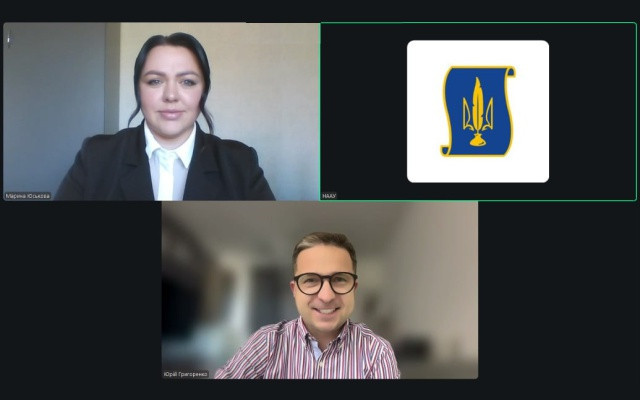
Professional reputation, clear positioning and the consistent demonstration of expertise were discussed during a webinar organized by Marina Yuskov, a representative of the UNBA NextGenin the Poltava region. The guest speaker was Yuriy Grygorenko, chairman of the UNBA Committee on the prevention of administrative offenses committed against advocates.
He drew attention to the behavior of individuals seeking legal assistance. Before reaching out, they often search for information online, compare professionals, and only then contact an advocate. Therefore, the decision to seek legal assistance may be formed even before the first interaction.
However, at the start of their careers, young advocates have little experience, low visibility and few clients. Building a personal brand can be one way to break this cycle. The speaker described this as a new approach in which an advocate’s clarity and visibility within their field are key.
Y. Grygorenko described the personal brand formula as a combination of three elements: expertise, visibility, and trust. If one of these components is missing, the formula doesn’t work: an advocate may have expertise but remain invisible, or be visible but lack a clear positioning.
The practical segment of the webinar focused on positioning. The advocate asked participants to answer several basic questions: what their strengths are, why clients would choose them over others, what changes they are bringing to their field, what values they embody, and what their professional communication style is.
He also explained the «ladder of trust». The first level is visibility: a professional profile should reflect the advocate’s expertise, rather than being a collection of random content. The second is clarity: it should be clear to people what kinds of issues they should consult an advocate about. The third is authority, which is built by explaining the law in plain language and providing commentary on changes in legislation, case law, and professional situations. The fourth is trust, when people address the advocate by name and recommend them to others.
Speaking about the content of public communication, the speaker presented a «content pyramid» for advocates: the foundation should be educational content, followed by values, case studies, and a limited amount of personal content. He emphasized that an advocate should come across as a real person, but expertise must remain the foundation of their online presence. For those just starting out, Y. Grygorenko advised using typical client questions, analyses of common mistakes, case law, changes in legislation, and debunking professional myths, as well as explaining how the judicial system works and the practical realities of a lawyer’s work.
In conclusion, the speaker proposed a 90-day roadmap: first, define your niche and positioning; next, prepare regular expert content; and then build your authority through articles, podcasts, and active participation in professional communities.
© 2026 Unba.org.ua Всі права захищені
"Національна Асоціація Адвокатів України". Передрук та інше використання матеріалів, що розміщені на даному веб-сайті дозволяється за умови посилання на джерело. Інтернет-видання та засоби масової інформації можуть використовувати матеріали сайту, розміщувати відео з офіційного веб-сайту Національної Асоціації Адвокатів України на власних веб-сторінках, за умови гіперпосилання на офіційний веб-сайт Національної Асоціації Адвокатів України. Заборонено передрук та використання матеріалів, у яких міститься посилання на інші інтернет-видання та засоби масової інформації. Матеріали позначені міткою "Реклама", публікуються на правах реклами.