
The practice of forensic medical examinations was discussed at the UNBA

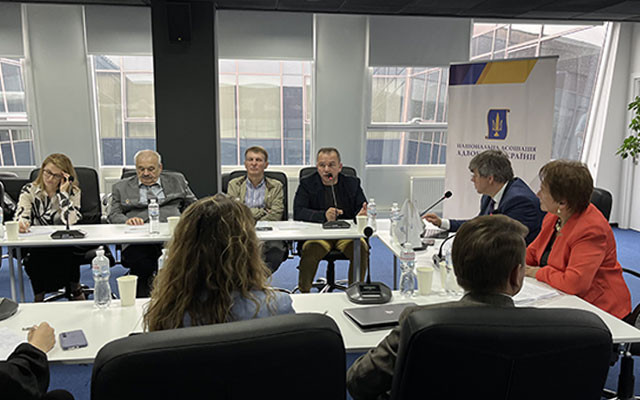
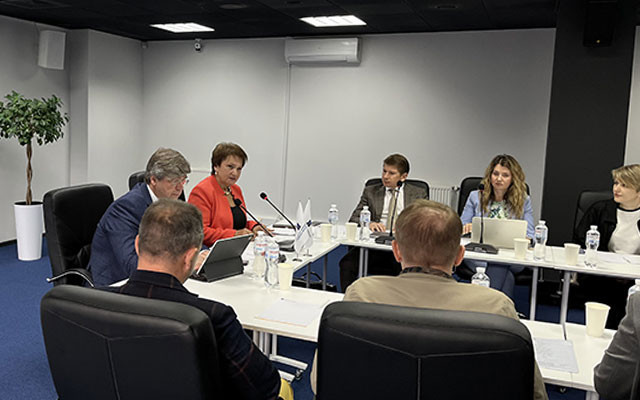
Participants in the roundtable discussion titled «Forensic medical examination: from assessing the severity of bodily injuries to identifying unidentified persons» examined changes in the organization of forensic medical examinations, the use of DNA-testing, the determination of the severity of bodily injuries and the handling of medical records.
The event was organized by the UNBA Committees on expert support for the practice of law and on criminal law and procedure.
Opening the discussion, the chairman of the UNBA Committee on expert support for the practice of law Violleta Fedchyshyna, drew attention to organizational changes in the forensic medical examination system. According to her, in April 2026, the Ministry of Health reorganized the Main Bureau of Forensic Medical Examination and the Kyiv City Bureau of Forensic Medical Examination, after which, by Order No. 500 dated April 14, 2026, it approved a new version of the charter of the State Institution «Institute of forensic psychiatry and forensic medicine of the Ministry of Health of Ukraine». The practical significance of these changes for advocates is that the functions of the Main Bureau of Forensic Medical Examination have been transferred to the restructured Institute, which, she said, is now the leading scientific and methodological institution in this field.
At the same time, she emphasized that the forensic medical examination system has two levels of subordination: regional bureaus are administratively linked to local health authorities, while scientific and methodological support for forensic medical examination activities falls under the Ministry of Health’s system.
In a report on DNA-testing, forensic expert and professor at the O.O. Bogomolets National Medical University Andriy Bilyakov explained that this is a highly specialized field within the forensic medical system, handled by immunologists in the departments of forensic medical immunology. According to him, such findings are used in criminal proceedings; therefore, in addition to the final result, an advocate should also understand what material was used and what methodology was employed to obtain it.
The speaker focused separately on DNA sources. For living individuals, the standard method of obtaining material is cells from the oral mucosa. Hair may be suitable for testing only if the root is present, and in the case of fingernails, it is not the cut nail plate that is significant, but the subungual contents. In traffic accident cases, according to the expert, investigators collect swabs from the steering wheel, gearshift lever, or car door handles. However, not every contact with an object leaves behind sufficient biological material.
That is why, A. Bilyakov explained, the completeness of the diagnostic panel — that is, the number of DNA regions analyzed — as well as the statistical probability of a match stated in the report are crucial for DNA analysis. And if the material was incomplete or damaged, a match in the table does not yet mean an indisputable identification of the individual.
A forensic expert at the Institute of Forensic Psychiatry and Forensic Medicine and a professor at the O.O. Bogomolets National Medical University Boris Mikhailichenko expanded on the topic of DNA testing by addressing the issue of biological material quality. According to him, when evaluating a report, it is not only the fact that cells with nuclei were detected that matters, but also their number and the amount of DNA suitable for analysis. If these indicators are not provided, this may serve as grounds for raising additional questions regarding the study.
In his report on determining the severity of bodily injuries, B. Mykhailichenko explained that an expert assesses not only the fact of the injury itself but also its nature, course, and consequences. Clinical data, laboratory indicators, and the results of diagnostic tests are used for this purpose. A significant portion of such expert evaluations is based on medical records, which must therefore allow for a reconstruction of the individual’s condition and the course of treatment: they must contain a description of the injury, laboratory and diagnostic test results, prescription sheets, and other data necessary for a comprehensive assessment.
The expert also noted that standard healing times are taken into account when determining the severity of injuries. For example, a typical wound usually heals within 10–14 days; therefore, a prolonged hospital stay does not in itself determine the severity of the injury without analyzing the reasons for that stay. He specifically addressed the assessment of blood loss and traumatic brain injury, for which laboratory results and follow-up examinations are crucial.
During the discussion on medical documentation, the experts specifically addressed situations where original documents are required for the expert examination, but some of the information exists in electronic form or is submitted as a printout. The experts noted that they work with the materials submitted in accordance with procedural requirements: if copies, excerpts, or printouts are included in the case file and provided to the expert, they are used during the examination. At the same time, the expert does not independently determine how these documents were obtained, whether they are properly identified, or whether they correspond to the original data. If there are discrepancies in the materials provided—for example, regarding the location or nature of injuries — the expert may point them out in the expert opinion. Therefore, questions regarding the origin, ownership, and procedural formalities of medical documentation remain subject to evaluation by the parties and the court.
Summarizing the discussion, the participants noted that the evaluation of an expert opinion is not limited to its medical or methodological aspects. For an advocate, the procedural origin of the materials submitted to the expert is also significant: who received them, how they were introduced into the proceedings, and whether they can be identified as pertaining to a specific individual. It is precisely these issues that may be relevant to assessing the evidentiary value of the forensic medical expert opinion.
© 2026 Unba.org.ua Всі права захищені
"Національна Асоціація Адвокатів України". Передрук та інше використання матеріалів, що розміщені на даному веб-сайті дозволяється за умови посилання на джерело. Інтернет-видання та засоби масової інформації можуть використовувати матеріали сайту, розміщувати відео з офіційного веб-сайту Національної Асоціації Адвокатів України на власних веб-сторінках, за умови гіперпосилання на офіційний веб-сайт Національної Асоціації Адвокатів України. Заборонено передрук та використання матеріалів, у яких міститься посилання на інші інтернет-видання та засоби масової інформації. Матеріали позначені міткою "Реклама", публікуються на правах реклами.