
Advocates were briefed on the limits of professional interaction with a difficult client
When working with a difficult client, it is important for an advocate to maintain a professional role: to explain the situation, assess risks, and guide the client through the process, but not to take responsibility for the client’s emotions or decisions.
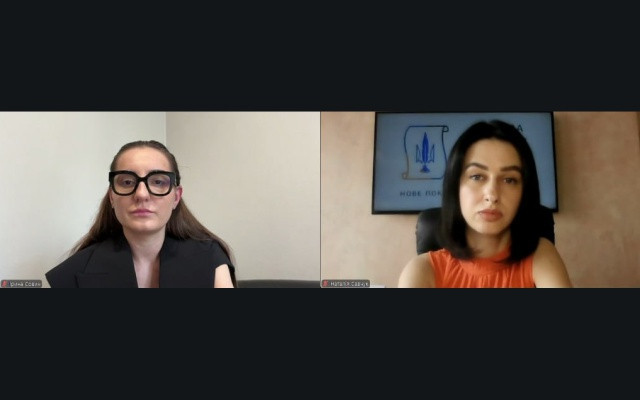
Advocates learned how to maintain their professional balance during a thematic webinar organized by the UNBA NextGen in the Volyn region. The event was moderated by regional representative Natalia Savchuk and the speaker was Iryna Sovych, a neurologist and psychiatrist who is a member of the European Psychiatric Association.
N. Savchuk noted that in legal practice, the greatest challenge often comes not only from cases involving hundreds of pages of documents or complex legal provisions, but from people themselves. A client may come to an advocate with fears, feelings of anxiety, disappointment, or unrealistic expectations, while the advocate may feel pressure from constant calls or the need to be available 24/7.
She also pointed out that legal practice involves working with people under stress: when a person is in conflict, faces a threat or harm to their health, financial or reputational losses, or the risk of imprisonment. Therefore, it is important to help the client understand that the advocate and the client share a common goal.
At the same time, I. Sovych emphasized that an advocate is a legal expert with a clearly defined role (06:02–06:08). An advocate can explain the situation, suggest possible solutions, assess risks, and guide the client through the process, but cannot take responsibility for the client’s emotions or decisions.
When under severe stress, it is more difficult for a person to process information, analyze risks, remember details, and think critically. Therefore, in such communication, it is important to use short sentences, maintain a clear structure, repeat key points at a calm pace, and confirm agreements in writing.
I. Sovich cited phrases such as «I really need this» or «It’s not that hard for you to answer» as examples of how manipulation can sound in practice — an attempt to bypass direct agreement on terms and change the specialist’s behavior while ignoring their boundaries and conditions for cooperation. In such situations, it is important to steer the conversation back to the agreed-upon terms.
If a client displays aggression, it should not be taken as a personal challenge. If you start arguing your case, defending yourself, or raising your voice, you risk stepping out of your professional role. Instead, the speaker advised not to take aggression as a personal insult, not to react to the tone, not to get personal, and to focus on the substance of the issue.
When an advocate faces a client’s unrealistic expectations, they must remember that in most cases they cannot guarantee the outcome of the case, but they can guarantee a professional approach, compliance with the law, and high-quality work. Therefore, it is important to discuss at the very beginning of the collaboration what can be done, what the limitations and risks are, and what alternative scenarios might unfold.
Finally, the speaker highlighted three key principles for working with difficult clients: emotional neutrality, clear boundaries, and clarity regarding the professional role. Boundaries, she said, are effective only when they are established, articulated, documented, and consistently upheld. To this end, it is important to agree with the client at the outset of the collaboration on the format of communication, working hours, and the agreed-upon scope of work. If the client’s behavior systematically violates these boundaries and does not change after they have been established, this is no longer a matter of communication but a question of whether further collaboration is advisable.
© 2026 Unba.org.ua Всі права захищені
"Національна Асоціація Адвокатів України". Передрук та інше використання матеріалів, що розміщені на даному веб-сайті дозволяється за умови посилання на джерело. Інтернет-видання та засоби масової інформації можуть використовувати матеріали сайту, розміщувати відео з офіційного веб-сайту Національної Асоціації Адвокатів України на власних веб-сторінках, за умови гіперпосилання на офіційний веб-сайт Національної Асоціації Адвокатів України. Заборонено передрук та використання матеріалів, у яких міститься посилання на інші інтернет-видання та засоби масової інформації. Матеріали позначені міткою "Реклама", публікуються на правах реклами.