
The NACP’s clarification regarding the declaration of membership in the UNBA should be clarified – BCU
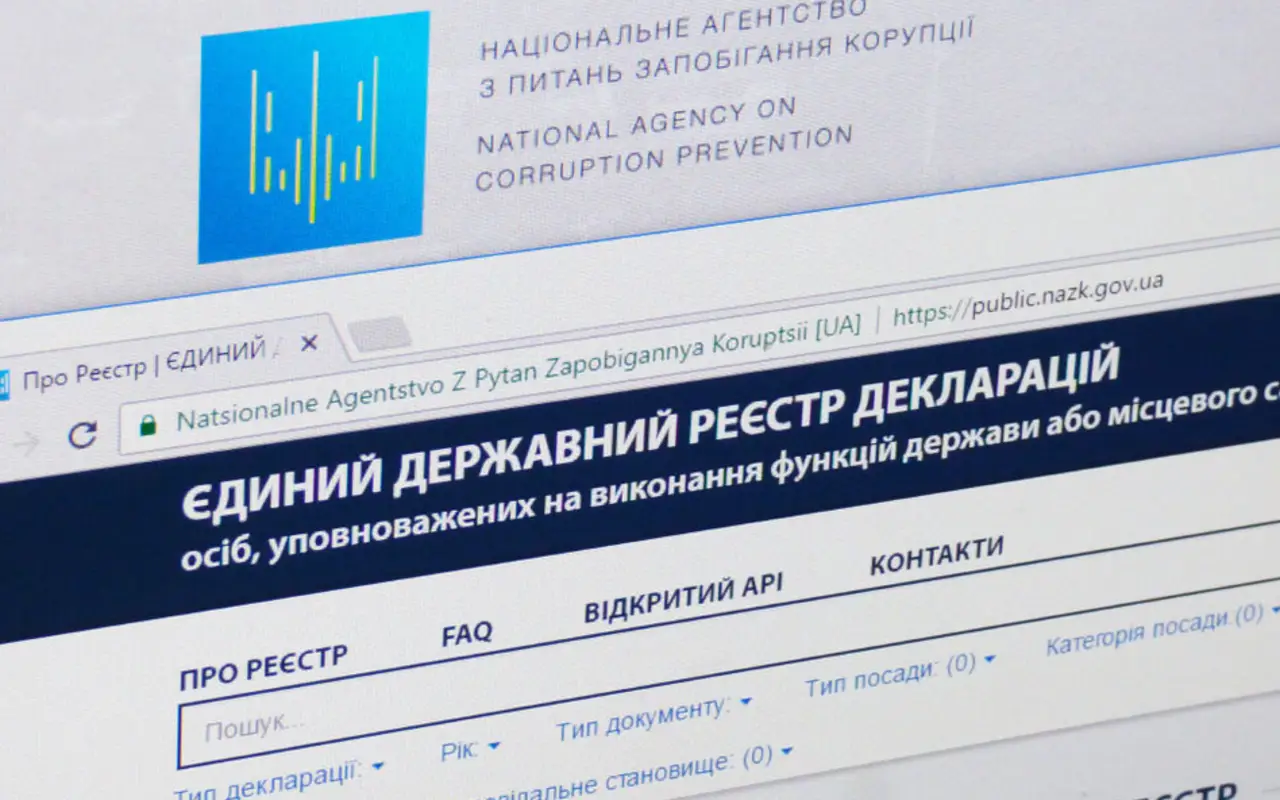
An advocate’s membership in the UNBA is an element of professional status arising by virtue of law, rather than a voluntary private membership in an association. Therefore, failure to disclose it in a declaration should not automatically lead to the conclusion of unethical conduct or the concealment of a private interest.
The Bar Council of Ukraine provided this clarification in its Decision No. 50 dated June 30, 2026, after reviewing the advocate’s appeal.
In presenting the matter, the President of the UNBA, BCU Lidiya Izovitova explained that the advocate had appealed to the UNBA after participating in a competition for a judgeship. According to the appeal, one of the factors that contributed to the negative assessment of the candidate’s integrity was the failure to disclose information about membership in the UNBA in the declaration.
L. Izovitova noted that an advocate’s membership in the UNBA is derived from their professional status. A person becomes an advocate after completing the procedure prescribed by law, receiving a license, and taking the oath, not after submitting an application for membership. The UNBA is a non-governmental, non-profit professional organization established to ensure the fulfillment of the tasks of bar self-governance. These objectives include ensuring the independence of the advocacy profession, protecting the professional rights of advocates, and guaranteeing the practice of law not exercising control over advocates.
For this reason, an advocate’s membership in the UNBA does not create a relationship of subordination, corporate dependence, private interest, or financial benefit. The Association has no discretion to deny an advocate such membership, and an advocate cannot, at their own discretion, practice law while not being a member of the UNBA.
Particular emphasis was placed on the transparency of an advocate’s status. Information about advocates is contained in the Unified Register of Advocates of Ukraine and is publicly verifiable. Therefore, the mere fact of membership in the UNBA does not constitute a hidden organizational connection and cannot automatically be used as an independent basis for a negative assessment of a person’s integrity as a candidate for the position of judge.
Furthermore, paragraph 12 of part one of Article 46 of the Law «On preventing corruption» (which requires individuals to disclose in their declarations information regarding membership in public, self-regulatory, or self-governing professional associations) must be applied with due regard to the purpose of financial oversight. This concerns the transparency of ties that may indicate a private interest, a conflict of interest, a financial benefit, or other influence on the performance of public functions. However, not every legal connection a person has with a particular institution has independent anti-corruption significance.
Therefore, in the absence of a direct and unambiguous provision regarding the procedure for disclosing an advocate’s membership in the UNBA as an element of professional status in the declaration, this provision must be applied in accordance with the principle of legal certainty and the interpretation most favorable to the individual.
Failure to indicate in the declaration that an advocate is a member of the UNBA, without the establishment of other legally significant circumstances, does not constitute an independent basis for concluding that there was concealment of information, misconduct, or intentional submission of false information.
Based on the results of its review, the BCU decided to request the NACP to clarify the guidance in the Knowledge Base regarding the declaration of advocates’ membership in the UNBA.
The NACP’s advisory clarifications regarding the declaration of membership in the UNBA do not contain legal norms and cannot expand the scope of paragraph 12, part 1, of Article 46 of the Law «On preventing corruption» beyond the boundaries of the law or create automatic negative consequences for an individual in a competitive selection process.
The clarification must take into account the specific professional and legal nature of this membership, its establishment by law, and its distinction from voluntary private membership. A copy of the decision must also be sent to the bodies conducting competitive procedures for the appointment of judges. At the same time, the BCU noted that the subject of consideration was not a review of the completeness or accuracy of V. Kovalishkin’s declaration or an assessment of the integrity of a specific candidate within the framework of the competitive selection process.
The BCU applied a similar approach in Decision No. 51, which concerns individuals whose right to practice law has been suspended. In that decision, the Council took the same position: membership in the UNBA has a specific professional and legal nature, arises by virtue of law, and is not voluntary private membership. At the same time, in such cases, the suspended status of membership must also be taken into account in accordance with the UNBA Charter.
© 2026 Unba.org.ua Всі права захищені
"Національна Асоціація Адвокатів України". Передрук та інше використання матеріалів, що розміщені на даному веб-сайті дозволяється за умови посилання на джерело. Інтернет-видання та засоби масової інформації можуть використовувати матеріали сайту, розміщувати відео з офіційного веб-сайту Національної Асоціації Адвокатів України на власних веб-сторінках, за умови гіперпосилання на офіційний веб-сайт Національної Асоціації Адвокатів України. Заборонено передрук та використання матеріалів, у яких міститься посилання на інші інтернет-видання та засоби масової інформації. Матеріали позначені міткою "Реклама", публікуються на правах реклами.