
The Verkhovna Rada explained why the section on advocacy should be removed from the anti-corruption strategy
The section on advocacy and legal aid in the draft anti-corruption strategy for 2026–2030 goes beyond the scope of anti-corruption policy and is inconsistent with the constitutional guarantees of the independence of the legal profession.
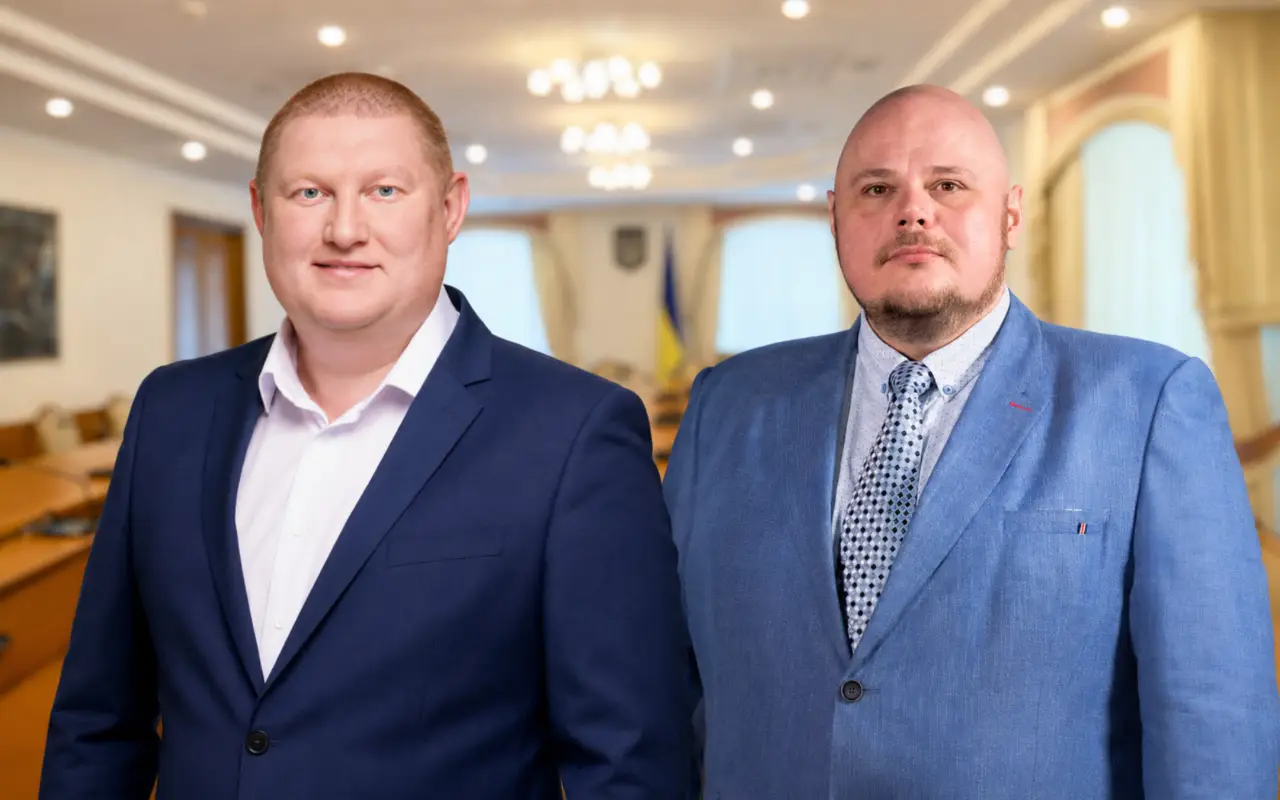
This was emphasized by chairman of the Subcommittee on the organization and activities of the advocacy and legal aid of the Verkhovna Rada Committee on legal policy Volodymyr Vatras, during a Committee meeting on July 8, 2026.
The meeting considered draft laws on the principles of state anti-corruption policy for 2026–2030: No. 15230, submitted by MP Anastasia Radina; No. 15230-1, submitted by the Cabinet of Ministers of Ukraine; and No. 15230-2, submitted by Petro Poroshenko and other MPs.
V. Vatras noted that he supports the anti-corruption strategy as a whole. At the same time, he said, Section 2.3, «Advocacy and legal policy», which is substantively identical in all three draft laws «does not stand up to constitutional scrutiny».
He pointed out that the seven expected strategic outcomes of this section effectively regulate the internal affairs of the legal profession. Specifically, these include the voting procedures for advocates, term limits and restrictions on serving in bar self-governing bodies for more than one consecutive term, the division of powers between the Bar Council of Ukraine and regional bar councils, the format of the qualifying exam, the continuing education system, the list of disciplinary offenses and sanctions, as well as budgets, procurement, and audits of funds generated from advocates’ own dues.
«There are no public funds, no public functions, and no entities required to file declarations here — not a single point of overlap with the subject matter of the Law «On preventing corruption», - the MP noted.
The second argument concerned Article 131-2 of the Constitution, which guarantees the independence of advocacy and stipulates that the foundations of advocacy’s organization and activities are determined by law. However, according to him, the Constitution authorizes the law to define the foundations the basic principles rather than the operational details of election procedures, training, or budgets. «Even when passing a law, Parliament has no right to decide on behalf of the professional community what constitutes the essence of self-governance, - V. Vatras emphasized. - The internal regulatory framework of the profession falls within the sphere of self-governance».
The MP also outlined the limits of the NACP’s authority in shaping anti-corruption policy. He noted that the agency is authorized to develop a draft anti-corruption strategy. However, the substantive scope of such a policy is defined by the Law «On preventing corruption» and pertains to the public sector.
In his view, the logic proposed by the NACP «where abuse is possible, there should be an anti-corruption strategy» does not comply with Part 2 of Article 19 of the Constitution of Ukraine. Moreover, under such an approach to strategy, the internal structure of any self-governing profession or civic association could be included.
Following his remarks, V. Vatras proposed that the Committee’s conclusion state that Section 2.3, «Advocacy and legal policy», is inconsistent with Articles 131-2 and 19 of the Constitution of Ukraine, and that the main Committee be recommended to exclude it when preparing the draft text for the first reading.
The position of his colleague was supported by the chairman of the Subcommittee on the adaptation of Ukrainian legislation to EU law Mykola Stefanchuk. He emphasized that advocates, as a professional community, are not subject to the Law «On preventing corruption» and that regulating advocacy through anti-corruption legislation would set a dangerous precedent for other professions. According to him, individual advocates may be subject to oversight in specific situations, but this does not justify «total control over the entire professional community».
The Vice President of the UNBA, BCU Valentin Gvozdiy recalled that the position regarding the Anti-Corruption Strategy as it pertains to advocacy is enshrined in Decision No. 158 of the Bar Council of Ukraine dated December 31, 2025.
He noted that advocacy does not shy away from change and is ready to work on improving the relevant law within the framework of parliamentary procedure. At the same time, the issues covered by the section on advocacy in the draft Anti-Corruption Strategy elections of self-governing bodies, the qualifying exam, continuing education, disciplinary proceedings, cost estimates, and audits are funded by the advocates’ own dues, without budgetary funds or public functions. «This is the internal organization of a non-governmental, self-governing institution — a status confirmed by the Constitutional Court in its Decision No. 4-r(II)/2025 of September 10, 2025. Such an institution cannot be the subject of state anti-corruption policy», - stated V. Gvozdiy.
At the same time, he noted, the document was drafted without the participation of the UNBA, which is legally authorized to represent advocates in Ukraine. The event to discuss the draft, organized by the National Agency for Corruption Prevention in late 2025, took place without adequate representation of the advocacy profession. Therefore, its results cannot replace consultations with the advocacy profession.
V. Gvozdiy also emphasized that in criminal proceedings, the state and the advocate are procedural adversaries. «And when government authorities establish electoral procedures, disciplinary mechanisms, and financial oversight for the defense, a conflict of interest arises that is incompatible with Council of Europe standards», - warned the Vice President of the UNBA, BCU.
In this regard, he cited the relevant Recommendation R(2000)21 and the Convention on the Protection of the Profession of Advocate, which Ukraine signed on March 9, 2026.
© 2026 Unba.org.ua Всі права захищені
"Національна Асоціація Адвокатів України". Передрук та інше використання матеріалів, що розміщені на даному веб-сайті дозволяється за умови посилання на джерело. Інтернет-видання та засоби масової інформації можуть використовувати матеріали сайту, розміщувати відео з офіційного веб-сайту Національної Асоціації Адвокатів України на власних веб-сторінках, за умови гіперпосилання на офіційний веб-сайт Національної Асоціації Адвокатів України. Заборонено передрук та використання матеріалів, у яких міститься посилання на інші інтернет-видання та засоби масової інформації. Матеріали позначені міткою "Реклама", публікуються на правах реклами.