
How to hear a child in court without coercion or psychological harm – recommendations presented
A child’s participation in resolving a family dispute does not necessarily require their physical presence in the courtroom. The format of the hearing must be voluntary, understandable, and safe, and a psychologist should be involved in the process if necessary.
Chairman of the UNBA family law Committee and an expert invited by the Interagency Coordination Council on Juvenile Justice Larisa Gretchenko spoke about practical approaches to ensuring this right during the roundtable discussion «Introduction of specialization for judges in family and children’s cases: experience and prospects».
The event was organized by the Supreme Court in collaboration with the Interagency Coordination Council and the National School of Judges of Ukraine, with support from the UNICEF Office in Ukraine as part of a project by the NGO «All-Ukrainian Public Center «Volunteer».
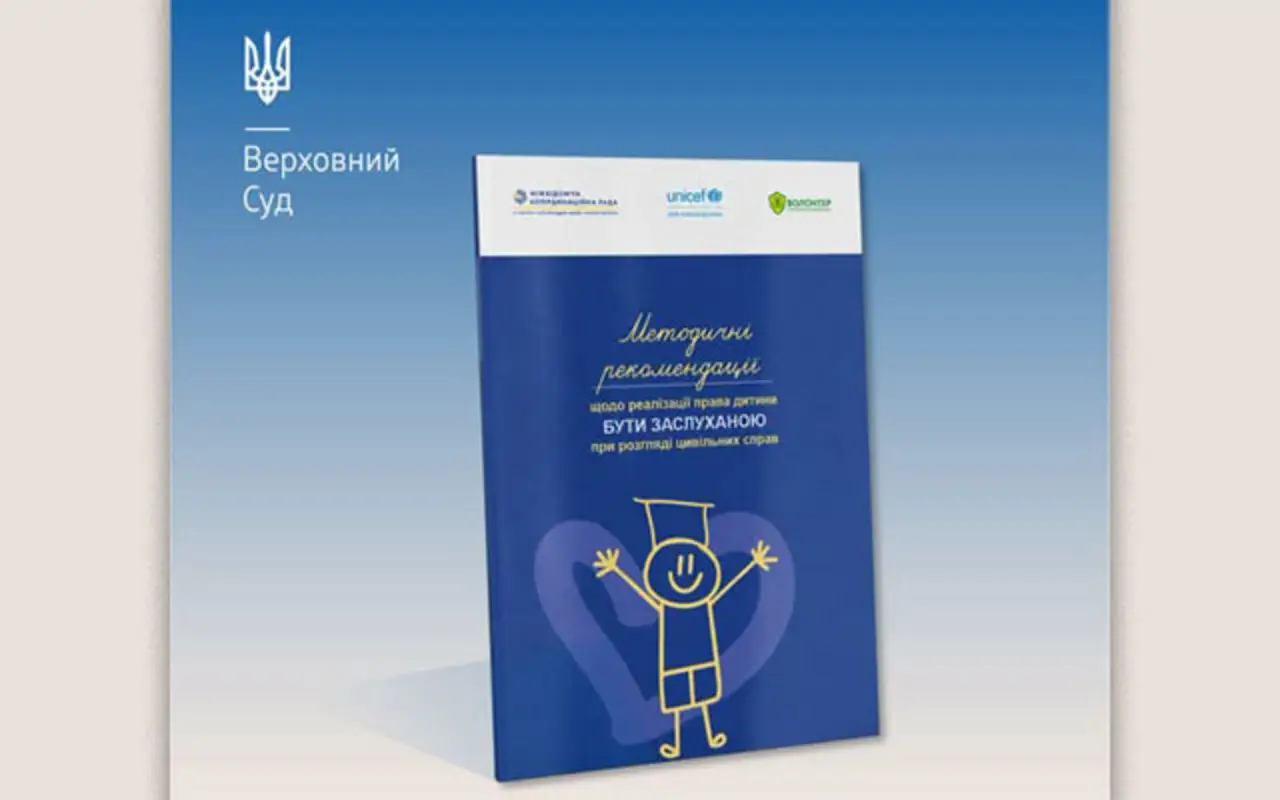
During the roundtable, Methodological recommendations on the implementation of a child’s right to be heard in civil proceedings were presented. L. Gretchenko, who was delegated by the UNBA to serve on the relevant working group under the Interagency Coordination Council, was one of the co-authors of the publication.
The recommendations are based on ten principles. These include voluntary and informed participation; full and effective participation; age- and maturity-appropriate participation; confidentiality and a safe environment; a form of communication that is easy to understand; professional training for specialists; feedback; a non-discriminatory approach; and ensuring the best interests of the child.
According to L. Gretchenko, the law does not establish a minimum age for exercising the right to be heard. Therefore, young age alone cannot serve as grounds for refusing to ascertain the child’s views.
The advocate paid special attention to the role of the psychologist. According to her, the psychologist does not represent the child, does not take sides with the parties to the dispute, and does not make procedural decisions. Prior to the hearing, the psychologist may assess the child’s readiness, explain the purpose and procedure for participation, and provide recommendations regarding conducive conditions for communication. During the hearing, the psychologist helps formulate questions in language the child can understand, explains the course of the proceedings, provides psychological and emotional support, and, if necessary, helps the court understand the child’s answers and behavior. At the same time, the psychologist’s procedural status in such cases is not defined by law, which requires separate regulation.
At the same time, L. Gretchenko emphasized that the judge plays a decisive role in ensuring the child’s right to be heard. It is the judge who chooses the method and location of the hearing, decides whether to involve a psychologist, ensures that no pressure is exerted, and evaluates the child’s statements along with the other case materials.
The child’s opinion must be heard and duly taken into account; however, it is not the sole basis for a decision. If the court issues a decision contrary to the position expressed, the child should be given a clear explanation of the reasons and informed of exactly how their views were taken into account.
© 2026 Unba.org.ua Всі права захищені
"Національна Асоціація Адвокатів України". Передрук та інше використання матеріалів, що розміщені на даному веб-сайті дозволяється за умови посилання на джерело. Інтернет-видання та засоби масової інформації можуть використовувати матеріали сайту, розміщувати відео з офіційного веб-сайту Національної Асоціації Адвокатів України на власних веб-сторінках, за умови гіперпосилання на офіційний веб-сайт Національної Асоціації Адвокатів України. Заборонено передрук та використання матеріалів, у яких міститься посилання на інші інтернет-видання та засоби масової інформації. Матеріали позначені міткою "Реклама", публікуються на правах реклами.