
L. Izovitova Identified 4 threats to advocacy amid security restrictions
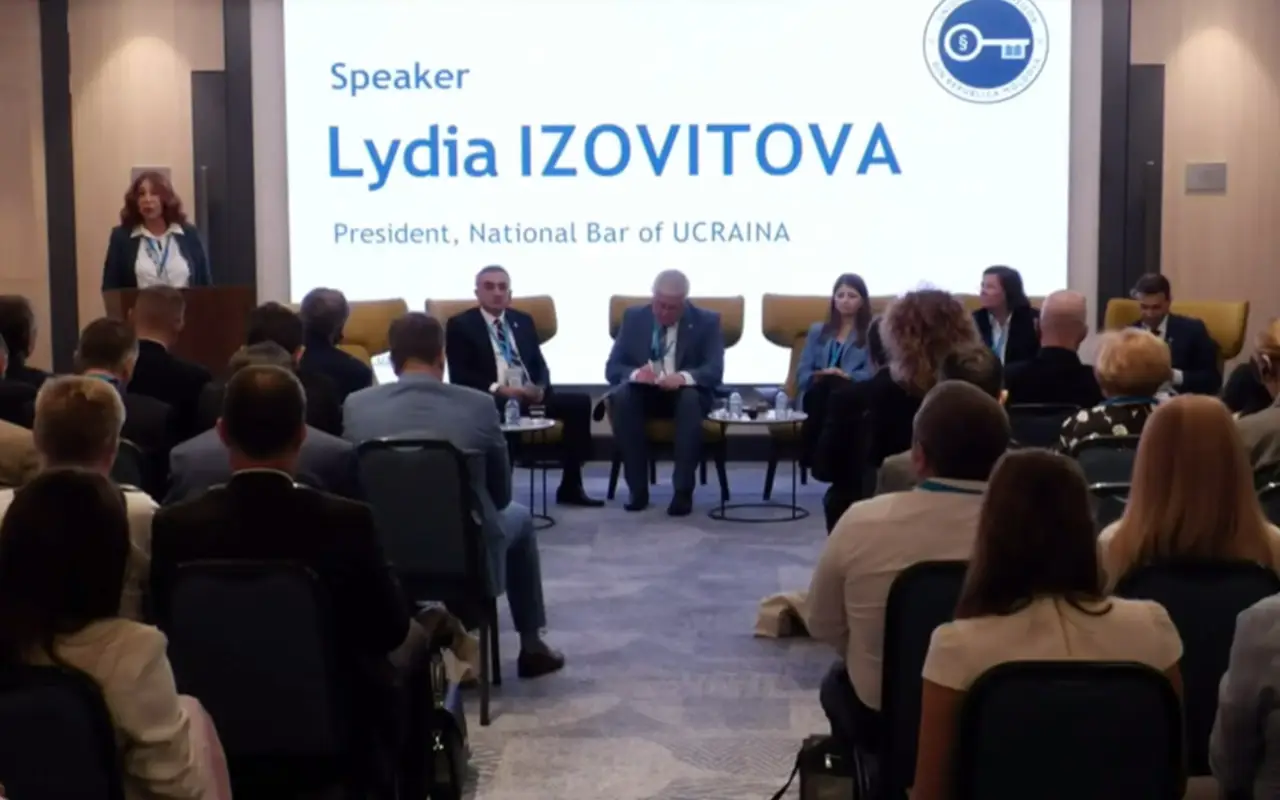
National security cannot be built on the vulnerability of individuals, and extraordinary circumstances do not negate the right to protection.
This was emphasized by the President of the UNBA, BCU Lidiya Izovitova during the 4th International conference of the bar association of the Republic of Moldova «Security and freedom: advocates as defenders against abuse of power», which is currently taking place in Chisinau.
She noted that security and freedom are often pitted against each other, but professional experience shows otherwise: security without freedom degenerates into tyranny, while freedom without security remains a mere promise on paper. It is the law upheld by advocates that holds them together.
And even extraordinary circumstances do not nullify the right to a defense, emphasized the head of the Ukrainian advocacy association. At the same time, abuse of power most often manifests itself in the form of «temporary», «technical» or «security» restrictions.
L. Izovitova identified four areas in which such restrictions are most noticeable.
The first concerns attorney-client privilege. In May 2026, a departmental order prohibited defense advocates in cases involving crimes against the foundations of national security from bringing their own computer equipment into pretrial detention centers. Instead, they were offered the use of the facility’s equipment. The Bar Council of Ukraine is publicly seeking the repeal of this regulation. The Ombudsman has supported the Bar Council of Ukraine’s position.
The President of the UNBA, BCU identified the conflation of the advocate with the client as the second risk. In cases sensitive to the state, providing defense is beginning to be perceived as solidarity with the accused. According to L. Izovitova, a state that forgets that an advocate is not identical to a client leaves its own citizens without protection.
The third issue is the adoption of decisions regarding the legal profession without the participation of its representatives. The aforementioned restriction on advocates’ use of their own computer equipment in pretrial detention centers has become a fait accompli for advocacy. L. Izovitova is convinced that regulations defining the conditions for the protection of individuals cannot be adopted without the participation of those who provide that protection. The self-governance of the advocacy community is not a corporate privilege but an institutional safeguard against abuse.
The President of the UNBA, BCU identified the gap between international standards and their legal enforceability as the fourth problem. The Council of Europe Convention on the Protection of the Profession of Advocate is the first binding international treaty aimed at protecting those who defend others. Moldova was among the first countries to sign the Convention in May 2025, and Ukraine signed it in March 2026. However, the document has yet to be ratified.
According to L. Izovitova, the common thread among these threats is that the consequences of violating an advocate’s rights are felt by their client, the court, and ultimately society as a whole.
The President of the UNBA, BCU also thanked her Moldovan colleagues for supporting Ukrainians since the start of the full-scale aggression and recalled that Moldova was among the first to take in people from Ukraine.
© 2026 Unba.org.ua Всі права захищені
"Національна Асоціація Адвокатів України". Передрук та інше використання матеріалів, що розміщені на даному веб-сайті дозволяється за умови посилання на джерело. Інтернет-видання та засоби масової інформації можуть використовувати матеріали сайту, розміщувати відео з офіційного веб-сайту Національної Асоціації Адвокатів України на власних веб-сторінках, за умови гіперпосилання на офіційний веб-сайт Національної Асоціації Адвокатів України. Заборонено передрук та використання матеріалів, у яких міститься посилання на інші інтернет-видання та засоби масової інформації. Матеріали позначені міткою "Реклама", публікуються на правах реклами.