
When working with sole proprietorships leads to business fragmentation: criteria and recommendations
What criteria do regulatory and law enforcement agencies use to identify artificial business fragmentation? How does this model differ from franchising? And when can tax optimization lead to criminal liability?
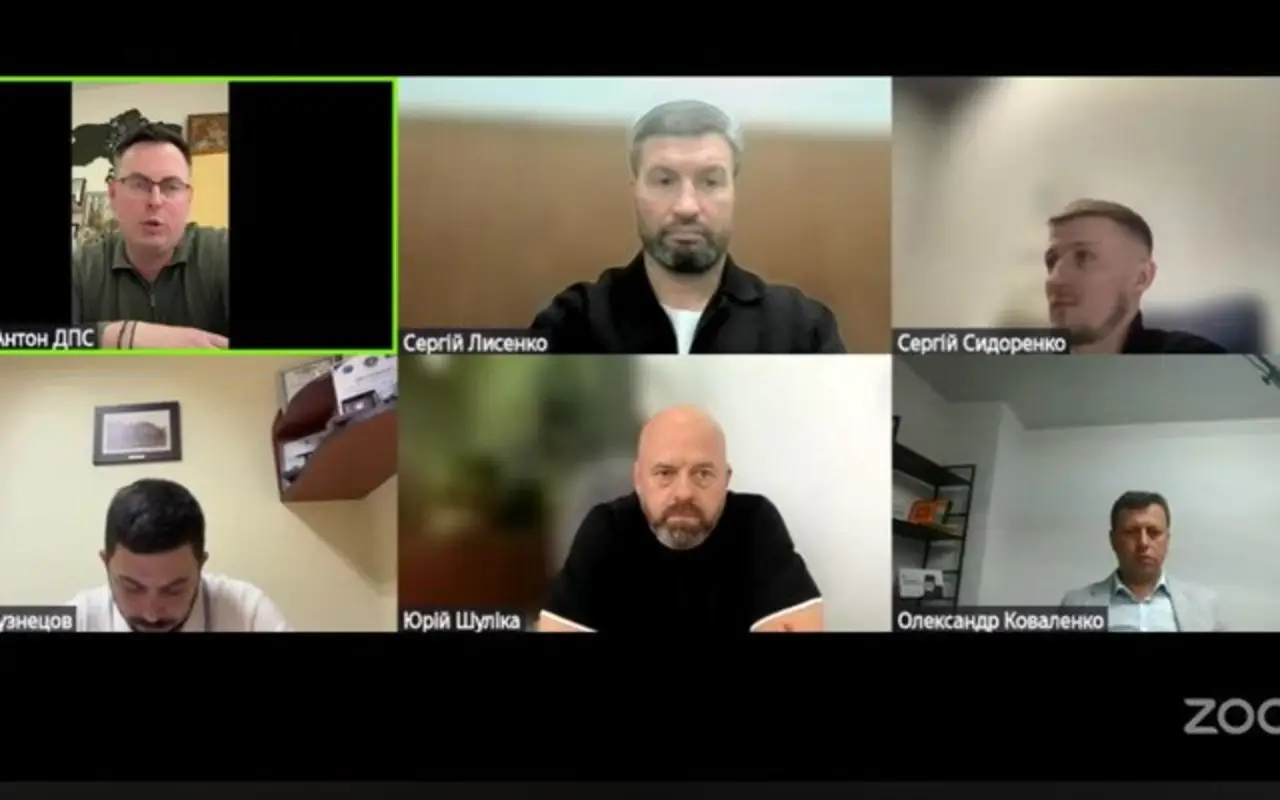
Advocates and government officials sought answers to these questions during the roundtable discussion «Business fragmentation: tax optimization or violation?», organized by the UNBA Committee on business and investor protection.
Opening the discussion, the Committee’s deputy chairman Serhiy Lysenko noted that the use of multiple business entities does not in itself constitute fragmentation. What matters are the purpose for which they were created and their actual independence. Signs of a violation may arise when a single business is artificially divided among formally independent entities to obtain a tax advantage, and their economic independence is absent or significantly limited.
However, there is currently no official definition of business fragmentation. This was confirmed by director of the Department for the prevention of financial transactions related to the legalization of proceeds from crime at the State Tax Service Anton Zamyatin. The State Tax Service views business fragmentation as the artificial division of the activities of large and medium-sized profitable organizations involving dozens or hundreds of sole proprietors operating under the simplified tax system.
Among the indicators of such schemes, he cited the replacement of sole proprietorships upon reaching the income threshold, filing reports from a single IP address, shared addresses, brands, and payment terminals, combining the status of an entrepreneur with employment at a company, as well as a single decision-making center. At the same time, one or two signs do not yet confirm the existence of a scheme: the circumstances must be assessed as a whole.
According to A. Zamyatin, the State Tax Service has prepared proposals to enshrine in the Tax Code a definition of business fragmentation, its characteristics, and the liability of participants. Representatives of the service also reported on their joint work with the Ministry of Finance to develop amendments to the simplified taxation system, specifically mechanisms to prevent the use of business fragmentation schemes.
An investigator with the Economic Security Bureau Serhiy Sydorenko suggested evaluating such models as potential abuses of the right to the simplified taxation system. During his analysis, he focuses primarily on the flow of assets: who actually receives the income, who controls it, and whether the financial situation of formally independent sole proprietors is improving. If income is accumulated by another person, this may indicate that the entrepreneurs are not the actual controllers of those funds.
A member of the UNBA Committee Oleksandr Kovalenko emphasized the issue of distinguishing between business fragmentation and franchising. After all, he noted, a shared brand, suppliers, accountant, lawyers or IP address for filing reports can also exist within a legitimate franchising model.
The difference lies in the fact that a franchisee independently makes management decisions, manages revenue, operates at its own risk, and has the personnel and material and technical resources necessary for the declared business activities.
To confirm the authenticity of such a model, the advocate recommended entering into and actually fulfilling contracts on market terms, retaining records, payment documents, and other source documents, as well as conducting a legal audit to verify compliance with the criteria for franchise fragmentation. A representative of the State Tax Service added that the mere existence of a commercial concession agreement does not in itself eliminate risks if payments under it are not made, the compensation does not correspond to the volume of activity, or the franchisee lacks actual independence.
Committee Council member Dmytro Mamchik agreed that a shared brand, a single address, outsourced accounting, revenue approaching a set limit, or working with a single counterparty can serve as indicators for analysis. However, each additional assessment must specify the specific violated provision, the taxpayer, the transaction, the tax period, and the calculation. Liability arises not from the «fragmentation» itself, but from the established violation of a specific provision regarding a particular taxpayer.
Speaking about the introduction of a general anti-abuse rule (GAAR), D. Mamchik proposed applying a cumulative test. The tax authority must simultaneously prove that the purpose of the transaction was to obtain a tax benefit, that such a benefit is contrary to the purpose of a specific provision, and that the transaction lacks reasonable commercial justification. The mere choice of a legally prescribed form of business activity, tax rate, tax exemption, or tax regime should not be sufficient grounds for concluding that abuse has occurred.
The secretary of the Committee Kirill Kuznetsov assessed the criminal law implications. For liability under Article 212 (tax evasion) of the Criminal Code, it must be established that funds in the relevant amount were not actually remitted to the budget and that there was intent. The absence of proven intent even in the presence of formal signs of fragmentation and additional assessments based on audit results keeps the matter within the realm of tax law rather than criminal law.
According to K. Kuznetsov, the evidence of centralized control cited in the pre-trial investigation materials includes a shared client base, the absence of entrepreneurial risk among sole proprietors, the concentration of revenue with a single beneficiary, and the centralized storage of electronic keys. S. Sidorenko noted that an individual entrepreneur who has transferred their electronic signature or personal data to third parties and does not actually carry out the declared business activities may be considered by investigators as an accomplice to the scheme’s organizer. At the outset of the proceedings, such a person may have the status of a witness; however, their procedural status will depend on the established facts and evidence.
© 2026 Unba.org.ua Всі права захищені
"Національна Асоціація Адвокатів України". Передрук та інше використання матеріалів, що розміщені на даному веб-сайті дозволяється за умови посилання на джерело. Інтернет-видання та засоби масової інформації можуть використовувати матеріали сайту, розміщувати відео з офіційного веб-сайту Національної Асоціації Адвокатів України на власних веб-сторінках, за умови гіперпосилання на офіційний веб-сайт Національної Асоціації Адвокатів України. Заборонено передрук та використання матеріалів, у яких міститься посилання на інші інтернет-видання та засоби масової інформації. Матеріали позначені міткою "Реклама", публікуються на правах реклами.