
The contract provides for a video conference, but the court requires in-person appearance: how should an advocate proceed?
Many advocates today work remotely; therefore, their agreements with clients provide for the provision of legal assistance via videoconferencing. However, this form of work does not, in and of itself, create an unconditional obligation for the court to conduct every hearing via videoconference.
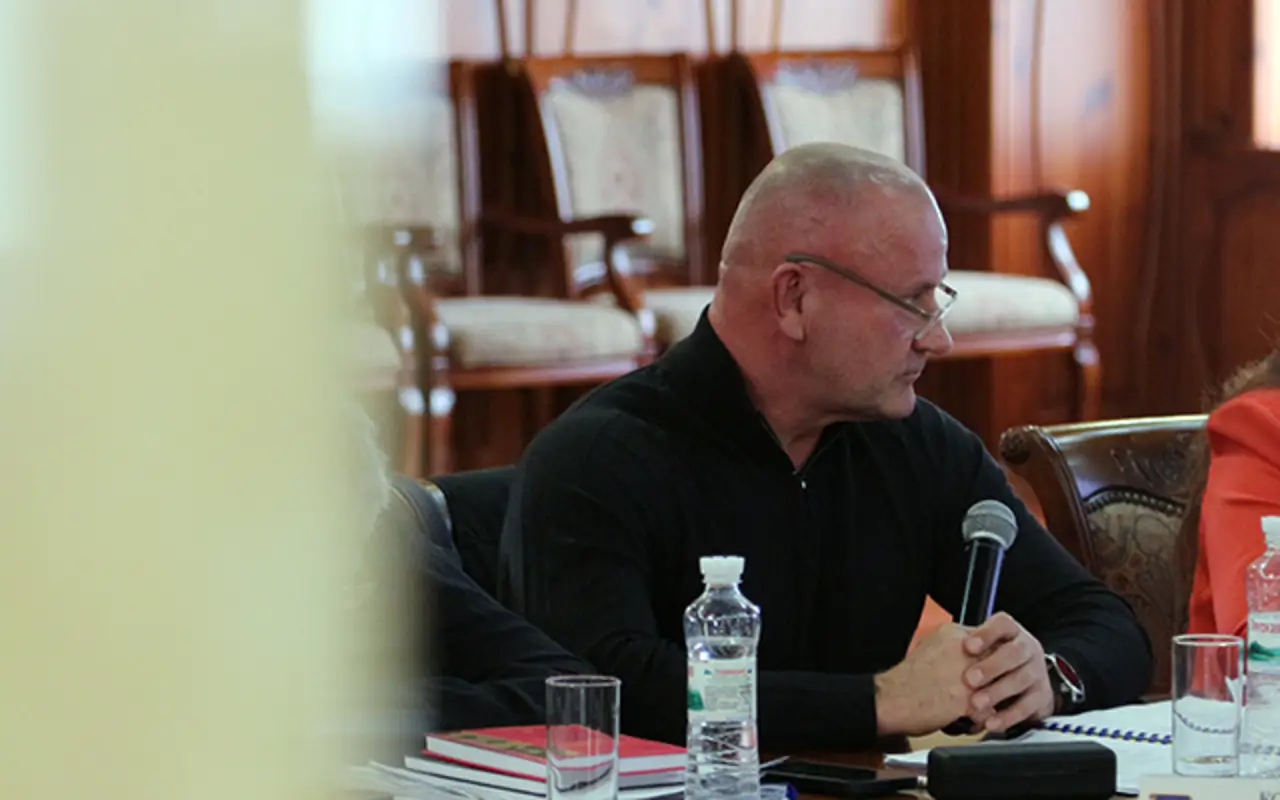
The Bar Council of Ukraine provided guidance on how an advocate should proceed when a judge requires in-person attendance at a hearing, based on the results of its review of a request from advocate Oleg Nesinov. The issue was presented by a representative of advocates from the Chernivtsi region within the Bar Council of Ukraine Anatoliy Telman.
He emphasized the need to distinguish between the contractual relationship between an advocate and a client, the procedural relationship between the advocate, the court, and other participants in criminal proceedings, and the court’s authority to determine the procedure for conducting the hearing.
The types of legal assistance, the scope of the retainer, the limits of the advocate’s authority, and the procedure for the advocate’s participation in the proceedings are determined by the contract. Therefore, the advocate is obligated to act within the limits of the authority granted by the client, taking into account the restrictions established by the contract.
At the same time, the court is not a party to this agreement and is not bound by its terms when determining the procedural order for conducting a specific hearing. Upon being admitted to participate in criminal proceedings, the advocate acquires the procedural status of a defense counsel, and the procedure for their participation is determined by the provisions of the Code of Criminal Procedure and the court’s procedural decisions.
Article 336 of the Code of Criminal Procedure provides for the possibility of conducting court proceedings via videoconference, including outside the courtroom using a participant’s own technical equipment. This form constitutes a lawful means of exercising the right to participate in the proceedings; however, it does not mean that every participant has an unconditional right to demand that any hearing be held exclusively remotely.
The court decides to conduct a video conference on its own initiative or upon a participant’s motion. In doing so, the court takes into account the specific nature of the procedural action, the need to ensure the right to defense, the possibility of confidential communication between the defense attorney and the client, the quality of the connection, and other circumstances of the case.
Therefore, a provision in the agreement regarding participation exclusively via remote means cannot be arbitrarily disregarded by the advocate. At the same time, this provision does not, in and of itself, deprive the court of its authority to determine the procedure for conducting a specific hearing.
If the court deems the advocate’s in-person participation necessary, such a decision must be made within the limits of the court’s statutory authority and must be duly substantiated. A general reference to the fact that the advocate is required to appear in court, without considering the motion for a videoconference, assessing the circumstances set forth therein, and issuing a reasoned ruling, is insufficient.
The defense attorney’s obligation to appear to participate in procedural actions, as provided for in Article 47 of the Code of Criminal Procedure, must be interpreted in conjunction with the provisions of Article 336 of the Code. It implies the need to ensure participation in accordance with the procedure established by law and the court, but cannot automatically be understood as an obligation to be physically present in the courtroom in every case where the law and the court permit videoconferencing.
Therefore, A. Telman noted, an advocate who is unable to appear in person must file a written motion for remote participation in a timely manner. The motion should cite Article 336 of the Code of Criminal Procedure, the terms of the agreement with the client, the circumstances justifying remote participation, and confirm the attorney’s readiness to use the appropriate technical equipment. Additionally, in his opinion, it is worth noting that remote participation is not intended to delay the proceedings and, if necessary, to propose other means of ensuring participation. In the event of a denial, the advocate should request that the court issue a reasoned ruling.
At the same time, the physical absence of an advocate from the courtroom cannot automatically be classified as a failure to properly perform professional duties. What matters is the timeliness of notifying the court, filing a motion for a videoconference, the existence of objective reasons, technical readiness to participate, and the absence of any intent to delay the proceedings.
At the same time, a court’s decision to forward a notice to the bar association or an assumption of a possible disciplinary offense does not constitute a decision to hold the advocate accountable. The existence of a disciplinary offense is determined exclusively by the competent bar self-governing body, which must examine all the circumstances and ensure the advocate’s right to explanation, defense, and appeal.
Following the review, the BCU adopted a clarification stating that a court may require an advocate’s in-person participation only within the limits of the powers granted by law, taking into account the circumstances of the case, and by issuing a duly reasoned procedural decision. If an advocate notified the court in advance, substantiated a motion for remote participation, was technically prepared for the hearing, and had no intention of delaying the proceedings, the mere fact of the advocate’s absence from the courtroom is not sufficient grounds for a finding of disciplinary misconduct.
© 2026 Unba.org.ua Всі права захищені
"Національна Асоціація Адвокатів України". Передрук та інше використання матеріалів, що розміщені на даному веб-сайті дозволяється за умови посилання на джерело. Інтернет-видання та засоби масової інформації можуть використовувати матеріали сайту, розміщувати відео з офіційного веб-сайту Національної Асоціації Адвокатів України на власних веб-сторінках, за умови гіперпосилання на офіційний веб-сайт Національної Асоціації Адвокатів України. Заборонено передрук та використання матеріалів, у яких міститься посилання на інші інтернет-видання та засоби масової інформації. Матеріали позначені міткою "Реклама", публікуються на правах реклами.