
The UNBA presented the key provisions of the future law on advocacy in Brussels
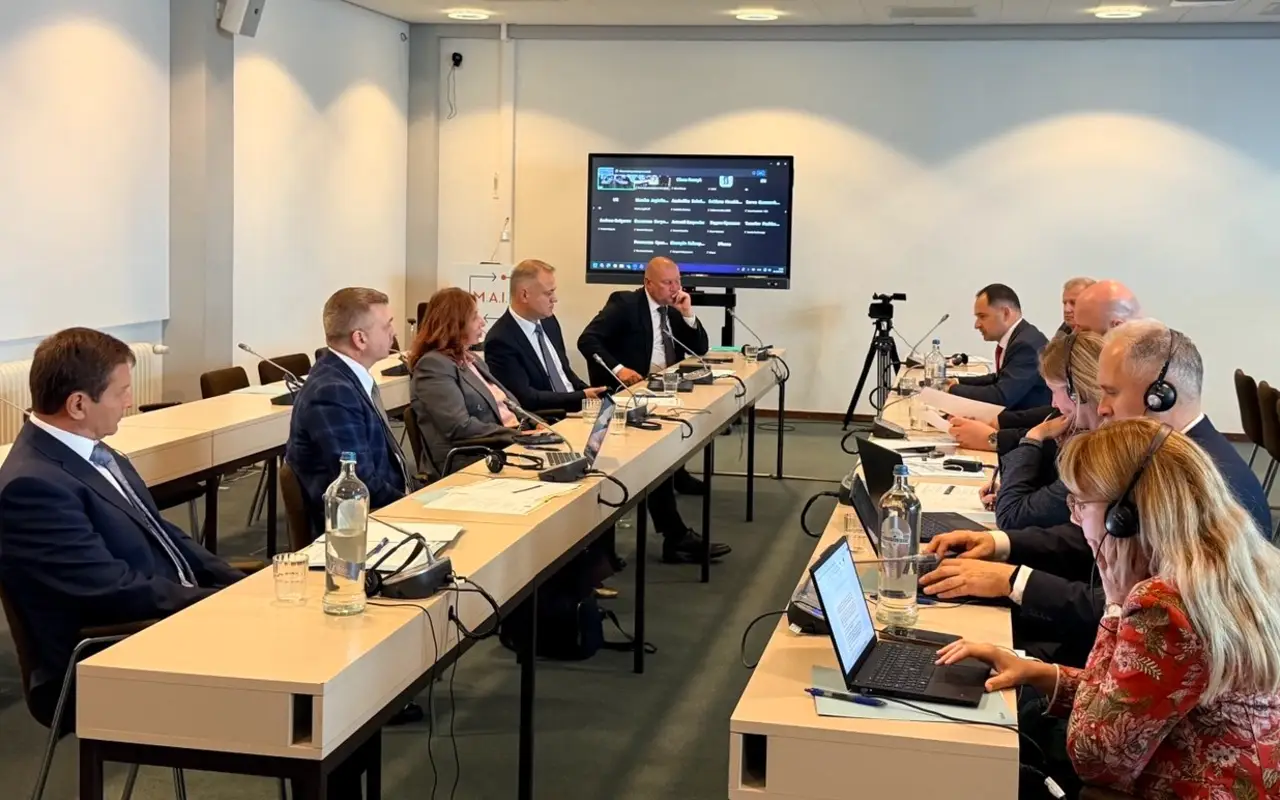
The Ukrainian National Bar Association presented its proposals for the upcoming law on advocacy, aligned with the Rule of Law Roadmap. The presentation covered topics such as access to the profession, self-governance, disciplinary procedures, professional development and guarantees for the practice of advocacy.
On October 1, a roundtable titled «Bar reform on Ukraine’s path to the EU: progress in implementing the Rule of Law Roadmap» was held in Brussels. The event was dedicated to presenting the recommendations of the Working Group on reforming bar legislation, developed in collaboration with international experts.
According to the President of the UNBA, BCU Lidiya Izovitova, the principles of the 2012 Law «On the advocacy and the practice of law» remain the foundation for these changes: a single national professional organization, bar self-governance, addressing issues of access to the profession and disciplinary responsibility within the bar, and professional rights and guarantees for advocates’ practice.
In her view, the current law remains up-to-date in its basic principles. However, it requires further development in light of changes in the justice system, technology, and judicial practice, as well as new challenges to the independence of advocates and negotiations regarding Ukraine’s EU membership.
The aim of drafting the new version of the relevant law was also to align the Ukrainian model with the standards of the Council of Europe Convention on the Protection of the Professions of Lawyer, particularly regarding the independence of the profession and professional organizations, professional secrecy, protection against undue interference, and fair disciplinary procedures.
L. Izovitova paid particular attention to institutional guarantees for the practice of advocacy, explaining that «all other changes make sense only when the advocate remains independent». She emphasized that the independence of the advocacy profession is, first and foremost, a guarantee for individuals who need protection particularly in their legal dealings with the state and who must be able to trust their advocate.
Another area of reform is continuing professional development. According to the President of the UNBA, BCU an advocate’s professionalism does not end with obtaining a license: changes in the law, judicial practice, and technology require ongoing training throughout one’s career. The goal is to ensure that individuals receive high-quality legal assistance from an advocate who maintains their competence.
Digitalization is viewed as an opportunity to modernize the infrastructure of the entire advocacy profession. In addition to testing for admission to the profession, digital tools are intended to be used in professional development, disciplinary proceedings, the work of self-governing bodies, matters related to attorney-client privilege, and the system of electronic registries. Such tools should ensure transparency, uniform rules, the recording of legally significant actions, and the preservation of decision histories, thereby reducing the scope for informal influence. At the same time, L. Izovitova cautioned that technology cannot replace an advocate’s professional experience, ethics, ability to argue a case and personal responsibility.
The President of the UNBA, BCU explained that certain thematic sections of the draft proposals were submitted to European bar associations for review. Colleagues were asked to verify whether the proposed solutions align with European principles: whether the independence of advocates is preserved, whether procedures are transparent, whether there is no excessive discretion, and whether powers are properly delineated and advocates are adequately protected. The feedback received helped refine the safeguards and improve the procedures.
Members of the Working Group presented specific proposals in the various areas of reform. The Vice President of the UNBA, BCU Oleksiy Kuchar spoke about access to the profession, advocate training and organizational forms of legal practice. The Vice President of the UNBA, BCU Valentin Gvozdiy, who moderated the event, elaborated on the concept of the organization of advocacy and bar self-governance.
In her thematic presentation, Lidiya Izovitova discussed disciplinary procedures, legal ethics and professional development. Chairman of the Committee on the protection of advocates’ professional rights and the implementation of guarantees for the practice of law of the Odesa Regional Bar Association Vadym Semenov spoke about the guarantees for the practice of law and the protection of advocates’ rights.
The legislative perspective of the reform was discussed during a separate session with parliamentarians — members of the Verkhovna Rada Committee on legal policy. The moderated discussion was attended by the deputy chairman of this Committee Ivan Kalaur, the chairman of the Subcommittee on the organization and activities of the advocacy and legal aid bodies Volodymyr Vatras, the chairman of the Subcommittee on political reform and constitutional law Maksym Dyrdin and chairman of the Subcommittee on the adaptation of Ukrainian legislation to the provisions of European Union Law (EU acquis) and the implementation of Ukraine’s international legal obligations in the field of European integration Mykola Stefanchuk.
The international expert panel focused on assessments and recommendations from European advocacy groups. It was attended by representatives of the Council of Bars and Law Societies of Europe (CCBE), the Bar Council of Italy, the National Bar Council of France, the German Federal Bar Association, the Czech Bar Association and the Lithuanian Bar Association, as well as the Mission of Ukraine to the EU.
Read more about the event in upcoming posts on the UNBA website.
© 2026 Unba.org.ua Всі права захищені
"Національна Асоціація Адвокатів України". Передрук та інше використання матеріалів, що розміщені на даному веб-сайті дозволяється за умови посилання на джерело. Інтернет-видання та засоби масової інформації можуть використовувати матеріали сайту, розміщувати відео з офіційного веб-сайту Національної Асоціації Адвокатів України на власних веб-сторінках, за умови гіперпосилання на офіційний веб-сайт Національної Асоціації Адвокатів України. Заборонено передрук та використання матеріалів, у яких міститься посилання на інші інтернет-видання та засоби масової інформації. Матеріали позначені міткою "Реклама", публікуються на правах реклами.