
War-related business losses: from documenting damage to seeking sources of compensation
How can businesses document war-related losses without losing evidence during the recovery process? What does an insurance policy actually cover, and where can assets be found for recovery? These are the questions facing businesses for which a court ruling does not yet mean actual compensation.
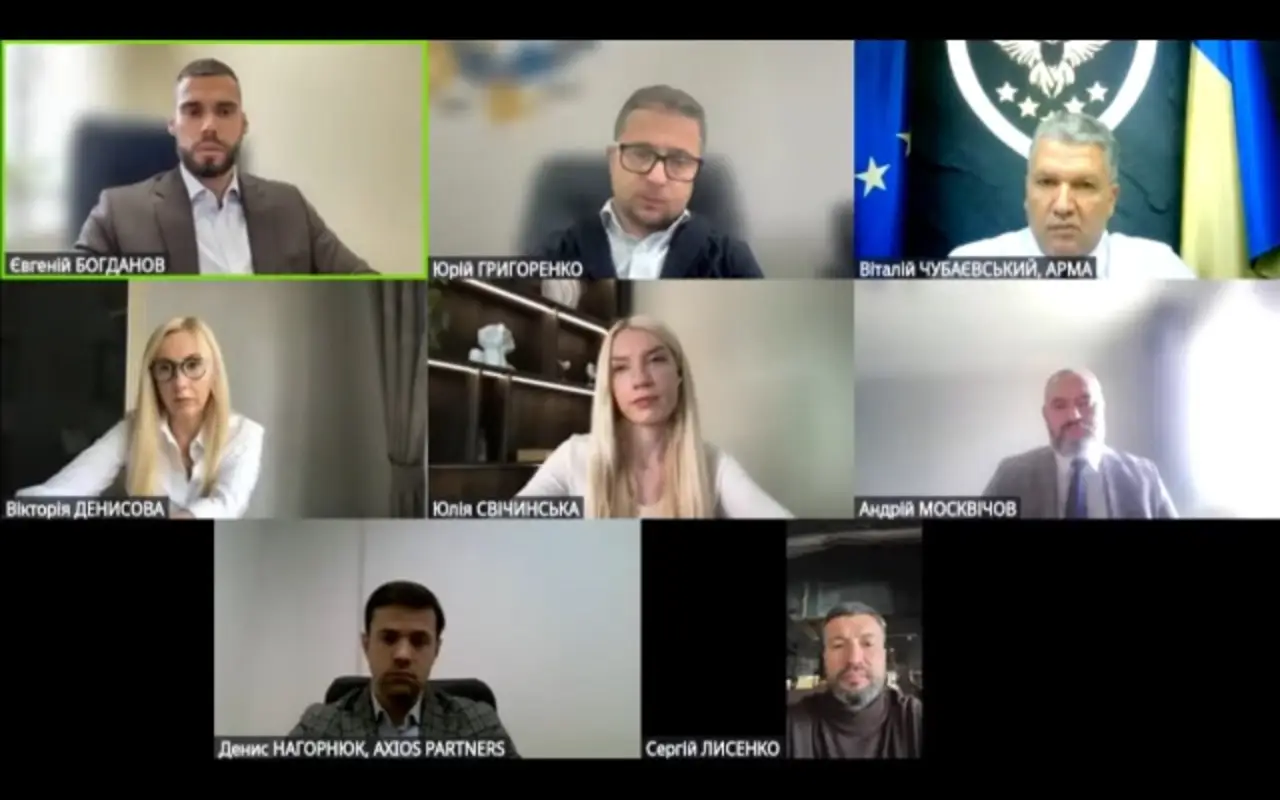
These issues were discussed during the roundtable «War-related business losses: mechanisms for compensation and recovery», organized by the UNBA Committee on business and investor protection.
Evidence first, then recovery
Opening the discussion, the moderator and Committee Council member Yevgeniy Bogdanov briefly outlined the evolution of approaches to compensating businesses for war-related losses. While in 2014 the main focus was on reducing the financial and administrative burden and helping businesses adapt to new conditions, after February 24, 2022, the scale of the destruction necessitated the creation of a much broader system — ranging from the documentation and assessment of losses and the insurance of war risks to an international Register of Losses and the exploration of avenues for legal protection and recovery.
At the same time, he emphasized that the mere existence of a mechanism does not mean it is practically accessible: for businesses, what matters most is how clear the procedure is, what evidence needs to be gathered and whether following it will lead to actual compensation.
The chairman of the UNBA Committee on the prevention of administrative offenses committed against advocates Yuriy Grygorenko discussed the documentation of damages using the example of assisting solar power generation companies whose equipment was damaged as a result of shelling. According to him, a court ruling against the Russian Federation is, for now, more of a legal title than a tool for actual recovery; at the same time, it establishes the circumstances and the amount of damages.
The advocate identified staff safety as the top priority following an attack and recommended taking photographs before restoration work begins: capturing general and detailed images, recording equipment serial numbers, geolocation, and the time. Among the next steps, he highlighted contacting the police and the State Emergency Service, filing a report of a criminal offense, and obtaining an extract from the Unified Register of Pre-trial Investigations.
Y. Grygorenko also explained the importance of the company’s defect report, the conclusion from the organization that maintained the equipment, and an inspection conducted with the participation of a local government body or military administration. Separately, he emphasized the need for documents confirming ownership and the value of the property, as well as proof of the expenses the company has already incurred to resume operations.
Responding to the moderator’s question about the stages whose omission could create gaps in the evidence, the advocate cited the commencement of restoration work without proper documentation of the damage. According to his explanation, once the work has been carried out, it becomes more difficult to establish the facility’s previous condition, the time the damage occurred, and its extent.
Head of the department for documenting and assessing losses from Russian aggression at the Ukrainian Chamber of Commerce and Industry Oleksandr Sheiko focused on the quality of primary documents: errors in wording, inconsistencies in dates, and difficulties in confirming who owned the property and how it was transferred or stored.
He also raised the issue of the evidentiary value of photographs taken independently by affected enterprises. In response, Y. Bogdanov suggested taking a procedural approach — filing a motion with the pre-trial investigation authority to inspect the device containing the photographs or video recordings, with the preparation of a corresponding protocol and the inclusion of technical details about the materials.
Head of the property valuation department at the Ukrainian Chamber of Commerce and Industry Yaroslava Butkova explained that a construction expert assessment can serve as the factual basis for assessing damage to real estate. She emphasized the need to consider the collected documents holistically so that the results of various studies do not contradict one another. According to the speaker, the methodological justification of calculations is also important for international review, and the application of international standards can strengthen the basis of an assessment conducted in accordance with national regulations.
How much does it cost to get back to work
An expert in the technical inspection of buildings and structures Yulia Svichynska spoke about the technical inspection of damaged buildings. She explained that photographs alone do not provide answers regarding the severity of the damage, whether the structure can remain in use, or what work is necessary for its restoration. In particular, in her practice, a request regarding broken glass turned out, after inspection, to require the replacement of the entire facade.
The speaker recommended conducting inspections before demolition: once only the skeleton of a building remains, it can be difficult for an expert to even determine the materials from which the building was constructed. At the same time, she cautioned that unsafe structures must be demolished, given that safety is the top priority.
Y. Svichynska also distinguished between the extent of direct damage and the scope of restoration: to replace a damaged wall or floor slab, it is sometimes necessary to dismantle adjacent sections and perform additional work. According to her, a technical inspection should determine the condition of the property, its usability, priority measures, and the justified scope of restoration.
Appraiser and forensic expert Viktoria Denisova continued the discussion from a financial perspective: the amount of damages and the scope of restoration needs can differ significantly. She explained that when determining damages, the condition of the property prior to the damage including its wear and tear is taken into account, whereas restoration requires future expenditures for the relevant work.
According to V. Denisova, the technical inspection report provides the baseline data for the cost estimate, which covers, among other things, demolition, debris removal, and expenses for design and cost estimate documentation. Responding to a question about property for which documents were destroyed in a fire or were missing, she suggested starting with an analysis of the surviving materials and the possibility of gathering evidence of ownership and the value of the assets in a specific case.
What lies behind the policy
The legal aspects of insuring against war risks were presented by a member of the UNBA Committee on business and investor protection Andriy Moskvichov, who suggested distinguishing between a war event, its consequences, and an insured event. According to his explanation, the mere mention of war in a contract does not automatically confirm coverage for all losses: physical damage to equipment, inability to access property due to occupation, and suspension of production have different legal implications.
Before signing the contract, the speaker recommended reviewing the entire set of terms and conditions and attachments, comparing the definition of an insured event with the exclusions, and clarifying territorial restrictions, the effective date of coverage, limits, and the deductible. According to him, special attention should be paid to the terms regarding occupation, forcible seizure of property, debris from weapons of war, the consequences of air defense operations, and a fire spreading from a neighboring facility. Insuring a building, the advocate emphasized, does not automatically mean compensation for lost income — an interruption in business operations must be agreed upon separately.
After an incident, A. Moskvichov advised notifying the insurer within the timeframe specified in the contract, ensuring accessible photo and video documentation, gathering documents from the relevant authorities, and agreeing on the inspection procedure. If access to the property is impossible, he recommended documenting the reasons and agreeing in writing on alternative methods of verifying the losses. The advocate also highlighted the need to coordinate insurance payouts, government compensation, and subsequent claims in accordance with the rules of each mechanism to avoid duplicate reimbursement for the same portion of the loss.
The head of one of the insurance companies Andriy Semchenko explained that when accepting a property for insurance, the company analyzes production processes, floor area, glass surfaces, neighboring properties, flight paths of drones and missiles, and the presence of other insured properties nearby. According to him, the availability of coverage also depends on the security situation and the capabilities of reinsurers, and risk assessment approaches are evolving.
A. Semchenko confirmed the possibility of insuring business interruption as a special extension of the basic coverage. In the scenario he described, the condition is damage to or destruction of the primary asset as a result of military actions, which caused the business interruption. He also described cases where companies postponed purchasing a policy and, after the destruction of neighboring properties, were no longer able to obtain an acceptable insurance solution due to the increased risk.
From a reference to a lawsuit
The requirements regarding documents from law enforcement agencies sparked a separate discussion: Y. Bogdanov described a case in which, at the request of a government agency, it was necessary to additionally contact a pretrial investigation agency to confirm the connection between the damage and military aggression. A. Semchenko replied that his company had not encountered such problems in practice and that, in addition to documents from the competent authorities, the company also collects information from the media regarding the relevant incident.
A member of the UNBA Committee on business and investor protection Sviatoslav Bolinsky cited another experience — requests to change the classification of an offense or to provide more details in the extract from the Unified Register of Pre-trial Investigations, the fulfillment of which delayed the protection of business interests. He spoke about lawsuits seeking damages from sanctioned individuals as joint and several defendants alongside the Russian Federation.
According to S. Bolinsky, at the outset of such cases, he encountered varying approaches by the courts regarding the payment of court fees, and initiating proceedings in the case described took several months. Another issue concerned establishing a link between the actions of a specific sanctioned individual and the harm caused: to build his case, the advocate relied, in particular, on information regarding the grounds for imposing sanctions in Europe and Ukraine.
The speaker explained that when selecting defendants, he focused on the presence of assets abroad and the prospect of subsequent recognition and enforcement of a Ukrainian court’s decision. At the same time, he emphasized the complexity and cost of locating such assets for the affected companies.
The key to asset tracing
Head of the Department for the identification and tracing of financial and other assets at ARMA’s central office Vitaliy Chubaevsky spoke about the possibilities for asset tracing. He explained that, as part of its cooperation with investigative authorities, the agency can trace the property of individuals involved in cases abroad and forward the information obtained to the party who initiated the request.
When asked whether a private individual or their representative could seek ARMA’s assistance as part of legal defense against a private defendant, V. Chubaevsky replied that the department he heads reviews requests from authorized agencies and does not conduct asset searches at the request of a private individual in a civil case. He listed among the conditions the existence of an open criminal proceeding concerning a serious crime, the penalty for which includes confiscation, and a description by the investigator of the connection between the relevant enterprises and criminal activity.
During the discussion, a member of the UNBA Committee on business and investor protection Denys Nahorniuk proposed drafting recommendations regarding the issues raised, particularly for lawmakers. He also raised the issue of harmonizing valuation standards to make it easier for companies to use prepared documents when applying to national and international authorities, and proposed creating a joint working group or joining the Chamber of Commerce and Industry’s initiatives as legal advisors.
Participants supported the initiative and agreed to the proposal for further cooperation and the implementation of relevant practical steps.
Summing up the event, Yevhen Bohdanov emphasized that the effectiveness of each subsequent stage of work on war-related losses depends on how correctly and promptly the previous stage was completed. That is why it is important for businesses to have a clear action plan—from the initial documentation and assessment of losses to the use of available compensation mechanisms.
At the same time, he emphasized that, despite the complexity of the issue and the lack of universal solutions, consistent work, the accumulation of practical experience, and the overcoming of legal barriers are gradually bringing us closer to the creation of effective compensation mechanisms.
«What seemed impossible or legally unclear just a few years ago is now becoming standard practice. Our task is to continue steadily building this path», - he concluded.
© 2026 Unba.org.ua Всі права захищені
"Національна Асоціація Адвокатів України". Передрук та інше використання матеріалів, що розміщені на даному веб-сайті дозволяється за умови посилання на джерело. Інтернет-видання та засоби масової інформації можуть використовувати матеріали сайту, розміщувати відео з офіційного веб-сайту Національної Асоціації Адвокатів України на власних веб-сторінках, за умови гіперпосилання на офіційний веб-сайт Національної Асоціації Адвокатів України. Заборонено передрук та використання матеріалів, у яких міститься посилання на інші інтернет-видання та засоби масової інформації. Матеріали позначені міткою "Реклама", публікуються на правах реклами.