
Living abroad doesn't sever your ties with Ukraine: what you should check

Moving to another country and even long-term residence abroad does not automatically sever an individual’s legal ties to Ukraine. Tax residency, sole proprietorship status, foreign income, enforcement proceedings, and military registration remain relevant even after relocation.
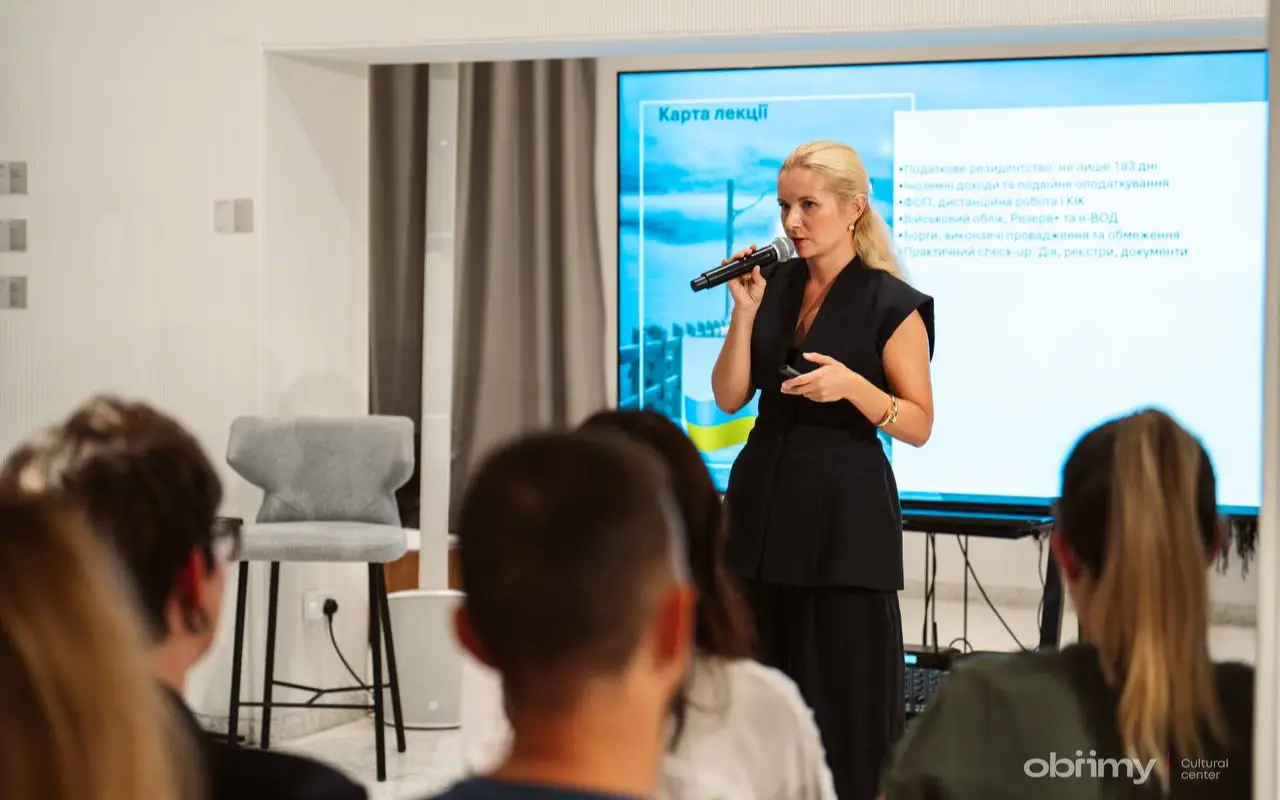
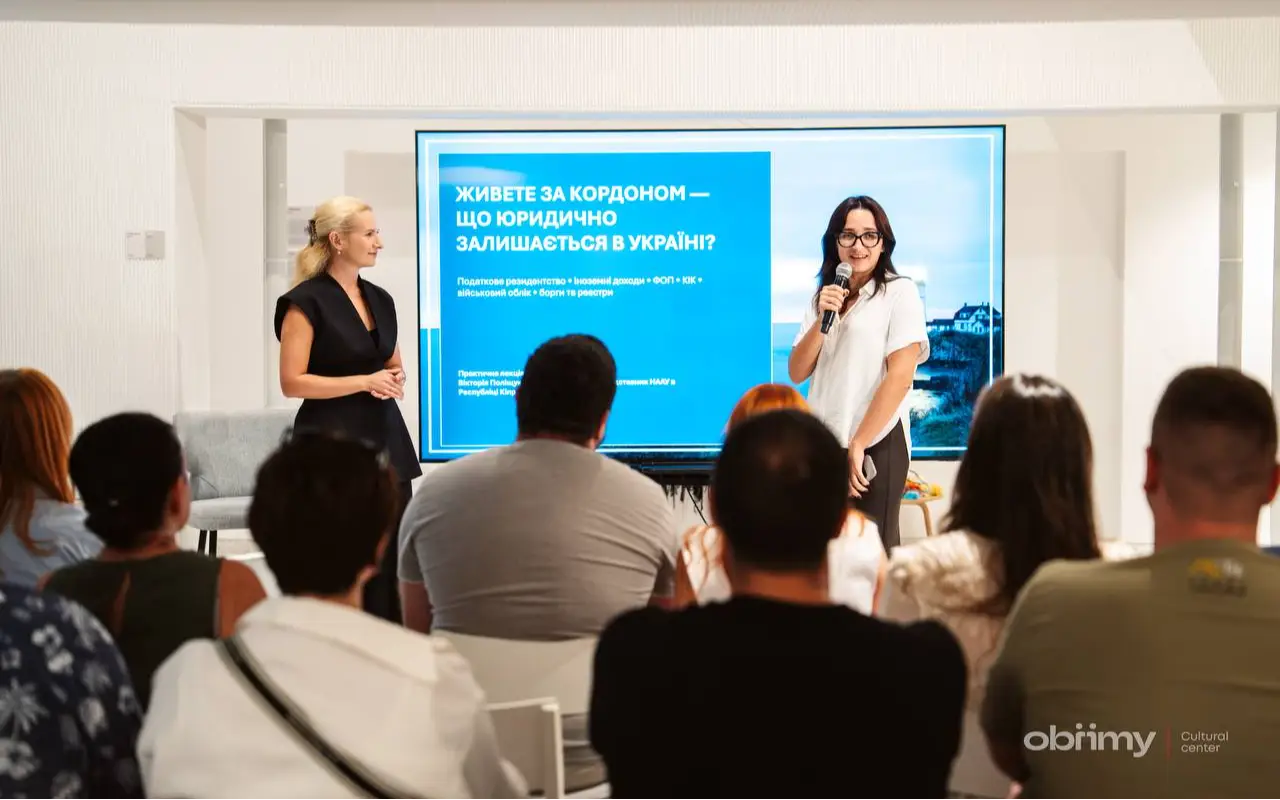
These and other practical issues were discussed during the workshop «Living abroad: what legally remains in Ukraine?», led by the UNBA representative in the Republic of Cyprus Viktoria Polishchuk. The event took place at the Ukrainian Educational and Cultural Center «Obiymy» in Larnaca.
The speaker explained that moving to another country and even long-term residence abroad does not automatically sever a person’s legal ties to Ukraine. She cited the notion that “spending more than 183 days abroad automatically makes you a non-resident of Ukraine” as one of the most common misconceptions. Under Ukrainian tax law, 183 days is only one of several criteria. To determine status, the following factors are analyzed in sequence: place of residence, permanent residence, center of vital interests, length of stay, and, in cases provided for by law, citizenship. The law does not establish a separate, universal procedure for «withdrawing» from Ukrainian tax residency: status is determined based on the facts and applicable regulations.
Special attention was given to the center of vital interests. V. Polishchuk emphasized that a combination of circumstances is relevant for its assessment: where the family lives, where the children attend school, where the individual works or conducts business, and where the individual’s permanent residence, main assets, and sources of income are located.
If the domestic laws of two countries simultaneously recognize an individual as their tax resident, one must refer to the relevant double taxation treaty. It is this treaty that defines the mechanism for resolving conflicts of residency and allocating the right to tax specific types of income. For a resident of Ukraine, according to the speaker, it is not only the fact of paying tax abroad that matters, but also documentary evidence of such payment and the application of the relevant mechanism for eliminating double taxation.
The practical session focused on sole proprietors who actually live and work abroad. The existence of a sole proprietorship in Ukraine does not negate the requirements of the country of actual residence or employment. At the same time, such registration may be relevant for assessing the center of vital interests.
The second part of the meeting addressed issues that are not tax-related but remain relevant for Ukrainians abroad. V. Polishchuk explained to the participants the capabilities of «Reserve+» and the electronic military registration document. It was specifically emphasized that having debt, open enforcement proceedings, an entry in the Unified Register of Debtors, and restrictions on the right to leave the country are distinct legal statuses. Among the practical recommendations is to conduct a personal legal check-up at least once a year.
This check-up covers tax status and payments, reporting for sole proprietorships and controlled foreign companies, court cases, enforcement proceedings, the validity of documents, and, if applicable, military registration data. V. Polishchuk advises conducting such a check before traveling to Ukraine.
«The main takeaway from the meeting is that living abroad does not sever legal ties with Ukraine. It is important for individuals not to draw conclusions based on a single factor: the number of days spent in the country, the ownership of an apartment, sole proprietorship status, or an entry in the registry. It is necessary to distinguish between legal issues, verify the actual circumstances and documents, and take action before a dispute arises or a deadline is missed», - summarized the UNBA representative in Republic of Cyprus.
© 2026 Unba.org.ua Всі права захищені
"Національна Асоціація Адвокатів України". Передрук та інше використання матеріалів, що розміщені на даному веб-сайті дозволяється за умови посилання на джерело. Інтернет-видання та засоби масової інформації можуть використовувати матеріали сайту, розміщувати відео з офіційного веб-сайту Національної Асоціації Адвокатів України на власних веб-сторінках, за умови гіперпосилання на офіційний веб-сайт Національної Асоціації Адвокатів України. Заборонено передрук та використання матеріалів, у яких міститься посилання на інші інтернет-видання та засоби масової інформації. Матеріали позначені міткою "Реклама", публікуються на правах реклами.