
What should an advocate do if a client is under severe stress?
An advocate may encounter a client in a state of acute stress, when the person is looking at the other person but does not see them. Before discussing the case, it is important to bring the client back to reality: establish contact, ask a few questions, and engage their senses.
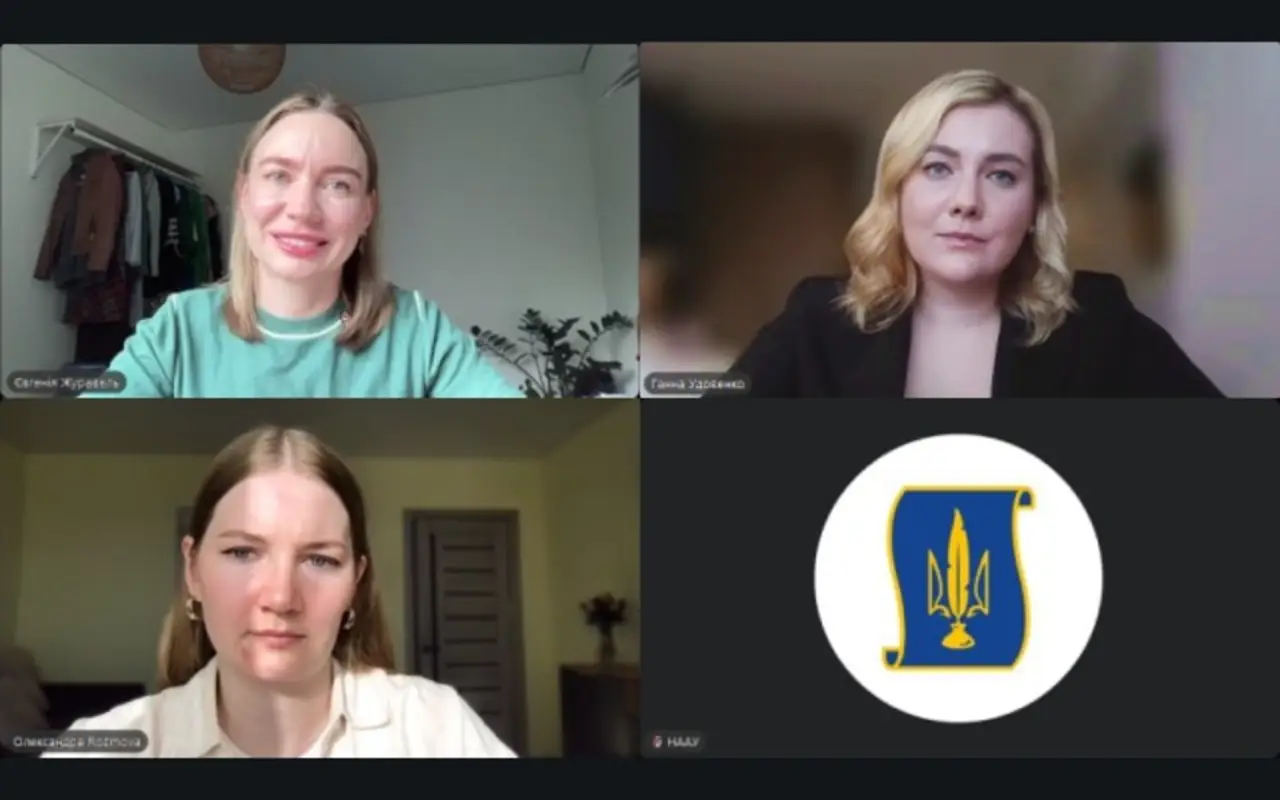
This advice for advocates was provided by psychologist, head of the psychological rehabilitation service at a recovery center for military personnel and civilians «Gart» Yevheniia Zhuravel. She spoke at the webinar «Basics of psychological first aid for adults and children», which took place on October 8. The event was held as part of the project «Supporting the mental health of Ukrainian advocates during the war», which the UNBA is implementing with the support of the International Bar Association (IBA).
According to the speaker, anyone can provide psychological first aid, just as anyone can provide first aid before medical help arrives; no special psychological training is required. Such assistance may be needed not only after shelling or an accident. It is also necessary when a person receives news of the death of a loved one. The goal of this assistance is to reduce an acute stress reaction and restore a person’s ability to act appropriately in the situation.
Y. Zhuravel listed the signs of acute stress. The person is disoriented and does not understand where they are or what is happening. They may stare blankly at the person they’re speaking with, cry or scream intensely, move erratically, tremble, be unable to exhale, or fail to comprehend even simple words. Most notably, the person’s behavior does not correspond to the situation they find themselves in. The psychologist explained that in this state, the brain is focused on survival, and the ability to think critically is suppressed. Therefore, safety must be ensured first; otherwise, the person will not be able to calm down.
You should approach the person calmly and stop at a distance that feels natural for conversation, as they will perceive rapid approach as a threat. If the person is sitting or lying down, you should get down to their level, try to make eye contact, introduce yourself, and calmly explain what happened. If the person is in a daze, the speaker advised first saying that you’re about to touch their hand, and only then touching them. You can ask them to squeeze your hand in response: this shows whether there’s a connection.
The next step is to ask questions that require some thought: where are we right now, do you have children, what day is it today? According to the psychologist, asking for their name is pointless, because people give it automatically.
Grounding techniques help stabilize a person. The first one is breathing together: raise your hand for four counts as you inhale and lower it for six counts as you exhale. A long exhale helps you relax. The second is the «5–4–3–2–1» exercise: name five objects around you, touch four different surfaces, distinguish three sounds, sense two smells, and taste one flavor. This engages all the senses, bringing the person back to the “here and now.” It’s also helpful to offer a few sips of water, but not alcohol. According to Y. Zhuravel, a few minutes of these exercises are usually enough for a person to be able to function again.
But, the speaker noted, words are secondary; what matters most is genuine presence. «I’m here, I’m close by, I’m with you. That might be enough», - the psychologist explained. She advised explaining to the person that their reaction is normal under abnormal circumstances. On the other hand, phrases like «calm down», «don’t cry», «everything will be okay» or «someone else has it worse» trivialize the person’s experience. You must not shake the person or slap them on the cheeks, as this only intensifies their sense of danger.
First psychological aid is no substitute for professional help. If a person needs a doctor or a psychologist, they should be referred to one. The psychologist advises keeping a list of such specialists on hand, including advocates whom clients in crisis turn to.
© 2026 Unba.org.ua Всі права захищені
"Національна Асоціація Адвокатів України". Передрук та інше використання матеріалів, що розміщені на даному веб-сайті дозволяється за умови посилання на джерело. Інтернет-видання та засоби масової інформації можуть використовувати матеріали сайту, розміщувати відео з офіційного веб-сайту Національної Асоціації Адвокатів України на власних веб-сторінках, за умови гіперпосилання на офіційний веб-сайт Національної Асоціації Адвокатів України. Заборонено передрук та використання матеріалів, у яких міститься посилання на інші інтернет-видання та засоби масової інформації. Матеріали позначені міткою "Реклама", публікуються на правах реклами.