
Fines for loud exhaust — based on a standardized measurement method — UNBA
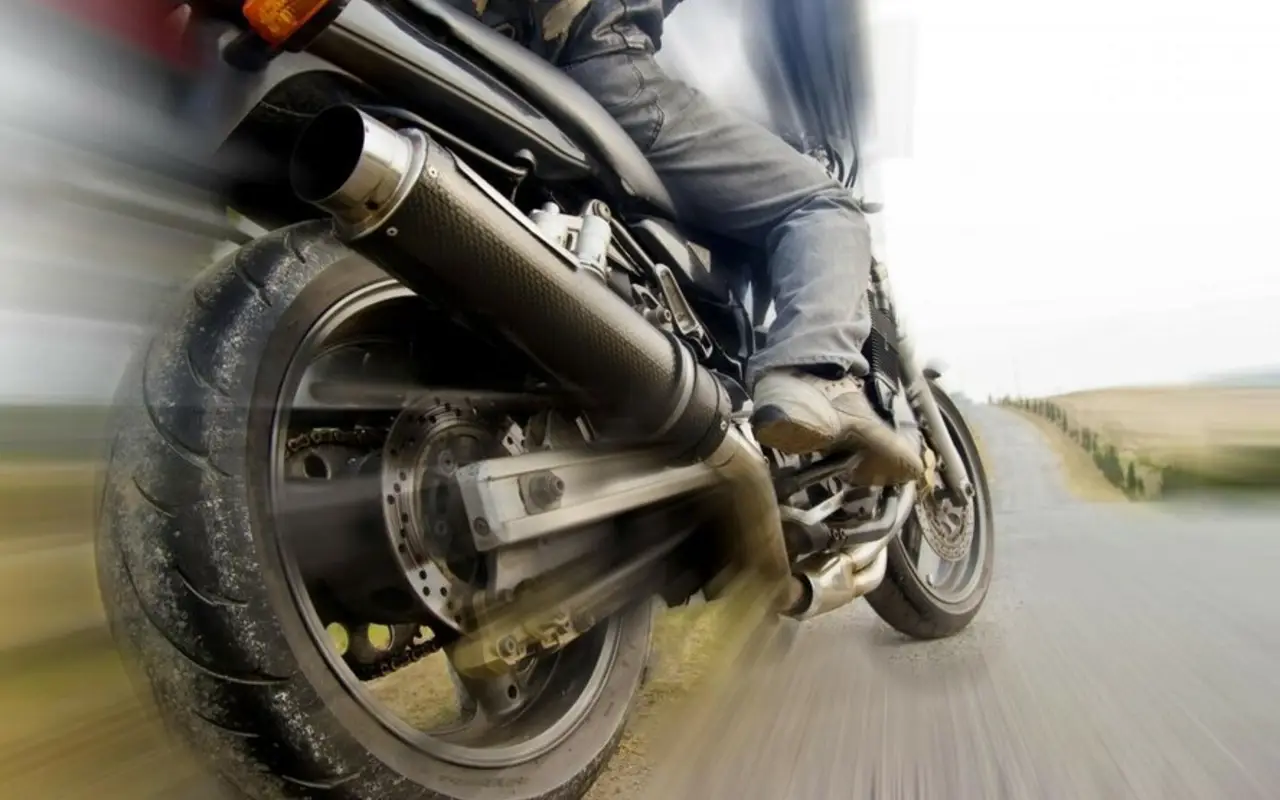
Measures to combat intentionally loud exhaust noises are justified, especially during wartime. However, as long as the law does not specify which noise standard to apply or how to measure it on the road, this new liability can be neither fair nor effective.
The UNBA Committee on transportation law drew attention to this issue following an analysis of Draft Law No. 15358 dated June 26, 2026 «On amendments to the Code of Ukraine on administrative offenses and other legislative acts regarding the establishment of liability for operating vehicles in excess of the permissible noise level», which the Verkhovna Rada adopted as a basis.
The draft law proposes to supplement the Code of Ukraine on administrative offenses with article 124-3. Driving a vehicle that exceeds the permissible noise level is punishable by a fine of 500 NMDG (8,500 UAH); during martial law, the fine is 1,000 NMDG (17,000 UAH). For a repeat offense—up to 2,000 NMW (34,000 UAH) and a 3–6-month suspension of driving privileges. The authors link the changes to the proliferation of «straight-through» exhaust systems and sounds that could be mistaken for an aerial threat.
The UNBA supported this objective. At the same time, according to advocates, the proposed liability mechanism is incomplete in terms of legal certainty and the burden of proof.
The key concern relates to the regulatory standard. Sanitary noise standards for residential areas (Ministry of Health Order No. 463 of February 22, 2019) assess the impact on humans and do not serve as a criterion for a vehicle’s technical roadworthiness. More relevant in nature are the Rules for the Operation of Wheeled Vehicles (Order of the Ministry of Infrastructure No. 550 dated July 26, 2013) and DSTU 3649:2010.
The permissible noise level (exceeding which is subject to a fine) depends on the vehicle category, engine type, and manufacturer’s specifications. Therefore, the police (as the authority responsible for imposing administrative penalties) must prove not only the actual noise level but also which threshold applies specifically to that vehicle. Furthermore, it is not the driver’s responsibility to locate the manufacturer’s technical documentation.
The second issue concerns the methodology for on-road measurements. Without a standardized method, the same technical condition will be assessed differently depending on the location of the stop, background noise, or the position of the measuring device. UNBA provides an example: if the standard is 90 dBA, the device reads 91 dBA, and the margin of error is ±2 dBA, a violation has not been proven. The margin of error should be interpreted in the driver’s favor. Furthermore, a sound level meter cannot distinguish the exhaust noise of a specific car from the background noise of a nearby bus or generator.
Therefore, advocates propose establishing the following safeguards:
- a series of measurements to determine background noise;
- continuous video recording of the procedure;
- the driver’s access to the results, information about the device, its calibration, and the applicable standard;
- the right to a repeat or follow-up measurement.
The UNBA also drew attention to the proportionality of the proposed penalties. Noise violations without dangerous consequences differ from violations that directly endanger life. Automatically increasing liability solely due to martial law regardless of the location, time, nature of the violation, and its actual consequences requires separate justification. The new wording should be aligned with Article 121 (Violation of Rules for Driving or Operating a Vehicle) of the Code of Administrative Offenses and should distinguish between intentional modification and sudden technical malfunction.
Therefore, the UNBA is prepared to support Draft Law No. 15358 provided it undergoes substantial revisions before the second reading, taking into account the comments expressed. Liability should take effect only after the approval of a unified measurement methodology, with a transition period. In the initial stage, the advocates propose using certified portable devices, while «noise radars» should be considered as a future option.
The full text of the UNBA’s comments and proposals, submitted to the Verkhovna Rada Committee on law enforcement, can be viewed at this link.
© 2026 Unba.org.ua Всі права захищені
"Національна Асоціація Адвокатів України". Передрук та інше використання матеріалів, що розміщені на даному веб-сайті дозволяється за умови посилання на джерело. Інтернет-видання та засоби масової інформації можуть використовувати матеріали сайту, розміщувати відео з офіційного веб-сайту Національної Асоціації Адвокатів України на власних веб-сторінках, за умови гіперпосилання на офіційний веб-сайт Національної Асоціації Адвокатів України. Заборонено передрук та використання матеріалів, у яких міститься посилання на інші інтернет-видання та засоби масової інформації. Матеріали позначені міткою "Реклама", публікуються на правах реклами.