
A one-time payment or royalties? Students were briefed on changes to copyright agreements
As a general rule, property rights to a work created by an employee are transferred to the employer, but the author retains the right to remuneration. European law requires that this remuneration be based on the actual income generated by the work, rather than being limited to a one-time payment.
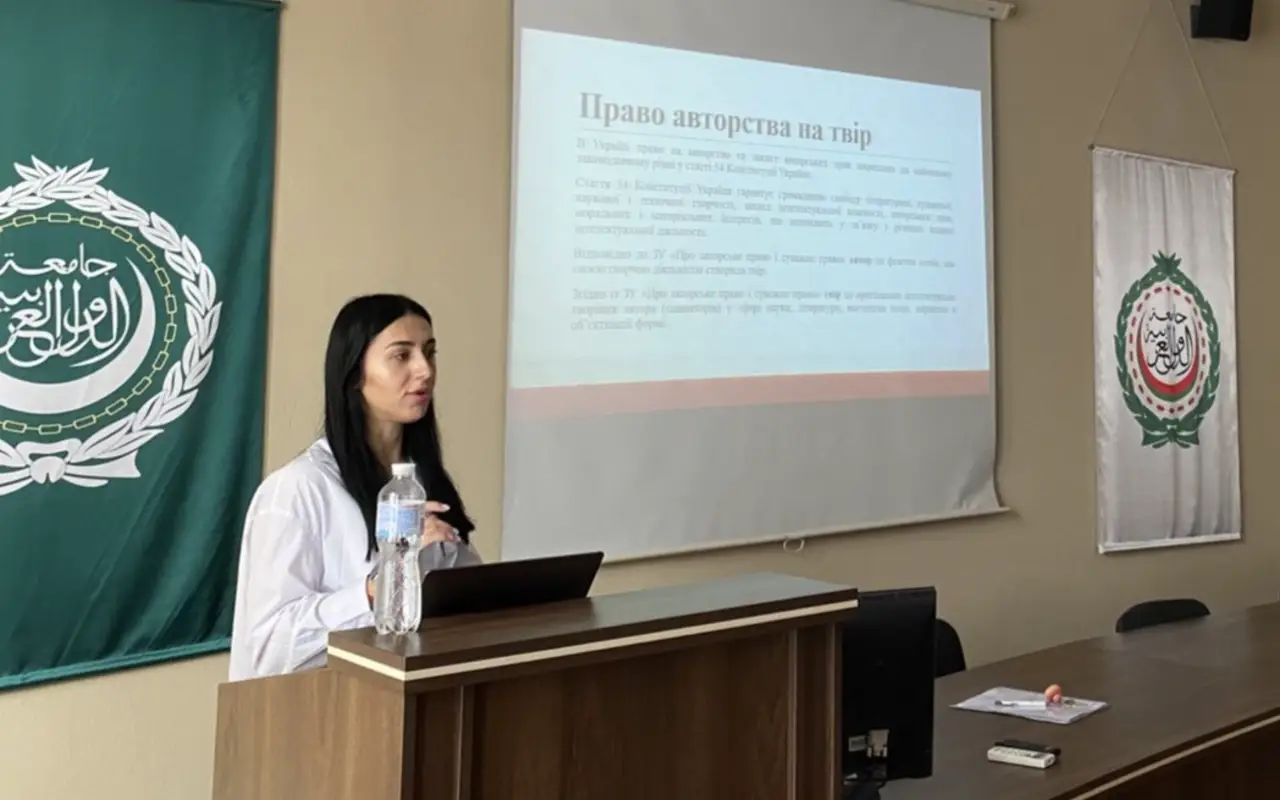
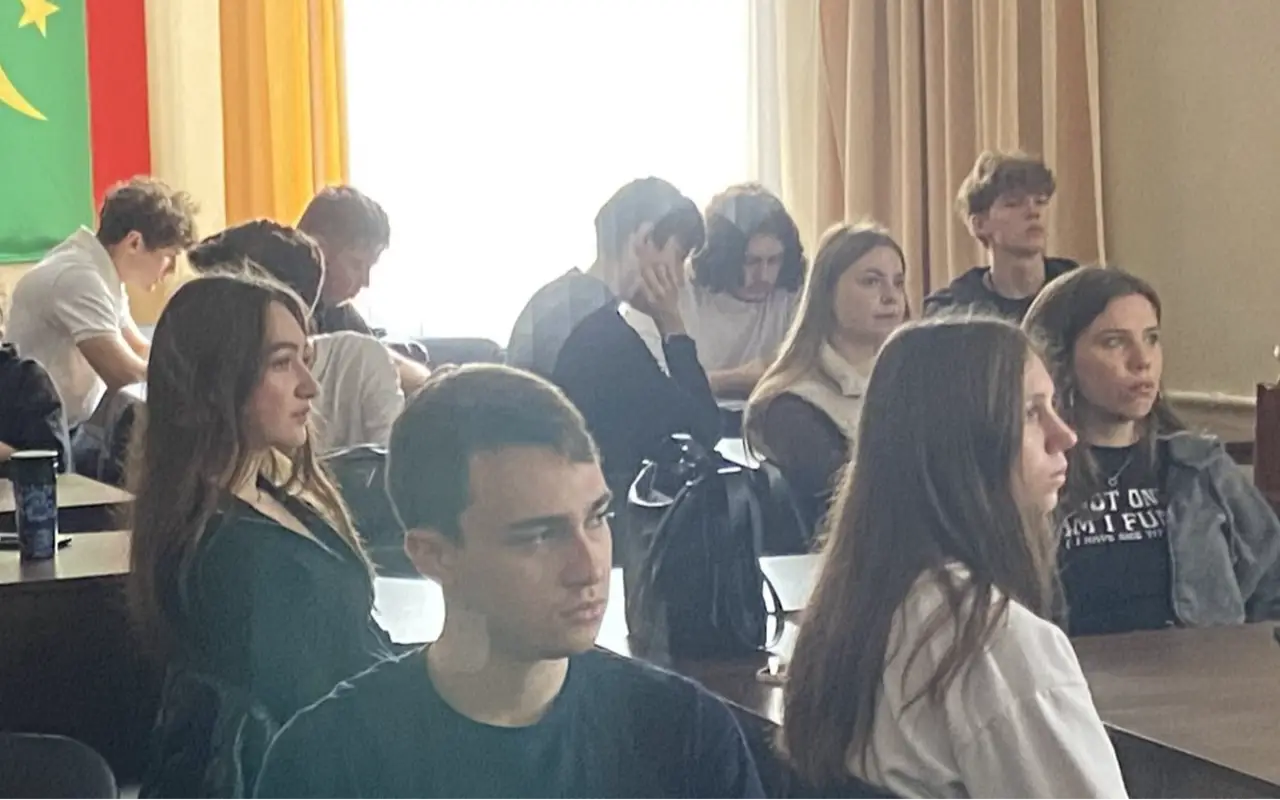
This was discussed during a lecture by advocate Viktoria Rudenko titled «The right to authorship in the human rights framework», which took place on October 13 at the Center for Advocacy at the University of Customs and Finance. The event was organized under a memorandum of cooperation between the UNBA, the Dnipropetrovsk Regional Bar Council, and the university for undergraduate and graduate students majoring in «Law».
The speaker noted that the right to authorship is guaranteed by Article 54 of the Constitution, and under the Law «On copyright and related rights», it arises from the very fact of a work’s creation from the moment it is given any objective form. Moral rights belong solely to the author; they cannot be transferred to others or inherited. In contrast, economic rights are the subject of contracts: employment contracts, contracts for the creation of a work on commission, contracts for the transfer (alienation) of rights, and licensing agreements.
V. Rudenko specifically addressed works created in the course of employment. By law, property rights to such works vest fully with the employer from the moment of creation, unless otherwise provided by law or contract, and the employee is entitled to compensation. This compensation may be included in the employee’s salary if the job duties explicitly require the creation of such works. At the same time, Article 429 of the Civil Code stipulates that property rights to a work created in connection with the performance of an employment contract belong jointly to the employee and the employer. Therefore, according to the speaker, all details should be specified in the contract — especially when the work is created not by a single employee but by a team.
The advocate highlighted the terms that must be included in the agreement: information identifying the work, the scope of the rights being transferred, the amount or method of determining compensation, or a statement that the work is provided free of charge. The license agreement should clearly specify the type of license (exclusive, non-exclusive, one-time), the methods of use, the term, the territory, and the procedure and deadlines for payments.
V. Rudenko also discussed European trends. According to her, the principle of freedom of contract has, in practice, led to an imbalance: authors, who are in a weaker bargaining position when negotiating with publishers, producers, or digital platforms, have signed so-called «buy-out contracts» — transferring all economic rights for a fixed one-time sum without sharing in future revenues.
To address this imbalance, Directive (EU) 2019/790 on copyright in the Digital Single Market established the principle of «fair and proportionate remuneration», which should correlate with the actual revenue generated from the use of a work.
This signifies a gradual shift away from exclusively fixed payments toward royalties and other forms of author participation in profits. According to the speaker, such approaches are also relevant for Ukraine.
© 2026 Unba.org.ua Всі права захищені
"Національна Асоціація Адвокатів України". Передрук та інше використання матеріалів, що розміщені на даному веб-сайті дозволяється за умови посилання на джерело. Інтернет-видання та засоби масової інформації можуть використовувати матеріали сайту, розміщувати відео з офіційного веб-сайту Національної Асоціації Адвокатів України на власних веб-сторінках, за умови гіперпосилання на офіційний веб-сайт Національної Асоціації Адвокатів України. Заборонено передрук та використання матеріалів, у яких міститься посилання на інші інтернет-видання та засоби масової інформації. Матеріали позначені міткою "Реклама", публікуються на правах реклами.