
Lidiya Izovitova: reform of the advocacy profession should make the profession stronger and individuals better protected
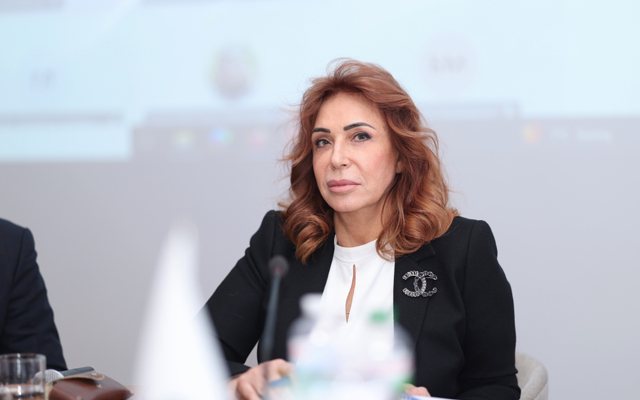
The Ukrainian advocacy community is finalizing work on a new version of the relevant law. The roadmap on the rule of law has set the fourth quarter of 2026 as the deadline for achieving results in this area. The draft is intended to ensure safeguards for the practice of law through mechanisms of accountability for violations.
This was emphasized by the President of the UNBA, BCU Lidiya Izovitova in her speech at the 16th International scientific and practical conference «Advocacy: past, present and future», which is taking place today, October 30, in Odessa. The event is organized annually by the National University «Odessa Law Academy» and the Odessa Regional Bar Association.
According to the President of the UNBA, BCU, the reform is based on the model established by the Law «On the advocacy and the practice of law» and Article 131-2 of the Constitution: a single professional organization, self-governance, access to the profession, and disciplinary responsibility under the jurisdiction of the bar itself. This foundation remains intact, while the new regulations build upon it.
L. Izovitova recalled that on March 9, 2026, Ukraine signed the Council of Europe Convention on the Protection of the Professions of Lawyer. The Roadmap designated the UNBA as a co-implementer of the reform, so the advocacy community is participating in it as a responsible entity, which is precisely what the Convention requires. The draft, parts of which were discussed with European bar associations and the CCBE, was presented in Brussels on October 1.
Access to the profession will be phased: an electronic preliminary test, a qualification exam focused on practical skills, and an internship with electronic tracking.
Guarantees for the practice of advocacy must be backed by enforcement mechanisms, as a guarantee that carries no consequences for violations remains merely a declaration. The draft provides for a special procedure and additional judicial oversight of procedural actions concerning advocates. Court warrants for seizure must contain an exhaustive list. It is also proposed to amend Article 397 of the Criminal Code and introduce administrative liability for publicly identifying an advocate with a client and for denying an advocate access to a client.
The disciplinary system will be developed through standing panels, automated case assignment, and full access by advocates to case materials. An advocate’s legal position, complaints, and motions are excluded from the grounds for disciplinary proceedings.
Regarding integrity, the chairman of the UNBA noted that advocates do not hold positions of authority; therefore, the criteria established for judges, prosecutors, and civil servants require a distinct approach. For candidates for self-governing bodies, four comprehensive criteria are proposed, which are verified against bar association records. These include the absence of a conviction for an intentional crime, the absence of any current disciplinary sanctions, fulfillment of the obligation of continuous professional development, and timely payment of annual dues over the past five years.
The draft deliberately does not provide for integrity declarations, which are designed for those holding public office. The vetting process should remain a tool of trust and should not take into account an advocate’s views, legal stance, or the clients they have represented.
L. Izovitova described the unified electronic system for advocacy as a tool of trust with a clear boundary: procedures are digitized, while the assessment of qualifications, disciplinary findings, and the legal position in a case remain the responsibility of a human being. The advocate is responsible for documents prepared using AI: his signature appears on them. Therefore, a machine error that the advocate fails to notice becomes his own error. Access to the advocate’s devices and accounts must be subject to the same safeguards as an office search. «Confidentiality guaranteed only within the walls of an office is worth nothing in the digital world», - emphasized the President of the UNBA, BCU.
According to her, every provision of the draft is evaluated based on a single question: Does it make the profession stronger, more transparent, and more independent, or does it create a new channel for external influence. «Reform should make the profession stronger and individuals better protected», - concluded L. Izovitova.
© 2026 Unba.org.ua Всі права захищені
"Національна Асоціація Адвокатів України". Передрук та інше використання матеріалів, що розміщені на даному веб-сайті дозволяється за умови посилання на джерело. Інтернет-видання та засоби масової інформації можуть використовувати матеріали сайту, розміщувати відео з офіційного веб-сайту Національної Асоціації Адвокатів України на власних веб-сторінках, за умови гіперпосилання на офіційний веб-сайт Національної Асоціації Адвокатів України. Заборонено передрук та використання матеріалів, у яких міститься посилання на інші інтернет-видання та засоби масової інформації. Матеріали позначені міткою "Реклама", публікуються на правах реклами.