
Advocate need their own access to the online portal in AEPS – UNBA
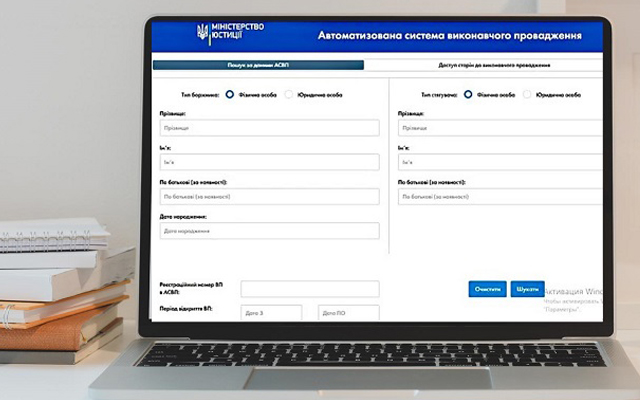
The new procedure for accessing enforcement proceedings materials does not allow an advocate to independently access the electronic account of the party he or she represents. As a result, the right to representation, guaranteed by law, is not fully realized in electronic form.
The UNBA drew attention to this issue following a legal analysis of the new procedure for accessing enforcement proceedings materials through the Automated Enforcement Proceedings System (AEPS). Consequently, the UNBA has appealed to Minister of Justice Denys Maslov with proposals to address the existing shortcomings in the regulatory framework and technical implementation of this procedure.
As a reminder, the modernization of procedures for the enforcement of decisions was provided for by Law No. 4833-IX of April 7, 2026, «On amendments to certain legislative acts of Ukraine regarding the improvement of the procedure for the enforcement of court decisions and decisions of other bodies and the digitization of certain stages of enforcement proceedings». In accordance with this law, the Ministry of Justice, by Order No. 1998/5 dated July 29, 2026, amended the Regulations on the AEPS. In late October, the State Enterprise «National information systems» (NAIS) launched an electronic portal for parties to enforcement proceedings and discontinued access to case materials using previously issued identifiers. From now on, access to case materials is possible only after the party has been electronically identified and has signed or confirmed consent to review the materials using an electronic signature.
The UNBA noted that it supports the digitization of enforcement proceedings, the strengthening of personal data protection, and proper user identification. At the same time, the new procedure does not include a properly regulated and implemented access mechanism for representatives. Such a mechanism should allow an advocate or other authorized representative to independently access a party’s electronic account using their own Qualified Electronic Signature (QES) and documents confirming their power of attorney.
As a result, a party formally retains the right to representation, but its representative is deprived of the ability to fully exercise this right electronically. Advocates point out that Article 16 (Representation of Parties in Enforcement Proceedings) of the Law «On enforcement proceedings» allows parties to act independently or through representatives. Article 19 of this Law guarantees the right to review the case materials, access the AEPS and challenge decisions, actions, or inaction by enforcement officers. Subordinate regulations and software cannot, in fact, alter or narrow the scope of rights established by law.
Furthermore, in accordance with Article 64 of the Constitution, the right to judicial protection and the right to professional legal assistance cannot be restricted even under martial law.
According to advocates, the most significant consequences of these changes will be felt by the elderly, people with disabilities, internally displaced persons, citizens residing abroad, military personnel, and others who do not have an electronic signature or the necessary technical skills.
For example, an elderly person who does not use the Diia app, electronic trust services, or online banking is effectively unable to review case materials online independently. Hiring an advocate does not solve the problem. Consequently, parties to the proceedings or their representatives are forced to personally contact state enforcement agencies or private enforcement agents. Providing an advocate with a client’s personal digital signature cannot be considered a proper legal or technical mechanism for representation.
The new mechanism for recording acknowledgment of receipt poses a particular risk. The system records the date a party reviews the materials as the date of signing or confirmation of consent. This information may become admissible as evidence when determining compliance with appeal deadlines. For complaints against enforcement officers, Article 449 of the Code of Civil Procedure and Article 341 of the Commercial Procedure Code provide for a ten-day deadline. A person may log into the system on their own but, due to a lack of legal knowledge, may only consult an advocate later. This creates the risk of a dispute regarding the exact moment when the individual learned or should have learned of the violation of their rights. The UNBA emphasizes that the technical recording of general consent cannot automatically replace the rules established by law regarding the notification of parties, the service of documents, and the determination of when procedural deadlines begin to run.
A lawyer’s inquiry, as noted by the UNBA, is not a full-fledged alternative to electronic access. The deadline for responding to such an inquiry may be extended to twenty business days. In practice, enforcement officers also ask the advocate to appear in person or provide only a portion of the documents. At the same time, in the «Electronic Court» subsystem, the advocate’s access to case materials based on verified credentials specifically, an electronic warrant has already been implemented. A similar mechanism must be implemented without delay in the AEPS as well, the UNBA notes.
In light of this, the advocates propose that the Ministry of Justice take the following measures within the scope of its authority:
- initiate amendments to the Regulations on the AEPS, providing for the direct right of duly authorized representatives of the parties to obtain remote access to information and documents related to enforcement proceedings;
- instruct the State Enterprise «NAIS» to prioritize ensuring that advocates are authorized using their own digital signature and that their powers are confirmed by a power of attorney, and for other representatives — by documents required by law;
- pending the implementation of this functionality, develop a temporary procedure for representatives to remotely review case materials without an unreasonable requirement to appear in person;
- establish a joint working group involving the Ministry of Justice, the State Enterprise «NAIS», the UNBA, the Association of Private Enforcement Officers of Ukraine and other interested parties to coordinate regulatory and technical solutions.
In addition, the UNBA insists on full access for representatives to all documents related to proceedings in the Administrative Court of Appeal and on organizational measures that will prevent the restriction of the parties’ rights during the transition period.
© 2026 Unba.org.ua Всі права захищені
"Національна Асоціація Адвокатів України". Передрук та інше використання матеріалів, що розміщені на даному веб-сайті дозволяється за умови посилання на джерело. Інтернет-видання та засоби масової інформації можуть використовувати матеріали сайту, розміщувати відео з офіційного веб-сайту Національної Асоціації Адвокатів України на власних веб-сторінках, за умови гіперпосилання на офіційний веб-сайт Національної Асоціації Адвокатів України. Заборонено передрук та використання матеріалів, у яких міститься посилання на інші інтернет-видання та засоби масової інформації. Матеріали позначені міткою "Реклама", публікуються на правах реклами.