
EU law, juvenile cases and war crimes: new areas of training for advocates
As EU membership approaches, advocates will have to work with sources of EU law, the case law of the Court of Justice of the European Union and preliminary rulings from national courts. It is worth familiarizing oneself with these mechanisms before they become a daily practical necessity.
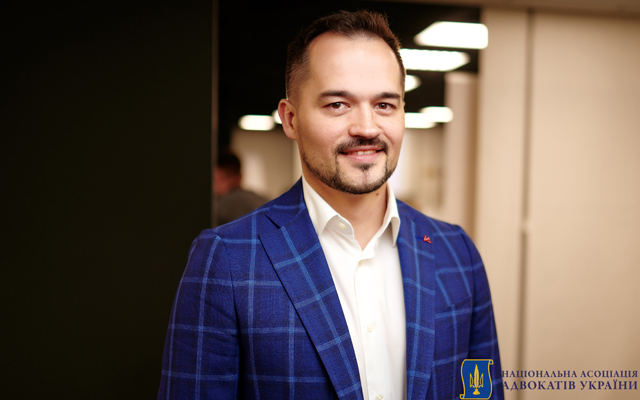
Director of the Higher School of Advocacy of the UNBA Savva Kuzmenko spoke about this during the XVI International scientific and practical conference «Advocacy: past, present and future». He presented proposals regarding the next stage in the development of training programs for advocates.
According to him, the experience of working with the case law of the ECHR serves as a guide. Advocacy has evolved from simply searching for and translating court decisions to assessing their relevance in specific cases. Now, professional discourse centers on the precise application of a court’s legal reasoning and the limits of its transposition into national proceedings. Therefore, it is proposed that training be based on case analysis, comparison of legal positions, and the development of legal arguments.
S. Kuzmenko proposed this same format for a separate program on EU law. It will cover the sources of EU law, their scope of application, their interaction with national legislation, and the case law of the Court of Justice of the European Union. Sector-specific courses tailored to areas of legal practice will be built upon this foundation. In the context of Ukraine’s accession, the focus is on the Association Agreement, legislative harmonization, and cases in which EU law is already relevant to clients. It is also important to prepare for the mechanisms of membership, particularly for handling preliminary rulings from national courts. The VSA is already collaborating with the Academy of European Law and participating in programs for Ukrainian lawyers. The next step should be to train instructors and develop programs accessible in various regions.
The second area is specialization. It is proposed to begin with cases involving children and cases of war crimes. Advocates already working in these fields, as well as specialists in related disciplines, will be involved in developing the programs and providing mentorship. In cases involving children, legal issues are combined with communicating with the child, taking into account their traumatic experiences and situations where their interests conflict with those of adults. Cases involving war crimes require knowledge of international humanitarian and criminal law, as well as skills in presenting evidence and working with digital materials, victims, and witnesses.
For both areas, a series of courses is offered, featuring case analysis, practical assessments, and mentorship. The goal is to train advocates in regions where such assistance is needed, so the initiative is being planned in collaboration with regional councils. According to the speaker, the issue of a separate professional status for these specialists will require a separate legal decision.
«The practical result is accessible specialized assistance and a timely response by the legal profession to society’s new needs», - concluded S. Kuzmenko.
© 2026 Unba.org.ua Всі права захищені
"Національна Асоціація Адвокатів України". Передрук та інше використання матеріалів, що розміщені на даному веб-сайті дозволяється за умови посилання на джерело. Інтернет-видання та засоби масової інформації можуть використовувати матеріали сайту, розміщувати відео з офіційного веб-сайту Національної Асоціації Адвокатів України на власних веб-сторінках, за умови гіперпосилання на офіційний веб-сайт Національної Асоціації Адвокатів України. Заборонено передрук та використання матеріалів, у яких міститься посилання на інші інтернет-видання та засоби масової інформації. Матеріали позначені міткою "Реклама", публікуються на правах реклами.