
Martial law has changed administrative disputes – findings from IUS PUBLICUM 2026
During martial law, the focus of administrative proceedings shifted: in addition to tax disputes, cases involving access to public information, personal data protection, and challenges to regulatory acts, the docket now includes mobilization issues, challenges to decisions by the TCC and the Special Purpose Commission, disputes regarding deferrals, military service, sanctions, and new administrative restrictions.
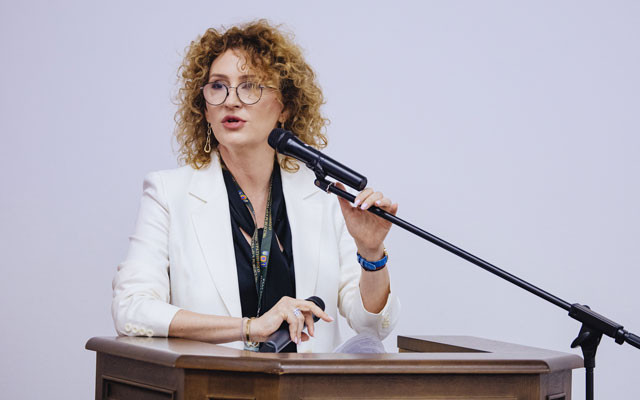
These issues were discussed during the first Forum on administrative law and justice «IUS PUBLICUM 2026», held on June 19 by the Odesa Regional Bar Association. The event brought together over 200 in-person participants and 300 online participants from various regions of Ukraine. Among those in attendance were advocates, administrative court judges, representatives of government agencies, academics, and legal professionals.
The acting chairman of the Odesa Regional Bar Association Olena Dzhaburia noted that administrative jurisdiction today covers disputes that directly reflect the relationships between individuals, businesses, advocacy, and the state. While certain categories of administrative cases were previously viewed as highly specialized, they have now become part of advocates’ daily practice.
«This is particularly evident under martial law, - she noted. - The state is objectively making a large number of administrative decisions, expanding the discretionary powers of government agencies, and introducing new regulations and restrictions. At the same time, it is precisely under such conditions that the need for professional legal protection, effective judicial oversight, and balanced administrative practice grows».
Among the effectively new types of disputes, O. Dzhaburia cited mobilization disputes, appeals against decisions of the TCC and the Military Registration and Enlistment Office, disputes regarding deferments, exclusion from military unit rosters, issues of access to public information during wartime, personal data protection, challenges to regulatory acts, sanctions cases, tax disputes under new economic conditions, as well as disputes related to disciplinary practices within the advocacy profession.
According to the head of the Odesa Regional Bar Association, this is a challenge not only for society but also for the entire advocacy profession. «In many of these categories, there are still no established approaches, no long-standing practice, and legal positions are being formed literally right now — through dialogue between advocates and courts, in each specific case, in every argument and in every court decision», - she explained.
The President of the UNBA, BCU Lidiya Izovitova identified seven challenges in administrative litigation for advocates: the predictability of judicial practice, jurisdictional disputes, cassation filters, enforcement of decisions against the state, the burden of proof, written proceedings, and guarantees for the practice of law.
The forum’s program was structured around four thematic sessions: administrative justice under martial law from a judicial perspective; public finance from an administrative-legal perspective; disciplinary practice within the advocacy profession and administrative justice; and administrative disputes in mobilization and military justice.
The organizers expressed their hope that «IUS PUBLICUM» would become an annual platform for the development of administrative law and judicial proceedings in Ukraine.
© 2026 Unba.org.ua Всі права захищені
"Національна Асоціація Адвокатів України". Передрук та інше використання матеріалів, що розміщені на даному веб-сайті дозволяється за умови посилання на джерело. Інтернет-видання та засоби масової інформації можуть використовувати матеріали сайту, розміщувати відео з офіційного веб-сайту Національної Асоціації Адвокатів України на власних веб-сторінках, за умови гіперпосилання на офіційний веб-сайт Національної Асоціації Адвокатів України. Заборонено передрук та використання матеріалів, у яких міститься посилання на інші інтернет-видання та засоби масової інформації. Матеріали позначені міткою "Реклама", публікуються на правах реклами.