


Lidiya Izovitova identified 7 challenges in administrative proceedings for advocates

The predictability of judicial practice, jurisdictional disputes, cassation filters, enforcement of judgments against the state, the burden of proof, written proceedings, and guarantees for the practice of law remain key issues in administrative justice for advocates.
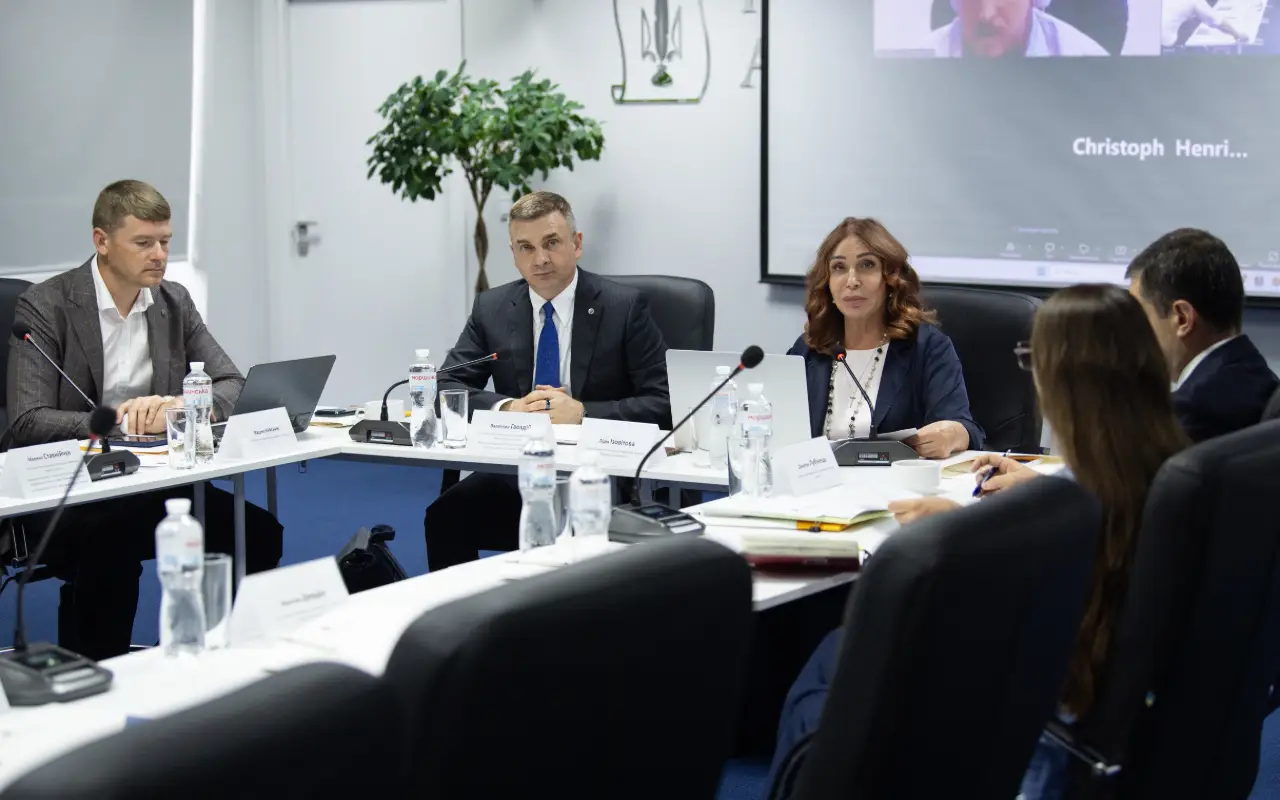
This was emphasized by the President of the UNBA, BCU Lidiya Izovitova in her opening remarks at the Forum on administrative law and judicial proceedings «IUS PUBLICUM 2026», organized on June 19 in Odesa by the Bar Council of that region.
She noted that the forum’s objective is not to pit advocates against judges, but to discuss how to improve the judicial process and what legislative changes should be made. The President of the UNBA, BCU identified certain issues as systemic bottlenecks that require resolution.
The first such issue is the predictability of judicial practice. Last year, the Grand Chamber of the Supreme Court issued approximately 300 decisions, accompanied by 190 separate opinions. This indicates that even Grand Chamber judges may hold a position different from that set forth in the decision. For advocates and clients, this means that a legal position prepared in accordance with established judicial practice may become obsolete during the course of a case. She mentioned «hidden» conclusions as a separate problem. These are situations where a court formally states that it shares the Supreme Court’s legal position but, in fact, takes a different approach. As a result, even in a case where an advocate relies on a well-established legal position, there remains a risk that it will not be applied.
Second, jurisdictional disputes. The Grand Chamber consistently emphasizes that the substance of the law and the nature of the legal relationship are decisive, rather than the authority acting as a party to the proceedings. At the same time, the number of cases addressing issues of erroneously determined jurisdiction indicates that this issue remains complex for both courts and advocates. According to the President of the UNBA, BCU, an error in determining jurisdiction at the outset of a case is costly for clients, as proceedings can be delayed for years.
Speaking about cassation filters, L. Izovitova acknowledged that access to the Supreme Court and cassation review are extraordinary procedures. At the same time, in administrative disputes where the state or a public authority is a party, one cannot agree that minor social and pension cases are effectively closed to cassation. For a person with a small pension (unlike the state), even 1,000 hryvnias is a significant amount.
The President of the UNBA, BCU identified the fourth key issue as the problem of enforcing court decisions against the state, since a court’s ruling in favor of the plaintiff is only half the battle. Enforcement is difficult to achieve, penalties for non-compliance are insignificant, and criminal proceedings are initiated selectively.
Separately, L. Izovitova focused on the burden of proof. She noted that administrative proceedings establish a higher standard of protection for the plaintiff, and the authority must prove the legality of its decision. However, in tax and customs cases, this burden is often effectively shifted to the plaintiff. The problem is exacerbated by the fact that advocates cannot always obtain the necessary documents through advocate requests, as authorities cite restricted access or confidentiality. Even when the court orders the production of evidence, it may arrive slowly or not arrive on time.
Today, nearly every other case is heard in writing. This conserves court resources, but advocates lose the opportunity to present their position and its nuances orally to the court. Therefore, according to the President of the UNBA, BCU, if a plaintiff insists on oral proceedings, such motions should be granted.
In conclusion, L. Izovitova emphasized the guarantees of the legal profession. According to her, advocates are not always able to fully safeguard the guarantees established by the Law on Advocacy, the Code of Administrative Procedure, and other legislation. She emphasized that when an advocate has the opportunity to present their position not only in writing but also orally, this is crucial for the soundness of the decision and the protection of the client.
Popular news

Legislation
The Verkhovna Rada is preparing a bill to implement the Convention on the Protection of the Professions of Lawyer
Members of Parliament plan to introduce a bill in the near future to implement the main provisions of the Council of Europe Convention on the Protection of the Professions of Lawyer. This parliamentary initiative may also prompt the government to expedite the preparation of the ratification package.

Educational events
Preparing a court argument: 7 tips for advocates
When preparing a courtroom speech, it is best to begin by formulating the decision the advocate is asking the court to render. Next, the structure of the speech should be built around this outcome, strong arguments should be selected, and weak points should be addressed.
Legislation
The path to ratification of the Convention must not end in yet another delay — L. Izovitova
Ukraine’s preparations for the ratification of the Council of Europe Convention on the Protection of the Professions of Lawyer have already passed key stages. Now, government institutions must submit the matter to the Verkhovna Rada for consideration. In doing so, Ukraine may complete the ratification process faster than EU member states.

Edition
Veterans were provided with algorithms for responding to malfunctions
The UNBA Committee on the protection of victims of armed aggression against Ukraine, compensation mechanisms and European integration legal support for recovery together with the Ministry of Veterans Affairs of Ukraine has prepared the latest Legal Guide for War Veterans.

Guarantees of the practice of law
Ukraine could be the first to implement a European mechanism for the protection of advocates. What’s holding it back?
Ukraine has a chance to be the first country to ratify the Council of Europe Convention on the Protection of the Professions of Lawyer. Political support for this exists, but the government’s legislative package has not yet been submitted to parliament. Meanwhile, the number of violations of advocates’ rights is on the rise.

Educational events
How can an advocate verify that work has been completed if the client refuses to sign the report?
When billing by the hour, the primary document for determining the fee may be a detailed report on the time spent by the advocate and the work performed. To prevent the client from withholding payment, the contract should specify in advance the procedure for submitting and approving such a report.

Self-government
The BCU took note of the public appeal from the HCJ
The Bar Council of Ukraine has determined that, given the current security situation, it is objectively impossible to hold, in accordance with the procedure established by the Law «On the advocacy and the practice of law», meetings of advocates, regional conferences of advocates and the Congress of Ukrainian Advocates, including for the purpose of electing two members of the High Council of Justice under the quota allocated to the Congress of Ukrainian Advocates.
War
The BCU has launched a digital project «Wall of Remembrance and Honor»
The Bar Council of Ukraine has adopted a resolution to launch the digital project «Wall of Remembrance and Honor». To this end, the UNBA is beginning to collect information on advocates and paralegals who lost their lives as a result of the Russian Federation’s armed aggression against Ukraine.
Publications

Vasyl Kolishnyi, «Law and Business» Supporting mental health should become part of the professional culture of the Bar, - H. Udovenko

Volodymyr Matsko Extradition during wartime: when the risks outweigh the request

Volodymyr Matsko Extradition as a systemic form of rights violations

Victoria Yakusha, Law and Business The anti-corruption vertical cannot «take care» of the Bar as an institution, - acting head of the HQDCB

Censor.net Protecting advocates – protecting justice: addressing concerns about the new law

Ihor Kolesnykov A BRIEF SUMMARY REGARDING THE APPLICATION OF THE ORDER ON EXTENDED CONFISCATION IN LATVIA REGARDING FINANCIAL ASSETS OF…

Valentyn Gvozdiy WORKING IN A WAR ZONE

Lydia Izovitova Formula of perfection