
What an advocate should check in a military personnel's death certificate
Whether the Medical Examination Commission attributes a soldier’s death to the defense of the homeland depends on the forensic medical expert’s conclusion regarding the cause of death. Such a conclusion can often be verified only through a histological examination. However, the material for this examination is kept in the archives for only three years, and sometimes it is not collected at all.
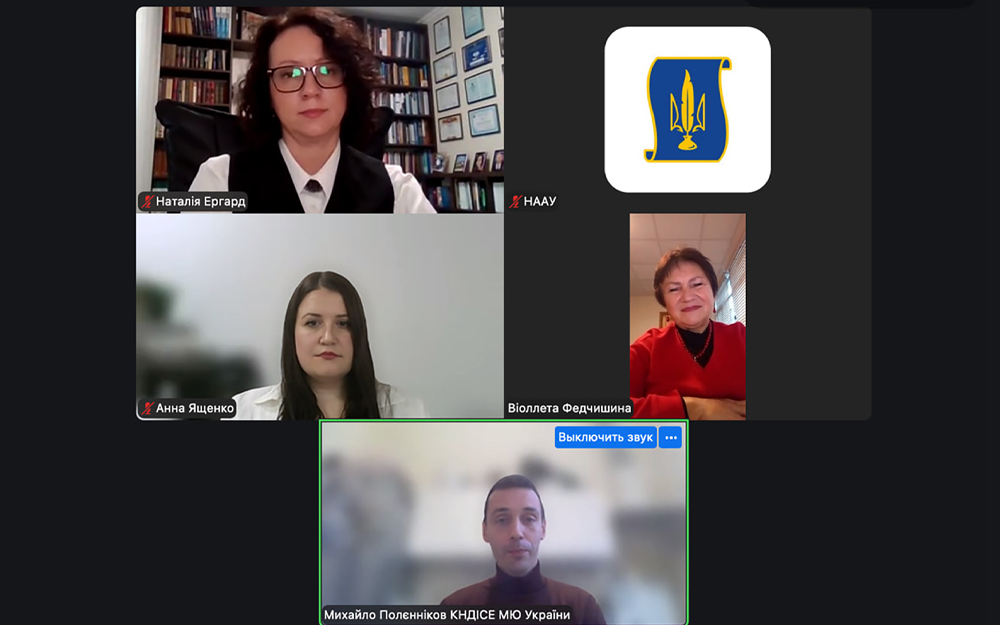
This issue was discussed during the roundtable «Forensic expertise practice under martial law: evidence, assessment of damages from Russian aggression and forensic medical aspects». The event was held on October 23 by the UNBA’s Committee on expert support for legal practice. The meeting was moderated by the Committee chairman, Violleta Fedchyshynl. «Forensic medical examinations of deceased military personnel are a matter of establishing the truth and providing legal protection for the rights of our heroes’ families. The quality of the autopsy and the accuracy of the forensic medical conclusions are crucial for establishing the cause of death and its causal link to the defense of the Motherland. The social protection of the families of the deceased directly depends on this», - she emphasized
Forensic medical expert Natalia Ergard explained that the picture an expert sees during an autopsy is merely a hypothesis. It must be confirmed by a forensic histological examination. However, organ samples are often sent to the archive without being examined. As a result, chemical damage to the lungs following poisoning during a combat mission may be described as ordinary pneumonia, and the Medical Examination Commission will attribute the death solely to military service.
According to her, an advocate should request not only the autopsy report but also the full histological examination report. In one case, the histologist did not confirm the cardiomyopathy that the expert had cited as the cause of death. It was precisely on the basis of this diagnosis that the Central Military Medical Examination Commission refused to link the death to trauma.
Discrepancies between the report and other data can also serve as grounds for a re-examination. For example, the report states that there were no bodily injuries, even though the soldier had suffered a traumatic limb amputation. It is also important to verify the completeness of the toxicological examination: whether other alcohols, besides ethyl alcohol, were detected in the blood.
The time limit for filing an appeal is limited. The histological archive is retained for three years, after which it is destroyed. If no tissue samples were collected for histological examination in the first place, a re-examination will not help determine the cause of death. During the discussion, the moderator noted that, in such a situation, the advocate has no other tools at their disposal besides requests for the available documentation.
To preserve the material, N. Ergard advised taking action while the examination is still underway, as it typically takes a month. The advocate should ask the expert or investigator where the histological material has been sent. If it has been sent to an archive, the advocate should initiate its examination. In that case, a description of the samples will be included in the histologist’s report, which will be retained for 25 years, and this report can then be used to assess the prospects for an appeal.
The participants also discussed the appointment of commodity expertise at the request of the defense. According to V. Fedchyshyna, such expert examinations are one of the most effective ways to influence the classification of an offense, since the value of property or the extent of damage often determines the fate of the suspect or defendant. A senior forensic expert at the Ukrainian Research Institute of Special Equipment and Forensic Expertise of the SSU Hanna Yashchenko spoke about their specific features.
A leading research fellow at the Kyiv Research Institute of Forensic Expertise and chairman of the forensic economic expertise section of the Scientific, Advisory and Methodological Council on Forensic Expertise under the Ministry of Justice Mykhailo Polennikov delivered a presentation on assessing damages resulting from the Russian Federation’s armed aggression. The moderator emphasized that the proper determination of the extent of the damage is crucial for the award of damages both in national courts and on the international stage.
Earlier, at a roundtable discussion of the UNBA Committee on expert support for the practice of law N. Ergard explained what is required to confirm a medical diagnosis during a medical examination by a commission of experts. At the same event, forensic experts distinguished between cases where an appraiser’s report is needed to determine business losses resulting from armed aggression and those where a forensic expert’s opinion is required.
© 2026 Unba.org.ua Всі права захищені
"Національна Асоціація Адвокатів України". Передрук та інше використання матеріалів, що розміщені на даному веб-сайті дозволяється за умови посилання на джерело. Інтернет-видання та засоби масової інформації можуть використовувати матеріали сайту, розміщувати відео з офіційного веб-сайту Національної Асоціації Адвокатів України на власних веб-сторінках, за умови гіперпосилання на офіційний веб-сайт Національної Асоціації Адвокатів України. Заборонено передрук та використання матеріалів, у яких міститься посилання на інші інтернет-видання та засоби масової інформації. Матеріали позначені міткою "Реклама", публікуються на правах реклами.