
Advocates were taught to voice their complaints without making accusations
In a difficult conversation, it’s easy to confuse facts with opinions, feelings with accusations, and requests with demands. How can you express dissatisfaction, explain your own needs, and propose a specific solution while still allowing your conversation partner the opportunity to refuse or suggest an alternative?
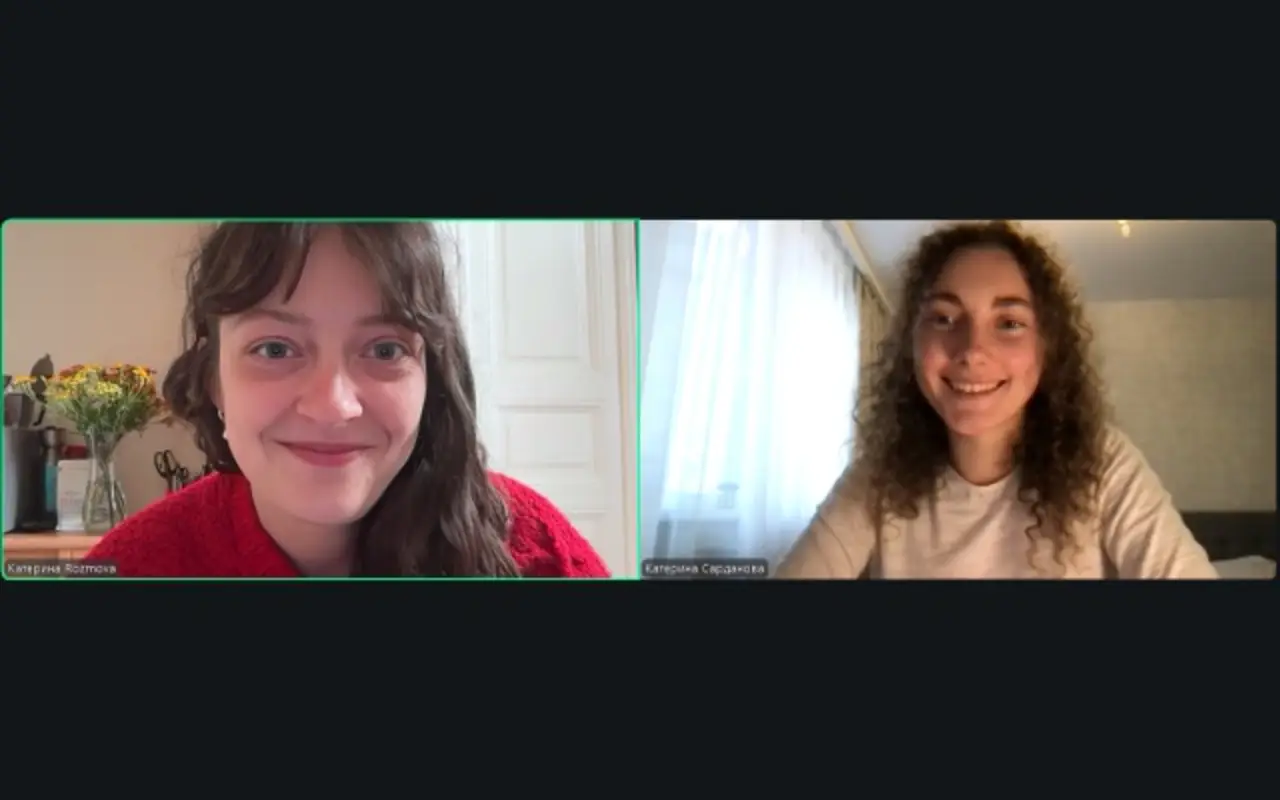
A practicing psychologist and head of the Psychological service at Taras Shevchenko National University of Kyiv Kateryna Sardanova hosted a webinar titled «Nonviolent communication in legal practice and personal life». The event was organized by the Ukrainian National Bar Association with the support of the International Bar Association (IBA).
The speaker outlined the four steps of nonviolent communication: observation, feelings, needs, and requests.
She compared the first step to a camera recording what is happening: in a conversation, you should state specific facts while avoiding judgments and generalizations. For example, instead of saying, «You’re always late», note that the person was supposed to arrive at nine but arrived at a quarter to ten. Words like «always», «constantly» and «never» lack specificity about the situation, and criticism can prompt the other person to become defensive.
The second step is to name your own feelings without substituting them for judgments about the other person’s actions. That is why, in the statement «I feel like you’re lying to me», the speaker suggested identifying the judgment rather than the emotion. Instead, in a conversation, you can directly name the anxiety, worry, or irritation that you are feeling.
Next, K. Sardanova advised identifying the need underlying this state for example, a need for safety, understanding or respect. The final step is to formulate a clear, specific, and achievable request. It should not sound like an ultimatum or an order: the other person should be given the opportunity to refuse or suggest an alternative solution.
The psychologist demonstrated the application of this sequence using a scenario where a client submits case materials just a few hours before a hearing. The advocate can point this out, explain that they feel anxious and under professional pressure because they need time to prepare the client’s defense, and suggest that, going forward, the submission of documents be coordinated at least one day in advance. The client, in turn, can agree or suggest an alternative.
Separately, the speaker explained how to translate the client’s requests into specific communication agreements: for example, offering the client a brief update via messaging app once a week or a phone call on Friday. At the same time, these options must also be acceptable to the advocate: if making a phone call is inconvenient, the advocate can suggest a message via messenger or an email.
To get used to this approach, K. Sardanova suggested writing down the steps and phrases discussed, trying to say them in front of a mirror, or using them in a conversation with a close friend or family member.
«Our task is to remain firm on the substance and gentle toward the person», - emphasized K. Sardanova.
Previously, advocates were also advised on how to maintain professional boundaries when dealing with a difficult client, what mistakes to avoid when communicating with clients and how to switch between professional and personal roles.
© 2026 Unba.org.ua Всі права захищені
"Національна Асоціація Адвокатів України". Передрук та інше використання матеріалів, що розміщені на даному веб-сайті дозволяється за умови посилання на джерело. Інтернет-видання та засоби масової інформації можуть використовувати матеріали сайту, розміщувати відео з офіційного веб-сайту Національної Асоціації Адвокатів України на власних веб-сторінках, за умови гіперпосилання на офіційний веб-сайт Національної Асоціації Адвокатів України. Заборонено передрук та використання матеріалів, у яких міститься посилання на інші інтернет-видання та засоби масової інформації. Матеріали позначені міткою "Реклама", публікуються на правах реклами.