
An advocate's meeting with a client outside the office: how to conduct it without giving away too much
If a client suggests meeting in a public place, keep in mind that any name or amount mentioned aloud could be overheard by bystanders. Therefore, it’s important to plan ahead regarding the table, seating arrangements, and the scope of the conversation.
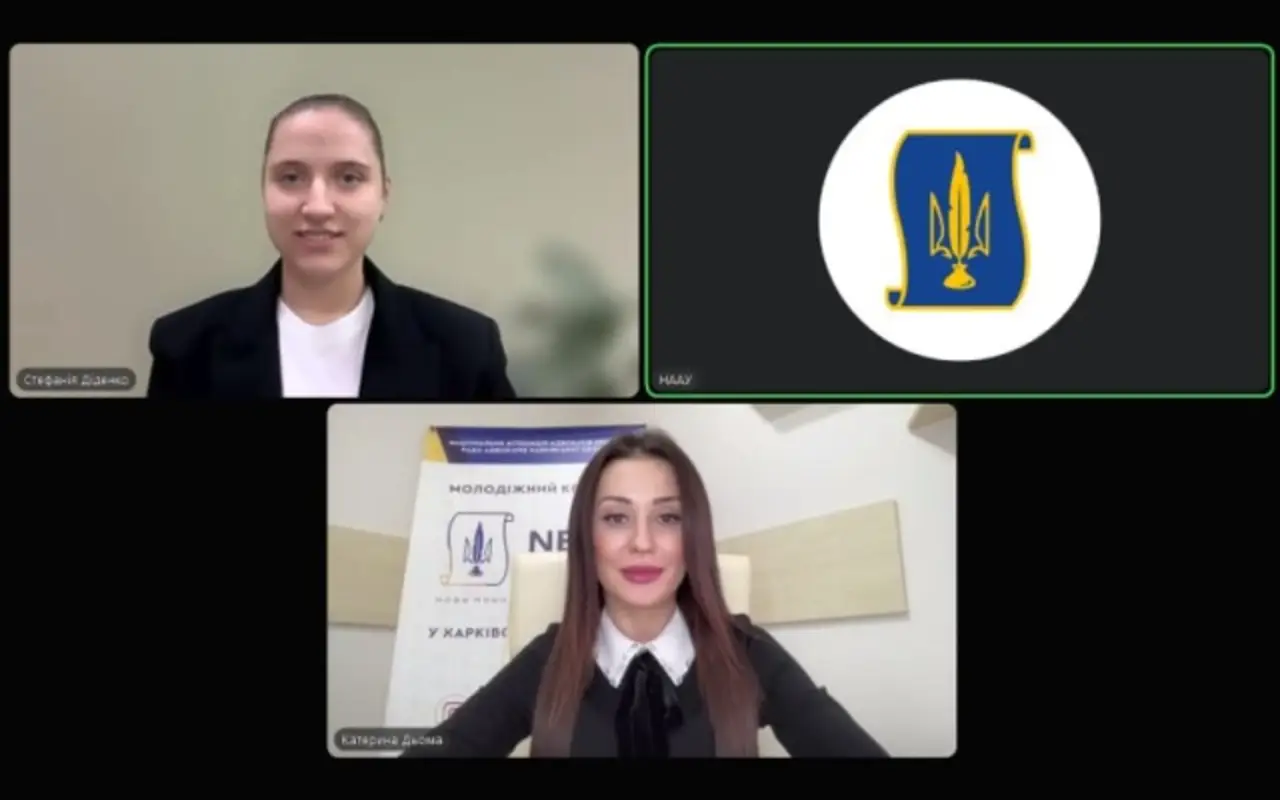
This topic was discussed during the webinar «The art of business etiquette: how to build an impeccable image and conduct effective negotiations». The event took place on October 13 at the initiative of the UNBA NextGen in the Kharkiv region. The speaker was an expert on diplomatic etiquette, protocol and public representation Stefania Didenko. The meeting was moderated by the Committee’s regional representative Kateryna Dyoma.
A webinar participant asked how to handle a situation where a client suggests meeting at a café. The speaker replied that even on neutral ground, the person who arranges the space in advance can take on the role of host. She advised arriving 15–20 minutes early and choosing a table in a corner or alcove. It should be away from the entrance, the cash register, the restroom, and a noisy coffee machine.
S. Didenko recommended that the client suggest a seat facing the room or a nice view so that he feels comfortable, while the advocate herself should sit with her back to the main flow of visitors. As she explained, this is how an advocate shows respect for the person she is speaking with. At the same time, this shields working materials and the screen of a laptop or tablet from prying eyes.
Public spaces, the speaker emphasized, pose a risk of information leaks. Therefore, in a café, one should avoid mentioning surnames, specific amounts, or company names out loud. It is better to replace them with neutral phrases such as «in our case» or «the other side». If a client begins to delve into sensitive details, they should be gently stopped. These nuances are best discussed in a secure setting, while at the table, the focus should remain on the overall strategy.
The speaker advised ordering items that won’t distract from the conversation or pose a risk to clothing or documents: coffee, tea, or water. It’s best to avoid full meals unless a business lunch has been arranged in advance. The relaxed atmosphere of a café blurs the boundaries of the meeting. Therefore, she suggested setting clear boundaries from the start: for example, stating that you have about 40 minutes and plan to go over the key documents during that time.
According to S. Didenko, the conversation itself should be prepared in advance. You need to define the goal, as well as the desired and minimum acceptable outcomes. At the end of the meeting, it’s a good idea to summarize the agreements out loud: who does what and by when. Ending the conversation politely is helped by a phrase that specifies the next concrete step. «Thank you, I’ve received all the necessary information. I’ll get back to you with a proposal by Friday», - the speaker cited as an example from her own experience.
Within 24 hours of the meeting, you should send a follow-up email summarizing the discussion. Such an email, she explained, helps keep everyone on track and clears up any differences in interpretation.
Previously, UNBA NextGen speakers explained why the highest degree of formality is appropriate for an advocate in court and discussed how eye contact, pauses, and cell phone use affect a client’s trust. Advocates were also given advice on what to do when a client is under severe stress.
© 2026 Unba.org.ua Всі права захищені
"Національна Асоціація Адвокатів України". Передрук та інше використання матеріалів, що розміщені на даному веб-сайті дозволяється за умови посилання на джерело. Інтернет-видання та засоби масової інформації можуть використовувати матеріали сайту, розміщувати відео з офіційного веб-сайту Національної Асоціації Адвокатів України на власних веб-сторінках, за умови гіперпосилання на офіційний веб-сайт Національної Асоціації Адвокатів України. Заборонено передрук та використання матеріалів, у яких міститься посилання на інші інтернет-видання та засоби масової інформації. Матеріали позначені міткою "Реклама", публікуються на правах реклами.