
Three seconds of silence can help an advocate maintain their position
Advocates often conduct difficult conversations with clients, opponents, or government officials outside the framework of formal procedural rules — over the phone, in a hallway, or in an official’s office. And when under pressure, there is sometimes a temptation to compromise one’s position just to ease the tension.
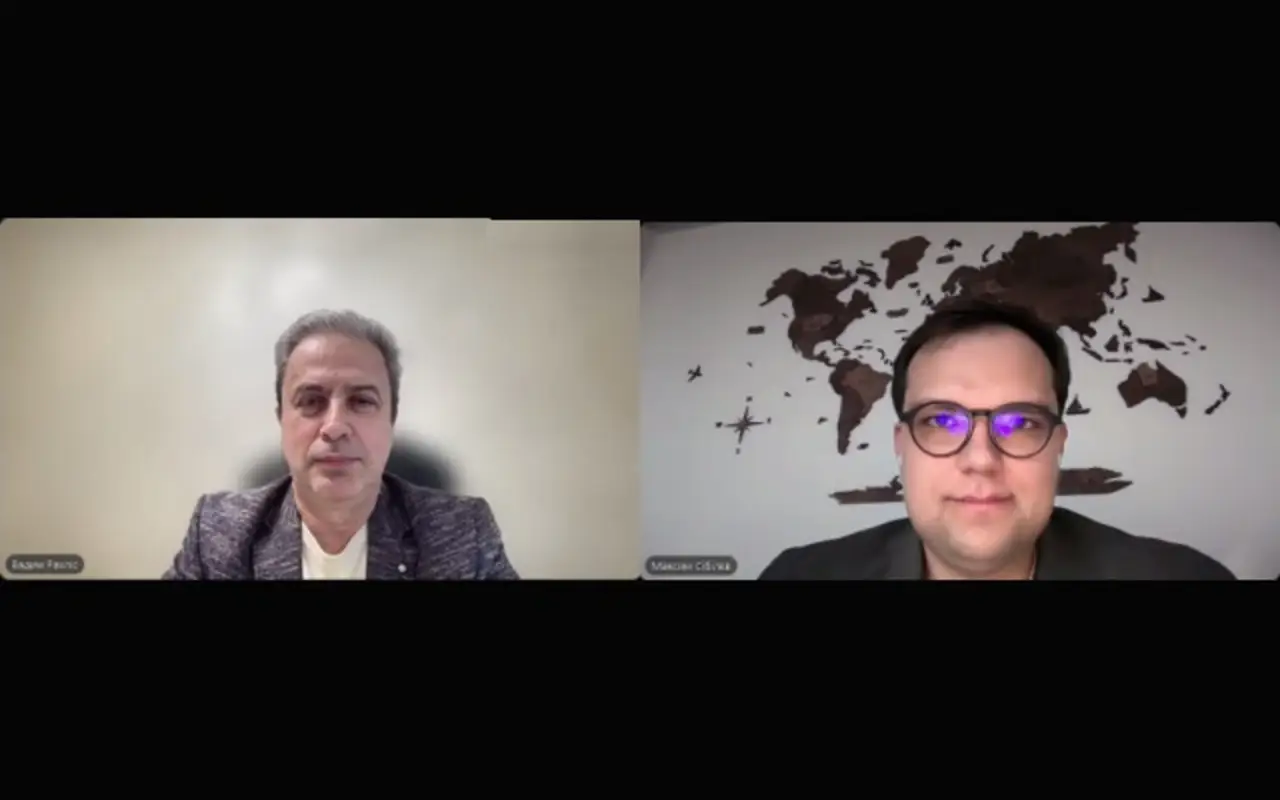
Advocates were taught how to counteract such pressure during the webinar «Negotiations under pressure: how to conduct a difficult conversation without compromising your position», held on October 30 by the UNBA NextGen in the Luhansk region. The speaker was an expert in conflict communication Vadym Rakhles. The meeting was moderated by the Committee’s regional representative Maksym Sibilev.
According to V. Rakhles, a «position» consists of the interests, boundaries, and conditions that a person defines before entering into a dialogue. He defined «losing one’s position» as a concession made solely to defuse tension. The speaker explained that pressure does not refute arguments; rather, it reduces the time and space available for decision-making.
The speaker identified six forms of pressure: time, status, procedure, publicity, uncertainty, and ultimatums. For the most part, they are combined. V. Rakhles considers procedure to be the most subtle form: it is rarely perceived as pressure until it becomes clear that there is no choice left. Counterattacks, silence, concessions, or getting bogged down in details — all of these defensive reactions equally lead to losing ground.
Therefore, the speaker identified controlling one’s own state as the first tactic. He proposed four steps. First, exhale and say nothing for three seconds. Next, mentally identify the form of pressure. Then — reframe the discussion, suggest an order for the discussion or criteria. Finally, ask a question without making excuses, such as «What is most important to you here?» and pause. The speaker cautioned against putting pressure on the other person in front of witnesses, undermining their status, making concessions just to keep the peace, and making direct threats.
The speaker also provided responses to typical phrases used to exert pressure. In response to «everyone understands», it is appropriate to clarify exactly who believes this and based on what criteria. In response to «I wouldn’t want to…», it is worth asking what exactly is meant. In response to «I’m just asking», you can determine what purpose the question serves. If procedural pressure is applied, V. Rakhles advised finding out who established the rule or deadline and documenting agreements in writing after each stage. Instead of an ultimatum, he recommended asking what outcome the other party considers successful and what risks are unacceptable to them.
Responding to the moderator’s question about when to end negotiations, the speaker noted that even in the face of unacceptable demands, it is better to take a pause and leave the door open to resuming the dialogue. «We are ready to continue negotiations, but not on terms that make it impossible to achieve a result», - V. Rakhles stated.
Previously, UNBA NextGen speakers discussed when an advocate should turn down a potential client, how to raise concerns without making accusations and what to find out if a client wants to go to court.
© 2026 Unba.org.ua Всі права захищені
"Національна Асоціація Адвокатів України". Передрук та інше використання матеріалів, що розміщені на даному веб-сайті дозволяється за умови посилання на джерело. Інтернет-видання та засоби масової інформації можуть використовувати матеріали сайту, розміщувати відео з офіційного веб-сайту Національної Асоціації Адвокатів України на власних веб-сторінках, за умови гіперпосилання на офіційний веб-сайт Національної Асоціації Адвокатів України. Заборонено передрук та використання матеріалів, у яких міститься посилання на інші інтернет-видання та засоби масової інформації. Матеріали позначені міткою "Реклама", публікуються на правах реклами.