






Does the client want to file a lawsuit? What an advocate should find out before filing a lawsuit

Even a court ruling in a client’s favor may leave the client dissatisfied if the ruling cannot be enforced or if the dispute destroys relationships that are important to the client. Therefore, when discussing legal strategy, an advocate should determine exactly what interests and needs underlie the decision to go to court.
This point was emphasized by chairman of the UNBA mediation Committee Louiza Romanadze during the webinar «Communication in the practice of law with clients, the court and other parties to legal relationships». The event took place on September 25, 2026, in the Volyn region, organized by the UNBA NextGen. The meeting was moderated by the Committee’s regional representative Natalia Savchuk.
L. Romanadze explained that clients often come to an advocate with a pre-formed position: they want to file a lawsuit, obtain a response from the other party, or, as a matter of principle, see the case through to the end. At the same time, behind such a demand lie interests, needs, motives, and values that are not always immediately articulated. Identifying them helps the advocate determine how to develop a legal strategy to serve the client’s interests.
To this end, the speaker suggested using three questions from mediation practice: «What is important to you?», «Why is this important to you?» and «What does this mean to you?». For example, upon hearing a request to file a lawsuit, an advocate can ask why going to court is important to the person and what it means to them.
Separately, during the discussion, the question arose of how to obtain more information from a client at the outset of the case, when for various reasons the client does not disclose all the circumstances. L. Romanadze linked the completeness of information disclosure both to trust in the advocate and to the advocate’s ability to ask questions. During the information-gathering stage, she advised using open-ended questions more often, as they elicit detailed responses.
At the same time, closed-ended questions those that can be answered with «yes» or «no» are also necessary: they are appropriate for verifying or clarifying specific circumstances. As examples, the speaker cited questions about whether the client had already filed a lawsuit and whether there had been attempts to settle the dispute amicably.
Another tool is paraphrasing: the advocate repeats the content of what was heard in their own words to verify that they understood it correctly. According to L. Romanadze, this simultaneously shows the client that they are being listened to and provides an opportunity to correct any misunderstandings. She noted that advocates receive a large amount of information and often move forward without seeking clarification, even though there may be a significant difference between what was heard and what the person was trying to convey.
The speaker suggested combining paraphrasing with interim summaries: after each segment of the conversation, briefly outline what circumstances the advocate has understood, what is important to the client, and what the client hopes to achieve. This approach allows for gradually clarifying what has been heard before summarizing a large amount of information.
To discuss alternatives and possible consequences, L. Romanadze advised asking hypothetical questions that begin with «What if…?». For example, what will happen if the other party does not agree to the proposed option or if the court rules in favor of the opponent.
The speaker illustrated this with the example of a family dispute: in an effort to punish someone or prove a point, a person may not consider how the legal process will affect their relationships with relatives. An advocate can help them discuss these consequences in advance — in particular, by asking what will change in those relationships even after a ruling in their favor. According to L. Romanadze, this is precisely where the question arises as to whether the outcome of the trial will serve the client’s interests or merely their initially stated position.
Popular news
Legislation
The UNBA warned against restricting advocates' rights during the implementation of the Convention
The Ukrainian National Bar Association supported the adoption in principle of draft laws aimed at harmonizing national legislation with the Council of Europe Convention on the Protection of the Professions of Lawyer, and also highlighted the need to refine them in preparation for the second reading.

Legal defence of military personnel
Guarantees in the event of detention and procedures for military personnel: recommendations from the UNBA Committee
Most often, military personnel turn to advocates regarding frozen bank accounts and delays in discharge. Step-by-step procedures have been prepared for such situations. A guide on one-time financial assistance has been provided for the families of those killed in action. And the new regulations governing the stay of mobilized individuals at TCCs require changes regarding guarantees of communication with an advocate.

Guarantees of the practice of law
Ratification first, reform second: Valentin Gvozdiy on the Council of Europe Convention
Albania and Bosnia and Herzegovina have ratified the Council of Europe Convention on the Protection of the Professions of Lawyer. Eight ratifications are required for it to enter into force, so Ukraine may still be among the states that will activate the mechanism for monitoring guarantees for the legal profession.
Rule of Law Roadmap
Lidiya Izovitova: reform of the advocacy profession should make the profession stronger and individuals better protected
The Ukrainian advocacy community is finalizing work on a new version of the relevant law. The roadmap on the rule of law has set the fourth quarter of 2026 as the deadline for achieving results in this area. The draft is intended to ensure safeguards for the practice of law through mechanisms of accountability for violations.

Abroad
The first country to ratify the Convention on the Protection of the Professions of Lawyer
Bosnia and Herzegovina became the first country to ratify the Council of Europe Convention on the Protection of the Professions of Lawyer (CETS No. 226). The country signed the Convention on March 17, 2026, so it took just over seven months to ratify it.
Discussion
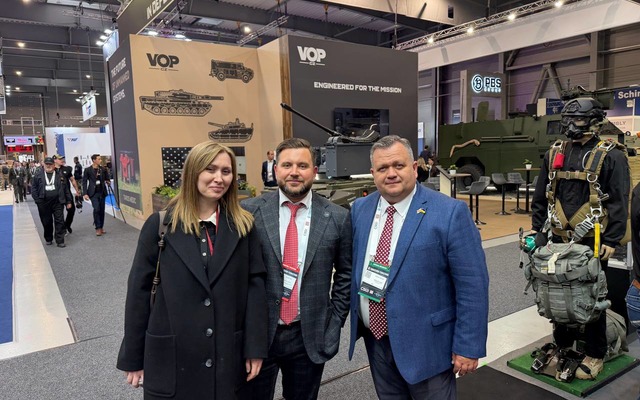
Civil security and guidelines for investors: representatives of the UNBA attend a forum in Prague
How to establish a business in Ukraine, protect investments, and comply with regulatory requirements — these were the issues that foreign companies in the security sector discussed with representatives of the UNBA during an international forum in Prague.
Legislation
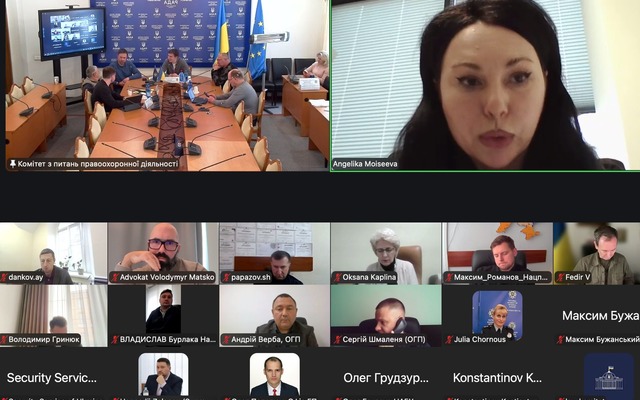
An emergency search without a warrant? What changes are advocates proposing to the CPC
The Verkhovna Rada is preparing a consolidated draft of amendments to the Criminal Procedure Code regarding searches in urgent cases without a prior ruling by an investigating judge. The UNBA insists that judicial oversight following such a search must be effective, and that homeowners must be full participants in the procedure.
Discussion
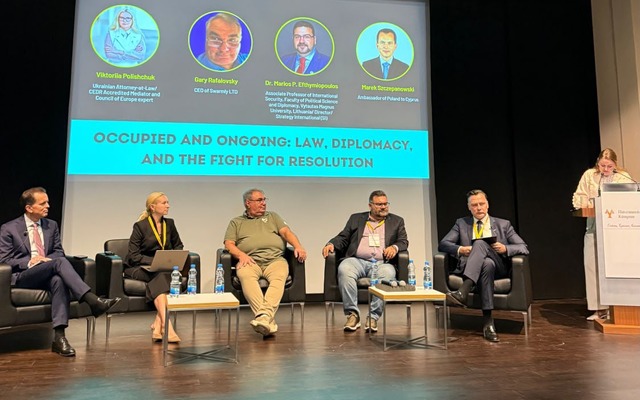
In Nicosia discussions focused on the protection of labor rights under occupation
How can a person’s labor rights be protected if the employer, the archives, and the employment record book remain in the occupied territory? And does a court that takes into account a document issued there legitimize the occupying authority?
Publications

Vasyl Kolishnyi, «Law and Business» Supporting mental health should become part of the professional culture of the Bar, - H. Udovenko

Volodymyr Matsko Extradition during wartime: when the risks outweigh the request

Volodymyr Matsko Extradition as a systemic form of rights violations

Victoria Yakusha, Law and Business The anti-corruption vertical cannot «take care» of the Bar as an institution, - acting head of the HQDCB

Censor.net Protecting advocates – protecting justice: addressing concerns about the new law

Ihor Kolesnykov A BRIEF SUMMARY REGARDING THE APPLICATION OF THE ORDER ON EXTENDED CONFISCATION IN LATVIA REGARDING FINANCIAL ASSETS OF…

Valentyn Gvozdiy WORKING IN A WAR ZONE

Lydia Izovitova Formula of perfection

