
Remote MMC for a servicemember abroad: how to gather the necessary documents
Service members receiving medical treatment abroad can now obtain a MMC decision without returning to Ukraine. However, the process often stalls before the commission even meets — either during the translation of documents or at the military unit. How can one prepare a package of documents that will allow the MMC to make a decision?
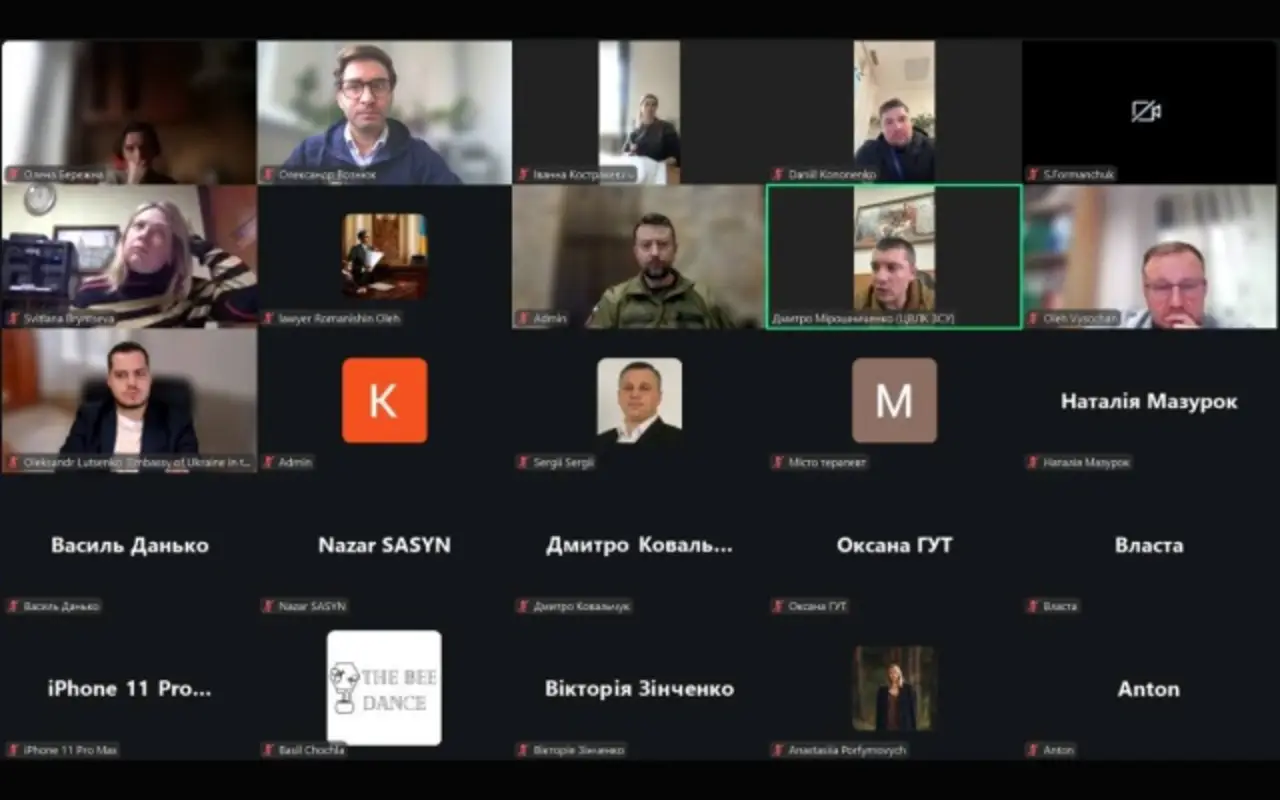
This was discussed during the roundtable «MMC abroad: problematic issues», held on November 2, 2026, by the UNBA Committee on the protection of the rights of persons with disabilities in collaboration with civil society organizations. The meeting was moderated by the Committee chairman Oleksandr Voznyuk. He noted that many wounded servicemembers are receiving treatment abroad under the medical evacuation program. Some of them have been unable to resolve their status for a long time: some have been removed from the active-duty roster, while others have failed to pass the MMC.
Where to submit
The chairman of the Central MMC of the Armed Forces of Ukraine Dmytro Miroshnychenko distinguished between two types of remote examinations. Decisions regarding the need for continued long-term treatment have been made by the Medical Examination Commission based on documentation dating back to 2023; according to him, there are already well over a thousand such conclusions. A new development is the remote examination to determine fitness for military service. It was introduced by Ministry of Defense Order No. 302 dated August 27, 2026, which amended the Regulations on MMC in the Armed Forces of Ukraine, approved by Order No. 402 dated August 14, 2008. Such a conclusion is issued as a MMC certificate instead of a medical certificate. It is easier to prepare, has the same legal force, and serves as grounds for discharge from service if the servicemember so desires.
The documents are reviewed by six military medical clinical centers — in Kharkiv, Dnipro, Odesa, Vinnytsia, Kyiv and Lviv. Some servicemembers submit them along with a referral from their commander. This applies only to service members who have traveled abroad for treatment in accordance with the Procedure for referring personnel from the defense and security forces injured as a result of the Russian Federation’s military aggression against Ukraine for treatment abroad, approved by Cabinet of Ministers Resolution No. 411 of April 5, 2022. Deputy chairman of the Committee Svitlana Bryntseva drew attention to individuals with disabilities abroad whose re-examination deadlines have expired: they are not being evaluated remotely. The speakers agreed that this issue now falls under the jurisdiction of the ECOPFO.
Since fitness examinations began to be conducted remotely, the MMC has been compiling statistics from military medical clinical centers every Friday. As of early November, three cases were more or less finalized. In one case, a servicemember was deemed unfit for service with a re-examination. In the other two, the documents were returned for revision; the most recent of these was a year and a half old. Another 8–10 sets of documents, which have just been received, are currently under review. «There must be at least some substantial grounds for us to base our decision on», - explained D. Miroshnychenko. He advised submitting documents that reflect the current state of health as accurately as possible, since it is impossible to force foreign doctors to write reports according to the requirements of the Ukrainian agency’s order.
Certificate, translation, seal
Deputy chairman of the Committee Oleg Romanishyn explained that in Germany, medical documents are often issued electronically, without the doctor’s handwritten signature or the facility’s seal. Foreign doctors do not issue a final discharge summary until the treatment phase is complete. CT and MRI results, as well as lab test results, are generally not available to patients. The burden of translation effectively falls on the servicemember or their family. The application of the relevant article in the Schedule of diseases, conditions and physical defects (Order No. 402) depends on the quality of the translation: the attorney cited an example where a diagnosis was translated as «mental disorder» instead of «mental illness».
Volunteer Olena Berezhna, who accompanies wounded soldiers in Germany, noted that the remote medical examination procedure allows for the translation to be certified at a single location of the applicant’s choice: at a translation agency, a notary’s office, a consulate, or an embassy. However, some units require all the official seals at once, and in some cases, an apostille as well. For a soldier undergoing treatment in Germany, obtaining this is practically impossible. Having a six-page medical report translated by a certified translator there costs about €500. To have a translation certified at a consulate, a person in a wheelchair sometimes has to travel 200–300 km. Regarding errors in the translation, O. Berezhna had a different opinion: discrepancies such as «bullet fragment» or «grenade fragment» arise because German doctors do not have the original documentation.
Where the procedure stalls
O. Romanishyn pointed out that Ministry of Defense Order No. 302 sets a deadline of up to 10 days for remote medical examinations. This period begins only after the referral, along with the documents, is received by the MMC. The deadline for the military unit is not regulated: if it does not send the package within a month, the countdown does not begin. Sometimes, the unit sends only the referral without the medical documents. Therefore, the attorney proposed introducing time limits for this stage as well.
According to O. Berezhna, the procedure in effect since November 27, 2024, requires the unit to prepare the soldier for the examination one month before the expiration of the MMC’s previous conclusion. In practice, they only find out that the deadline has passed when payments stop. In one case, the unit did not accept the documents for two months because the chief medical officer wanted to receive them from the embassy.
Committee member Ivanna Kostrakevych described another vicious cycle based on her own experience: the unit’s doctor does not refer a seriously wounded soldier to the MMC because the medical discharge summary does not contain such a recommendation from a doctor.
A representative of the Office of the Military Ombudsman Serhiy Trofimov noted that it was the Office that initiated amendments to Order No. 402 based on the results of complaints. He highlighted three problems: commanders’ refusal to issue referrals, the complicated transfer procedure and the lack of a mechanism to support military personnel abroad.
A representative of the Consular Service Department of the Ministry of Foreign Affairs Danylo Kononenko spoke about the role of consulates. According to his explanation, before a servicemember is sent abroad for treatment, the diplomatic mission receives a list of contact information from the Ministry of Health via the Ministry of Foreign Affairs. The consul informs the Ministry of Defense monthly about the servicemember’s whereabouts and the last time contact was made with him. The consulate cannot obtain such data from the hospital or the migration service due to GDPR requirements. Therefore, D. Kononenko urged people to report any service members who have been overlooked to the consulate via the hotline and to verify whether they have been mistakenly included on the list of civilians.
The risk of a premature return
O. Romanishyn reminded that the MMC must be completed before the 12-month treatment period expires. Law No. 4954-IX of August 19, 2026, «On amendments to certain laws of Ukraine regarding the right of military personnel, veterans and prisoners of war released from captivity to adequate medical care, rehabilitation and prosthetics», allows for the continuation of financial support beyond this period based on medical criteria. However, it does not take effect until November 24, 2026, and requires government regulation. In the meantime, some units are demanding that servicemembers return before completing their prosthetics or rehabilitation. In that case, he risks interrupting his treatment, losing his benefits, and facing the threat of disciplinary action. The attorney emphasized that undergoing treatment abroad does not constitute unauthorized absence from the unit. He proposed that servicemembers be informed in advance of their return and that their medical examination documents be verified beforehand.
O. Berezhna raised another question: after a determination of unfitness, who should initiate the ECOPFO, the processing of a pension, and the one-time cash benefit? In her experience, remote ECOPFO is possible: in three cases, it was conducted at the request of a traumatologist. However, there is no one responsible for this stage, and she believes there will be many such findings, as quite a few service members have been undergoing treatment for over a year.
Summarizing the discussion, O. Voznyuk announced that the Committee would send its proposals to government agencies based on the results of the discussion.
Previously, the UNBA discussed, how the ECOPFO and the MMC operate following the reform. It also analyzed the changes to the MMC procedures being prepared by the Ministry of Defense. The Ministry took into account the UNBA’s proposals regarding the MMC for those released from captivity.
© 2026 Unba.org.ua Всі права захищені
"Національна Асоціація Адвокатів України". Передрук та інше використання матеріалів, що розміщені на даному веб-сайті дозволяється за умови посилання на джерело. Інтернет-видання та засоби масової інформації можуть використовувати матеріали сайту, розміщувати відео з офіційного веб-сайту Національної Асоціації Адвокатів України на власних веб-сторінках, за умови гіперпосилання на офіційний веб-сайт Національної Асоціації Адвокатів України. Заборонено передрук та використання матеріалів, у яких міститься посилання на інші інтернет-видання та засоби масової інформації. Матеріали позначені міткою "Реклама", публікуються на правах реклами.