


The Ministry of Defense is preparing new procedures for MMC: what changes are being proposed
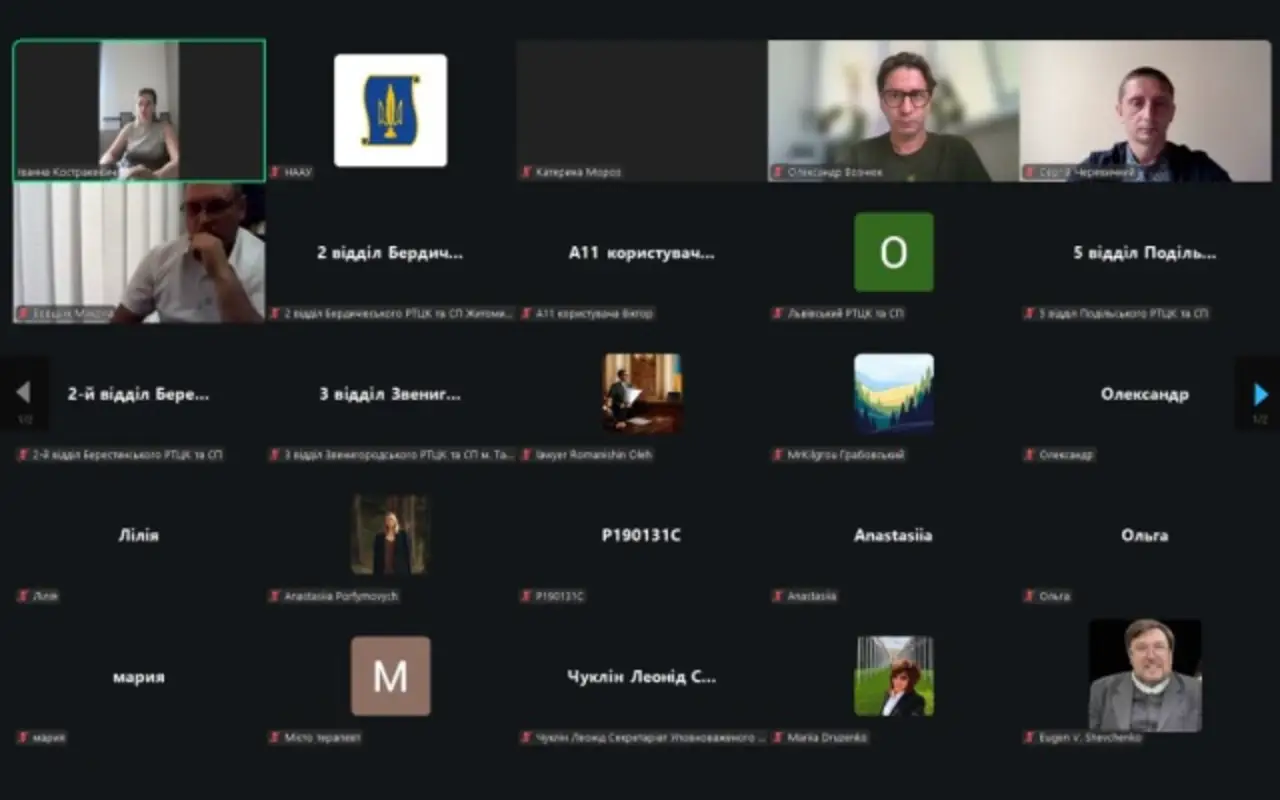
The Ministry of Defense is establishing an interagency working group to develop a new procedure for military medical examinations conducted by military medical commissions. Among the issues requiring resolution are the issuance of documents based on examination results, referrals for repeat medical examinations, verification of the medical basis for decisions, and the accountability of military medical commission members.
Options for reform
Representatives of government agencies and advocates discussed the existing problems during a roundtable titled «Military Medical Commissions: procedural violations, effective appeal mechanisms and judicial practice». The event was organized by the UNBA Committee on the protection of the rights of persons with disabilities, the Human Rights Union of Persons with Disabilities and the NGO «Dobrobat». The discussion was moderated by the Committee chairman Oleksandr Voznyuk.
Representatives from various agencies are expected to be involved in developing the new procedure. To this end, the Ministry is establishing an interagency working group, according to Ministry of Defense representative Kristina Saponenko.
According to her, the Regulations on Military Medical Examination in the Armed Forces of Ukraine, approved by Ministry of Defense Order No. 402 of August 14, 2008, will eventually be replaced. However, this will take time, as a rapid change to the document could disrupt the system’s operations. The Ministry has already prepared a concept, and after the sections are finalized and drafted, the draft of the new regulations will be submitted for public comment.
She noted that the order, adopted back in 2008, was designed for peacetime, and the list of medical conditions was intended for regular conscription into active duty.
K. Saponenko pointed out that courts verify compliance with the procedure for conducting military medical examinations. At the same time, verifying procedural compliance may not be sufficient, as controversial decisions are often linked to medical indicators and the specific course of a disease. Therefore, a mechanism for the medical review of such decisions must be established.
According to her, the Central Military Medical Examination Commission currently operates at the level of regional commissions, performing the same functions while also exercising oversight. Therefore, the Central Commission’s workload must be reduced, and its coordination and oversight functions should be separated. This could enable it to additionally conduct medical reviews of disputed decisions.
Document for appeal
UNBA Committee Council member Ivanna Kostrakevych identified the failure to issue Medical Examination Commission certificates to those subject to military service as one of the main problems during mobilization. An advocate must first request the certificate, after which the decision on fitness for military service can be appealed. Therefore, in the lawyer’s opinion, it is advisable to stipulate in the Regulations that the certificate must be issued and to establish that a decision that has not been delivered is not enforceable.
The speaker also cited an example where a person subject to military service was mobilized while a medical certificate was under review by the regional Military Medical Commission and awaiting subsequent approval by the regional Military Medical Commission. During the examination, the new commission did not take into account the previously submitted medical documents and the certificate and deemed the person fit for service. Therefore, according to I. Kostrakevych, it is also necessary to regulate the period between the issuance of a medical certificate and its approval, which can be lengthy.
In addition, she raised the issue of the causal link between an illness or injury and the defense of the homeland. In one of her cases, a servicemember who had participated in combat operations and undergone spinal surgery was initially denied this classification due to the lack of a report detailing the circumstances of the injury. After complaints were filed, the causal link was reviewed; however, the procedure required significant time and expense.
According to I. Kostrakevych, problems also arise due to the results of the initial medical examination during mobilization.
If a person is deemed fit for service, the advocate must subsequently prove that the individual did not have the relevant medical condition as of the date of mobilization in order to establish a causal link. Furthermore, appeals regarding the establishment of a causal link can take regional medical examination commissions nearly a year to review.
Referrals to the Medical Examination Commission
During its first six months of operation, the Office of the Military Ombudsman received 12,000 complaints. Of these, 23% relate to medical issues. This topic ranks first among the categories of complaints. The statistics were presented by head of the Department for Ensuring the Protection of Servicemembers’ Rights at the Office Serhiy Cherevychny.
Among medical complaints, 43% are related to obtaining referrals for medical examinations. Next in terms of the number of complaints are referrals for military personnel to receive treatment, appeals against the actions of medical examination board officials, medical care, and the medical examination process itself.
S. Cherevychny clarified that the Office of the Military Ombudsman reviews complaints from military personnel or their representatives. However, issues regarding violations of citizens’ rights during mobilization fall under the jurisdiction of the Verkhovna Rada Commissioner for Human Rights.
A representative of the Ombudsman’s Secretariat Leonid Chuklin also shared some data on this matter. According to him, 6,127 complaints were received in 2025, and as of July 2026, there were approximately 3,500. Nearly half of this year’s complaints concerned the medical examination process.
In his view, the location of service should be taken into account when determining the degree of fitness for service. Currently, fitness is determined based on the branch or type of military unit, even though support units are also present in combat brigades, and actual conditions of service may not correspond to a servicemember’s state of health.
Accountability of members
A member of the UNBA Committee Mykola Boshchyk proposed introducing a separate mechanism for the disciplinary accountability of Medical Examination Commission members. Among the possible consequences, he cited dismissal, exclusion from serving on the commission, and suspension from practicing law for a specified period.
His colleague on the Committee Oleg Romanishyn emphasized that the procedure for filing an appeal and requesting a re-examination takes time. And by the time an advocate secures a referral for a service member to undergo a re-examination, the service member may already be stationed at a military unit or undergoing basic military training.
Therefore, he identified the accountability of members and heads of the Medical Examination Commission who make unlawful decisions as the key issue.
K. Saponenko agreed that every level of the Medical Examination Commission must understand the consequences of its decisions. She suggested that one possible mechanism would be to link payment to the quality of the examination: if a medical service was provided improperly, it should not be paid in full. To implement this, the Ministry of Health and the National Health Service of Ukraine (NHSU) must be involved. At the same time, she noted, medicine should not be criminalized, as doctors might then refuse to work on the Medical Examination Commission.
Medical Examination Commissions abroad
Separate changes are being prepared for military personnel undergoing treatment abroad. K. Saponenko reported that the draft amendments to the Regulations were scheduled to be submitted for external approval in the coming days. The draft is intended to define the procedure for conducting medical commissions to determine the fitness of military personnel abroad and to involve garrison medical commissions in this work.
The Ministry of Defense also plans to draft a new resolution to replace the pilot project for remote medical commissions, which was introduced by Cabinet of Ministers Resolution No. 1125 dated September 10, 2025. The current model remains in effect until September 2026; however, according to the Ministry of Defense representative, it has not worked in practice.
It is proposed to amend the Procedure for Referring Personnel from the Defense and Security Forces Who Have Suffered as a Result of the Russian Federation’s Military Aggression Against Ukraine for Treatment Abroad, approved by Cabinet of Ministers Resolution No. 411 of April 5, 2022. Before referring a service member for rehabilitation abroad, it is proposed to conduct a medical examination in Ukraine to prevent future issues with documentation.
***
Based on the results of the roundtable, the UNBA Committee is to prepare and submit written proposals to the relevant government agencies. O. Voznyuk also announced plans to continue discussions on the medical examination reform within the framework of a working group under the Office of the President.
As a reminder, the Ministry of Defense recently reported that it had taken into account the UNBA’s proposals regarding medical examinations for individuals released from captivity.
Popular news
Interaction
The UNBA is developing a concept for a Center for expert research
The Ukrainian National Bar Association has begun work on a concept for a Center for expert research, which is intended to provide advocates and their clients with access to specialized knowledge and the ability to have expert opinions professionally reviewed.
Guarantees of the practice of law
Ombudsman calls for a firm response to violence against advocates
Every instance of obstruction of an advocate’s lawful activities, use of physical force, delaying an investigation, or concealment of evidence must be subject to a proper legal assessment. The state is obligated to ensure that the right to a defense is a genuine guarantee.
Greetings
The UNBA congratulates Denis Maslov on his appointment as Minister of Justice
Denis Maslov’s many years of experience as a advocate, his work as a judge and his tenure as chairman of the Verkhovna Rada of Ukraine’s Committee on legal policy have given him a deep understanding of how the legal system functions and the challenges it faces.
Legislation
The Verkhovna Rada explained why the section on advocacy should be removed from the anti-corruption strategy
The section on advocacy and legal aid in the draft anti-corruption strategy for 2026–2030 goes beyond the scope of anti-corruption policy and is inconsistent with the constitutional guarantees of the independence of the legal profession.
Announcements
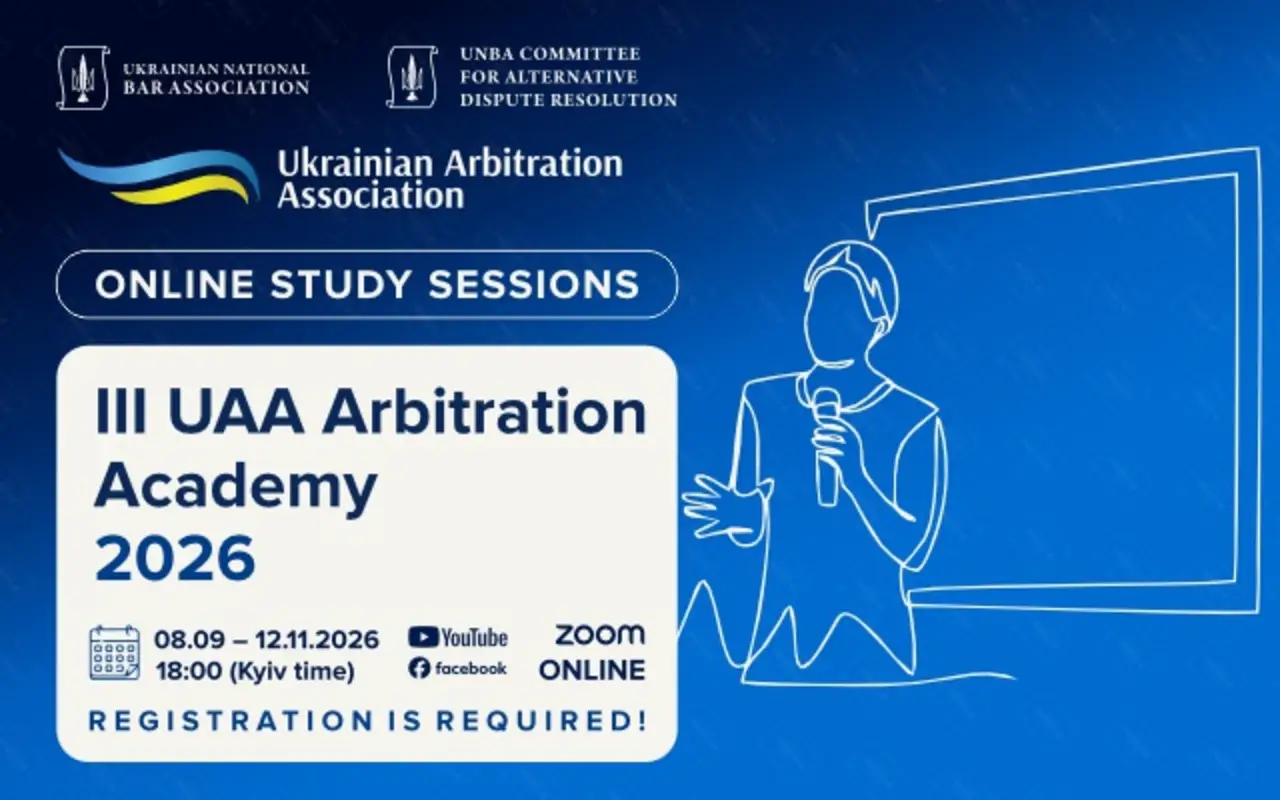
Advocates are invited to the III UAA Arbitration Academy 2026
The UNBA, at the initiative of the Committee on alternative dispute resolution, invites advocates, lawyers, students, judges, government officials and anyone interested in international arbitration to participate in the III UAA Arbitration Academy 2026.
Educational events
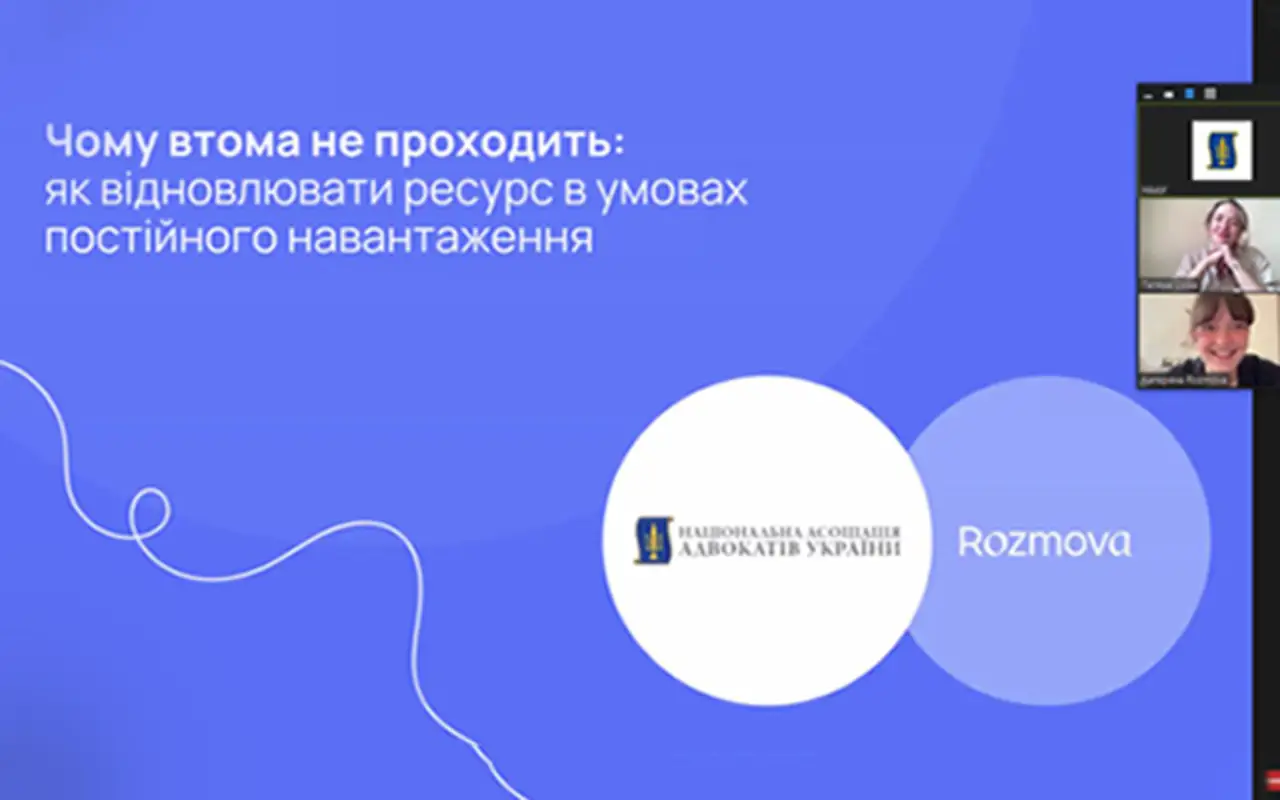
How can an advocate recharge if fatigue persists after the weekend?
Fatigue resulting from prolonged stress does not always go away after sleep, a weekend, or a vacation. In situations of chronic stress, it is important for advocates not only to «take a break» but also to understand exactly which resource has been depleted and what type of rest is needed.
Discussion
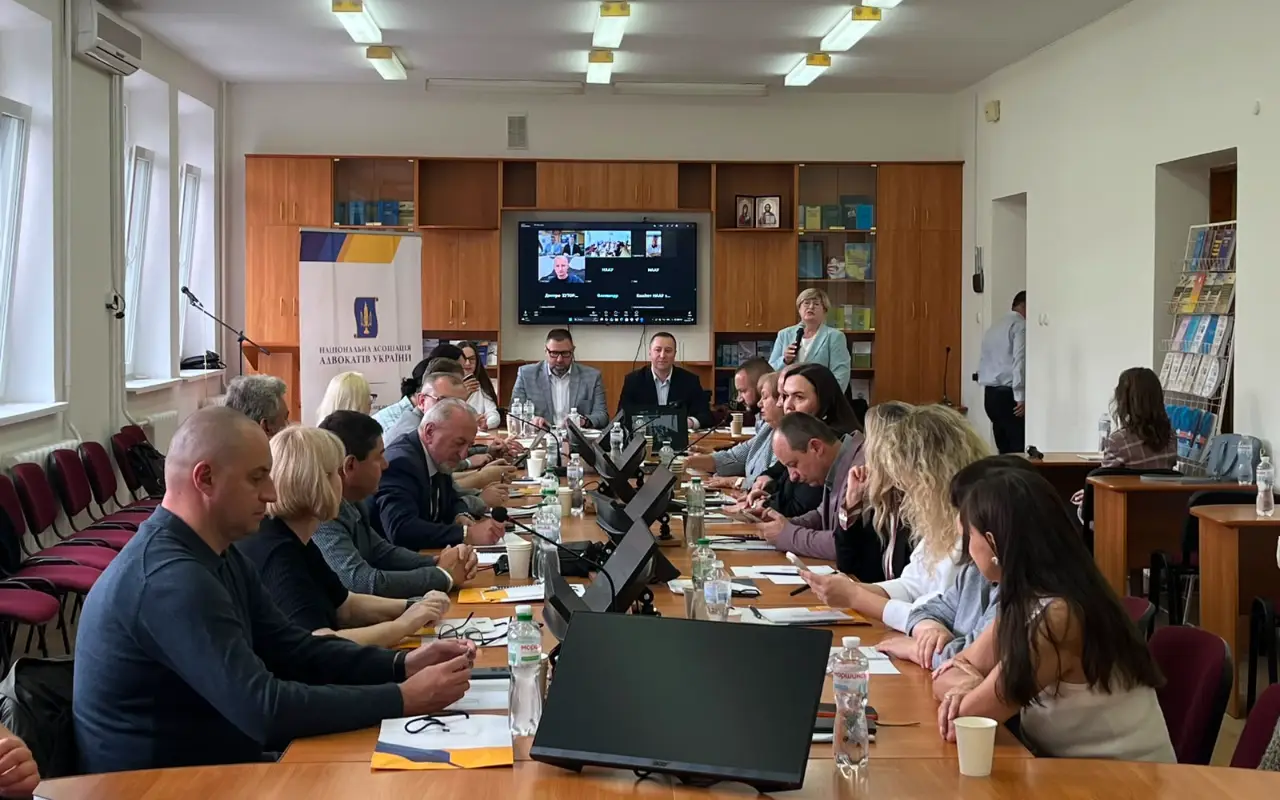
Complaints, time limits and prosecutorial powers: what gaps in the CPC do advocates see?
During the pretrial investigation stage, the effectiveness of the defense depends to a large extent on the proper implementation of procedural safeguards: the timely consideration of complaints, the advocate’s access to information regarding the progress of the proceedings and so on.
Guarantees of the practice of law
The NACP’s clarification regarding the declaration of membership in the UNBA should be clarified – BCU
An advocate’s membership in the UNBA is an element of professional status arising by virtue of law, rather than a voluntary private membership in an association. Therefore, failure to disclose it in a declaration should not automatically lead to the conclusion of unethical conduct or the concealment of a private interest.
Publications

Volodymyr Matsko Extradition during wartime: when the risks outweigh the request

Volodymyr Matsko Extradition as a systemic form of rights violations

Victoria Yakusha, Law and Business The anti-corruption vertical cannot «take care» of the Bar as an institution, - acting head of the HQDCB

Censor.net Protecting advocates – protecting justice: addressing concerns about the new law

Ihor Kolesnykov A BRIEF SUMMARY REGARDING THE APPLICATION OF THE ORDER ON EXTENDED CONFISCATION IN LATVIA REGARDING FINANCIAL ASSETS OF…

Valentyn Gvozdiy WORKING IN A WAR ZONE

Lydia Izovitova Formula of perfection

Sergiy Vylkov Our judicial system is so built that courts do not trust advocates