






The Verkhovna Rada is waiting for the Minister of Justice to take action on signing the Convention for the Protection of the Profession of Lawyer
Ukraine, which was directly involved in the preparation of the world's first Council of Europe Convention for the Protection of the Profession of Lawyer, has still not signed it. There appear to be no formal objections, but no real steps have been taken towards accession either.
New guarantees
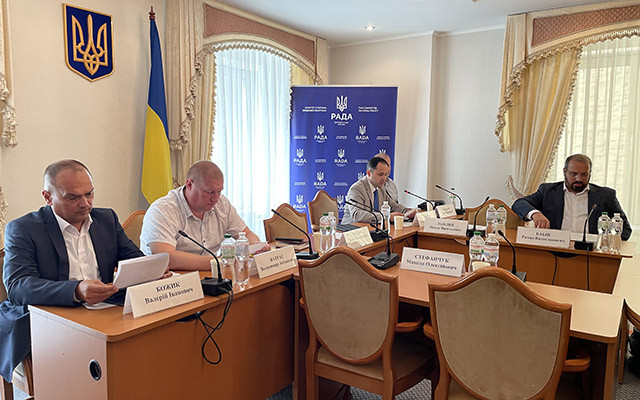
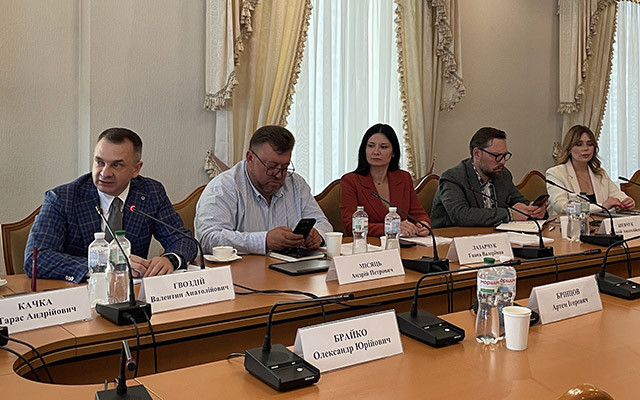
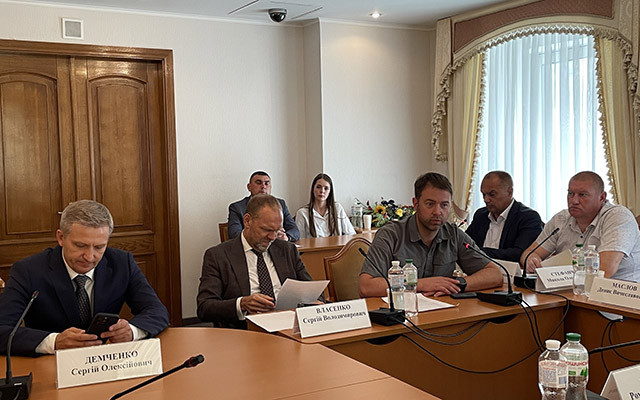
The reasons for the delay in the signing and ratification process were discussed on August 20 at a working meeting in parliament. The event was held at the Subcommittee on the organization and activities of the advocacy of the Verkhovna Rada Committee on legal policy, at the initiative of the Subcommittee's chairman Volodymyr Vatras.
The event was attended by members of parliament, representatives of the Ministry of Justice, the Ministry of Foreign Affairs, and the Ukrainian National Bar Association.
We would like to remind you that the need to prepare the Convention was prompted by the growing number of reports of attacks on advocates, including in the form of persecution, threats, physical attacks, or interference in the exercise of their professional duties. In 2022, the European Committee on Legal Cooperation established a Committee of Experts on the Protection of Advocates (CJ-AV), which includes 15 experts from across Europe, including Ukraine. One of the drafters of the Convention was the Vice President of the UNBA, BCU Valentin Gvozdiy, who was even elected Vice-President of CJ-AV.
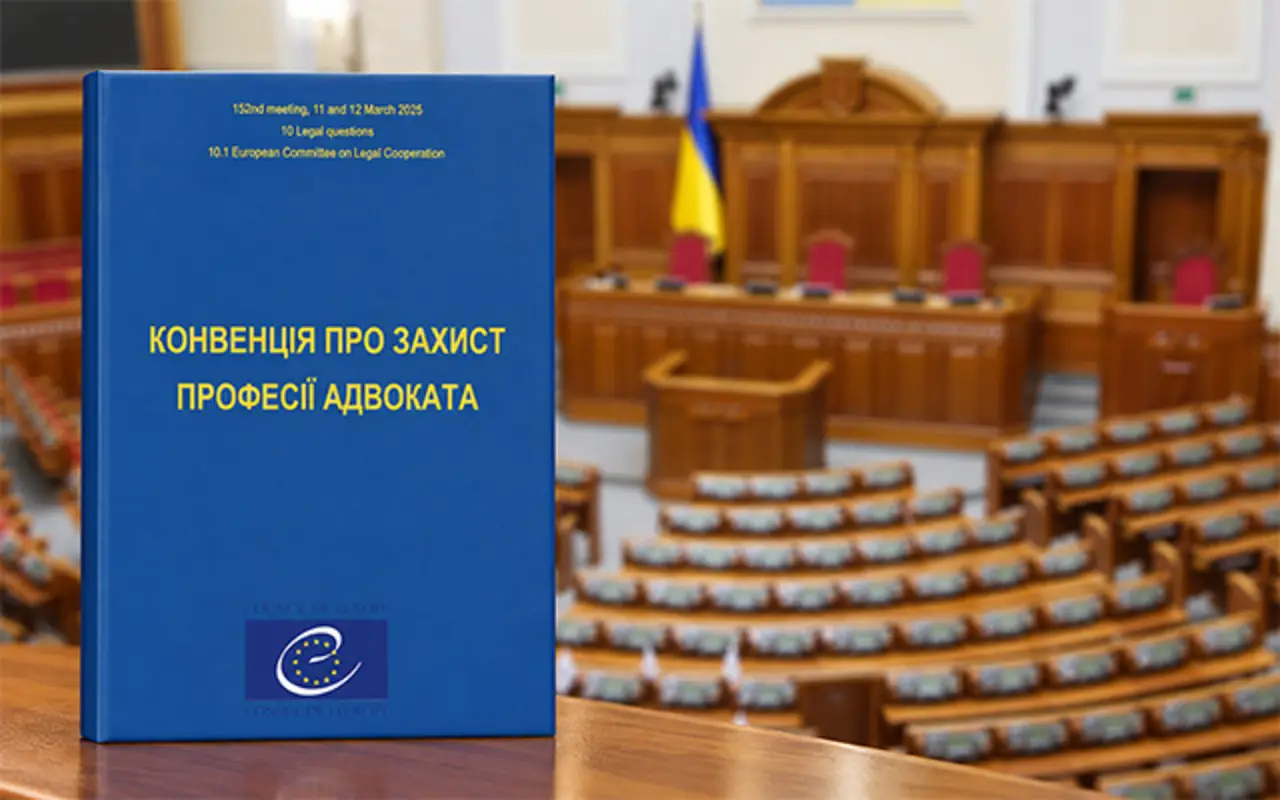
The Convention on the protection of the profession of advocate was adopted by the Council of Europe at its meeting on March 12, 2025.
It applies to both advocates themselves and professional associations. The document contains provisions on the right to exercise professional activities, professional rights, freedom of expression, professional discipline, and provides for special measures to protect advocates and their associations. In particular, it provides for a clear mechanism for monitoring its implementation. To monitor compliance with the provisions of the Convention, a group of experts on the protection of the advocate profession (GRAVO) will be set up, comprising representatives of the participating countries.
Risks of delay
The situation in which Ukraine actively participated in the preparation of the Convention but did not sign it seems paradoxical. V. Gvozdiy warned of the negative consequences: delay leads to the risk of losing the opportunity to include a representative of Ukraine in GRAVO. According to the document, the first election of eight members of this group will be held within one year after the Convention enters into force.
He noted that the signing requires only technical decisions and could be carried out by either the Minister of Foreign Affairs or the Minister of Justice, subject to a relevant authorization.
At the same time, the signature would be an important signal for the country's European integration process and confirmation of shared values. The Convention remains open for signature, and Ukraine still has a chance to join.
However, the Ministry of Justice sought the opinions of various state bodies, but not the UNBA, which is surprising. Nevertheless, the association conducted a detailed analysis of the current legislation of Ukraine for its compliance with the Convention and prepared a comparative table. No contradictions were found. In his opinion, this is logical, since Ukraine was among the authors of the document. In addition, during the screening process for EU candidate status, Ukraine reported to the European Commission that the Law on Advocacy and the Practice of Law was fully compliant with EU directives. V. Gvozdiy assured that advocates are ready to provide the Ministry of Justice with all available materials to speed up the signing and ratification of this important international treaty.
Opinions of parliamentarians
Participants in the meeting from the parliament unanimously emphasized that the issue of signing and ratifying the Convention cannot be postponed. The first initiative was taken by the chairman of the Subcommittee on political reform and constitutional law Maksym Dyrdin. He proposed setting a specific deadline and a list of responsible persons in the executive branch so that the Verkhovna Rada would know when the document would be ready for consideration. According to him, the Ministry of Justice and the Ministry of Foreign Affairs are expected to provide clear information rather than general explanations.
His colleague, Volodymyr Vatras, chairman of the Subcommittee on the organization and activities of advocacy and legal aid bodies, supported him. He called for clear deadlines to be set so that parliament could plan its next meeting to discuss the signing and ratification of the Convention, and also stressed the importance of directly involving advocacy in the consultation process.
Thus, it was M. Dyrdin and V. Vatras who set the tone for the discussion, effectively stimulating movement towards the adoption of concrete decisions.
Deputy chairman of the Committee on legal policy Valery Bozhik pointed out that the Convention does not actually create any problems for Ukrainian legislation. A comparison with the current Law «On advocacy and the practice of law» shows that the provisions are almost identical. The only aspect that may require clarification is the extension of protective measures to persons assisting advocates in the performance of their duties. Everything else poses no difficulties for implementation. He stressed that such obvious compliance should simplify the work, but so far no initiative has been seen on the part of the Ministry of Justice.
His colleagues were supported by the chairman of the Committee on law enforcement Serhiy Ionushas. At the same time, he noted that without a «road map», it is difficult to move forward. According to him, MPs need to see a step-by-step plan: who exactly should initiate the signing, who is responsible for preparing the package of documents, and what are the deadlines for this process. He stressed that parliament is ready to join in, but only after it receives a clear plan of action from the government.
The issue of the Ministry of Justice's position was also raised by Serhiy Demchenko, a member of the Committee on legal policy. He noted that at previous meetings, he had not heard whether the minister supported the signing and ratification or whether he had any reservations. Without this, it is difficult for parliament to make further decisions.
All deputies agreed that the lack of a clear answer from the Ministry of Justice creates the impression of procrastination.
Position of the Ministry of Justice
These questions were answered by the deputy Minister of Justice for European integration Lyudmila Sugak. She emphasized that the Convention had been signed by 18 states, none of which had yet ratified it. The Ministry of Justice recognizes the importance of the international treaty but insists on the need to carefully assess what changes will have to be made to national legislation. According to her, the preparation of a draft law on ratification should be accompanied by the development of amendments to relevant acts, and these processes should proceed in parallel.
She also referred to the government-approved «roadmap on the rule of law», which contains a number of measures to improve the advocacy system and harmonize it with EU law. In this context, she said, the Ministry of Justice had collected proposals from state authorities and judicial institutions in order to form a consolidated position.
At the same time, L. Sugak confirmed that the Ministry had not directly contacted the Ukrainian National Bar Association, although advocacy is the direct addressee of the Convention. She explained this by the desire to first obtain the views of state bodies, but assured that she was ready to send a request and hold consultations with the professional community.
In response to follow-up questions from MPs, the official also acknowledged that the Ministry of Justice had not submitted a proposal to the Cabinet of Ministers to authorize someone to sign the Convention. She noted that without collecting and summarizing all positions, the ministry was not ready to initiate this issue.
However, representatives of advocacy questioned this argument. For example, the chairman of the UNBA Committee on information policy and interaction with the media Oleksiy Shevchuk noted that the signing of the Convention is in no way related to lengthy internal procedures. After all, the Ministry of Foreign Affairs had all the necessary powers to sign the document from the moment it was adopted, and signing is not the same as ratification. He stressed that the delay contradicts the direct obligations of the state and creates a risk of devaluing the work of Ukrainian representatives in the Council of Europe. And the acting chairman of the High Qualification and Disciplinary Commission of the Advocacy Andriy Misyats stressed that the requests sent by the Ministry of Justice to state bodies in June do not indicate real progress in the case, but are rather a formality. That is why, in his opinion, clear deadlines for achieving specific results should be set for the ministry, otherwise the process will remain at the level of declarations.
The Ministry of Foreign Affairs is not authorized
The position of the Ministry of Foreign Affairs was presented at the meeting by the deputy director of the international law department Oleksandr Braiko. He confirmed that the Ministry of Foreign Affairs had supported the preparation of the Convention from the outset and had repeatedly sent letters in its favor. At the same time, he explained that the issue of signing cannot be resolved solely by the Minister of Foreign Affairs. Following the Council of Europe's announcement of the opening of the Convention for signature, the Cabinet of Ministers instructed all relevant authorities to develop a consolidated position.
According to the official, in March 2025, the Prime Minister instructed the Ministry of Justice to look into this and make suggestions to the government. So, signing can only happen after this process is done and the Cabinet makes a decision.
He also clarified that, in accordance with the Law on International Treaties, only the President, the Head of Government, or the Minister of Foreign Affairs can sign an international act on behalf of the state without additional powers. If the signing is entrusted to another person, a separate authorization from the Cabinet of Ministers is required.
At the same time, O. Braiko noted that the Ministry of Foreign Affairs is ready to participate in technical work at any stage, from the official translation of the document to communication with the Council of Europe. However, without the completion of the government's assignment and the coordination of the position of the central executive authorities, the Minister of Foreign Affairs is not authorized to sign on behalf of Ukraine.
This logic was criticized by those present. It creates a vicious circle: the Ministry of Justice is waiting for the positions to be gathered, the Ministry of Foreign Affairs is waiting for the Cabinet's decision, and the Cabinet is waiting for an initiative from the Ministry of Justice. As a result, responsibility is effectively shifted from one body to another, and the process of signing the Convention is not moving forward.
Next steps
In the end, the meeting participants agreed that the issue of joining the Convention requires specific decisions and the appointment of responsible persons. Members of Parliament emphasized that Parliament is ready to support the signing and ratification of the document, as it does not contradict current legislation and strengthens guarantees of the independence of advocacy. In their opinion, the implementation of the Convention will send a positive signal to international partners and enhance the prestige of the state.
To this end, it was decided to officially invite the Minister of Justice and his deputies to the next meeting of the Verkhovna Rada Committee on legal policy in order to obtain a clear position from the leadership of the ministry on the necessary steps.
The deputies also insisted that the ministry provide a list of legislative changes that may be necessary. «Instead of collecting long «positions» from the authorities, we need certainty at the ministerial level», - concluded Serhiy Vlasenko, a member of the relevant Committee.
He also pointed out that the arguments about possible contradictions seem dubious — it is difficult to imagine that the Council of Europe Convention could contradict European legislation, with which it is inherently consistent.
Popular news
Legislation
A bill implementing the Convention on the Protection of the Professions of Lawyer has been introduced
The constitutional guarantees of legal aid, defense, and the independence of advocacy cannot be realized without protecting advocates from unwarranted interference in their professional activities, including searches, the seizure of professional materials and the use of criminal procedural mechanisms to exert pressure.
Abroad
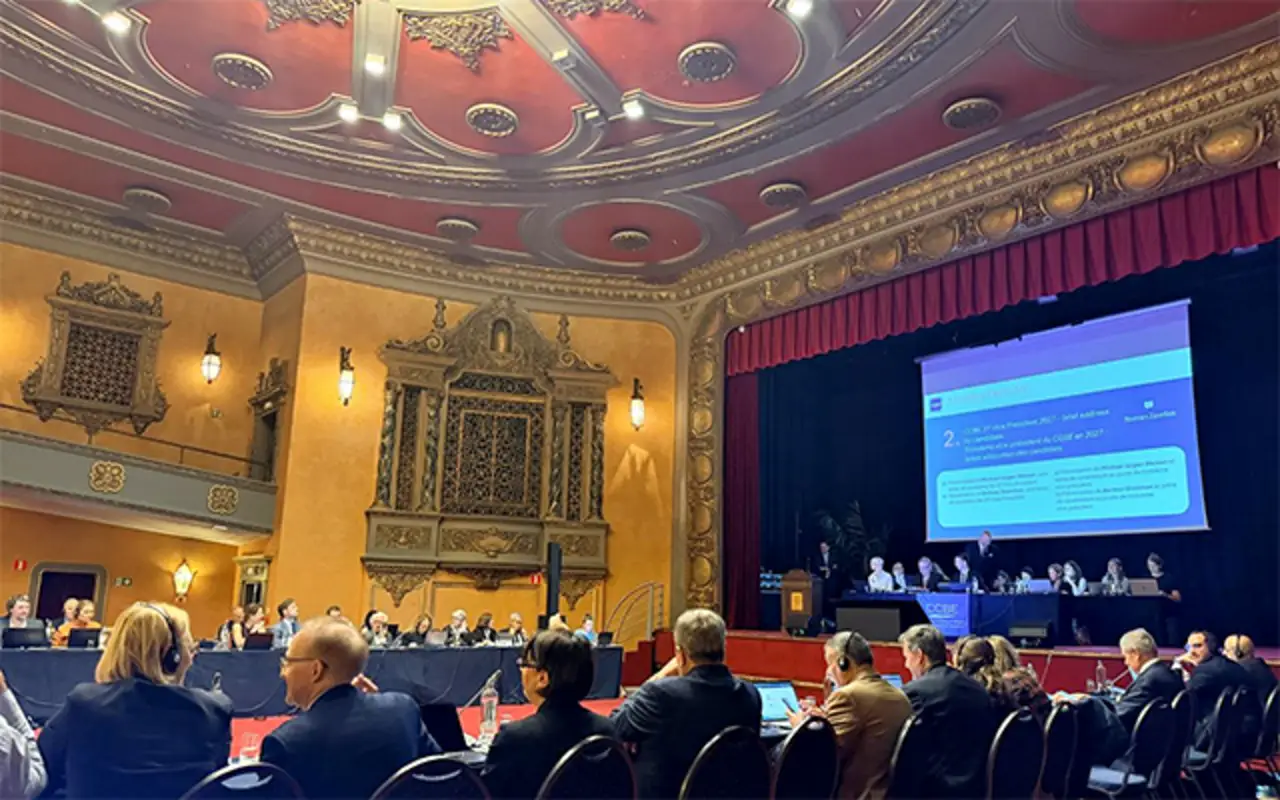
The CCBE is discussing European justice and issues related to the protection of advocates
Today, October 2, a meeting of the Standing Committee of the Council of Bars and Law Societies of Europe (CCBE) is taking place in Brussels. On the agenda are the protection of the advocate profession, the rule of law, attorney-client privilege, and changes in the European justice system.
Rule of Law Roadmap
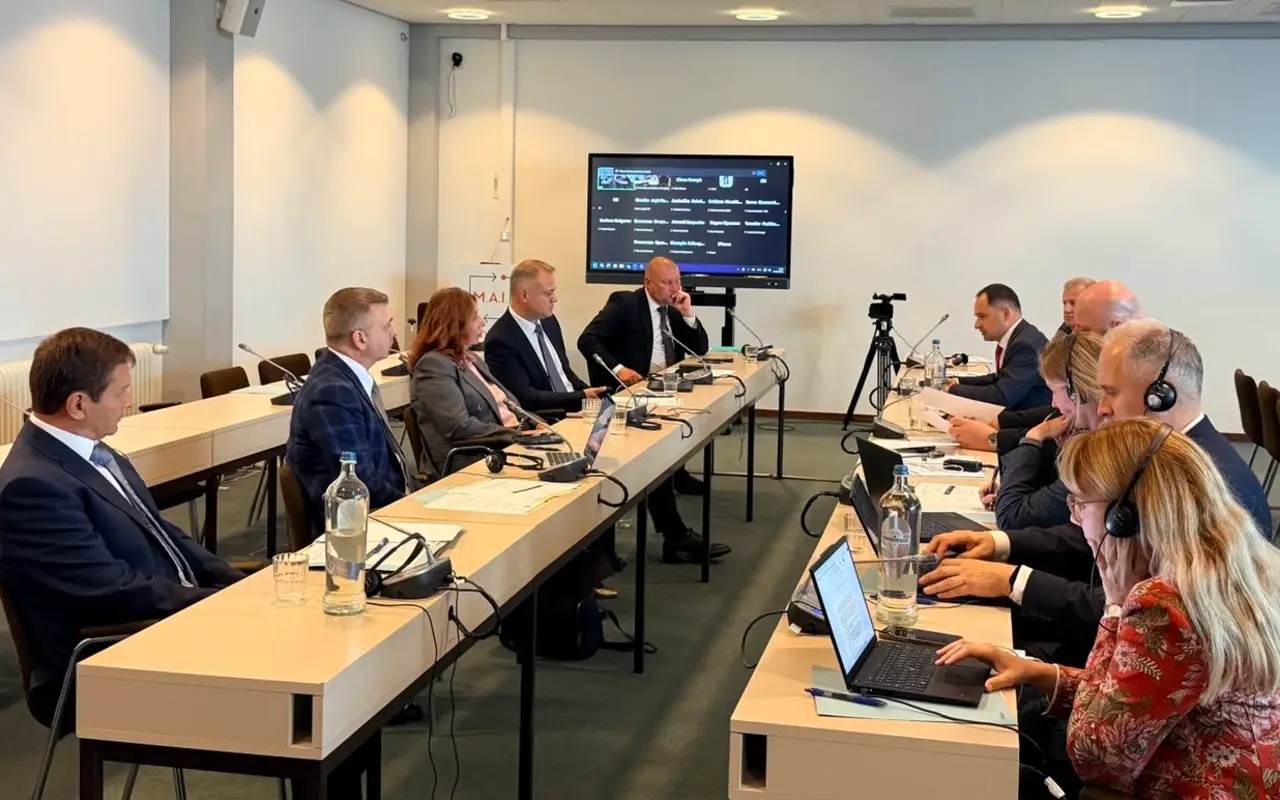
The UNBA presented the key provisions of the future law on advocacy in Brussels
The Ukrainian National Bar Association presented its proposals for the upcoming law on advocacy, aligned with the Rule of Law Roadmap. The presentation covered topics such as access to the profession, self-governance, disciplinary procedures, professional development and guarantees for the practice of advocacy.

Educational events
Advocates were taught to voice their complaints without making accusations
In a difficult conversation, it’s easy to confuse facts with opinions, feelings with accusations, and requests with demands. How can you express dissatisfaction, explain your own needs, and propose a specific solution while still allowing your conversation partner the opportunity to refuse or suggest an alternative?

Guarantees of the practice of law
Unrestricted access to advocates' accounts poses a risk of client data disclosure — BCU
Information regarding transactions in the bank accounts of an advocate, a law firm, or a bar association from which clients can be identified, as well as the fact and subject matter of a request for legal assistance, the purpose of payments, and the amount of the fee constitutes attorney-client privilege. This rule applies regardless of whether the information also constitutes banking information and is in the possession of a bank.
Guarantees of the practice of law
The contract provides for a video conference, but the court requires in-person appearance: how should an advocate proceed?
Many advocates today work remotely; therefore, their agreements with clients provide for the provision of legal assistance via videoconferencing. However, this form of work does not, in and of itself, create an unconditional obligation for the court to conduct every hearing via videoconference.
Guarantees of the practice of law
Independent oversight is necessary before using CISA materials against an advocate – Lidiya Izovitova
Before the prosecution uses information obtained during covert investigative actions and related to an advocate’s activities, independent procedural oversight must be conducted. It is necessary to determine whether such information is covered by attorney-client privilege and whether it may be disclosed.
Self-government
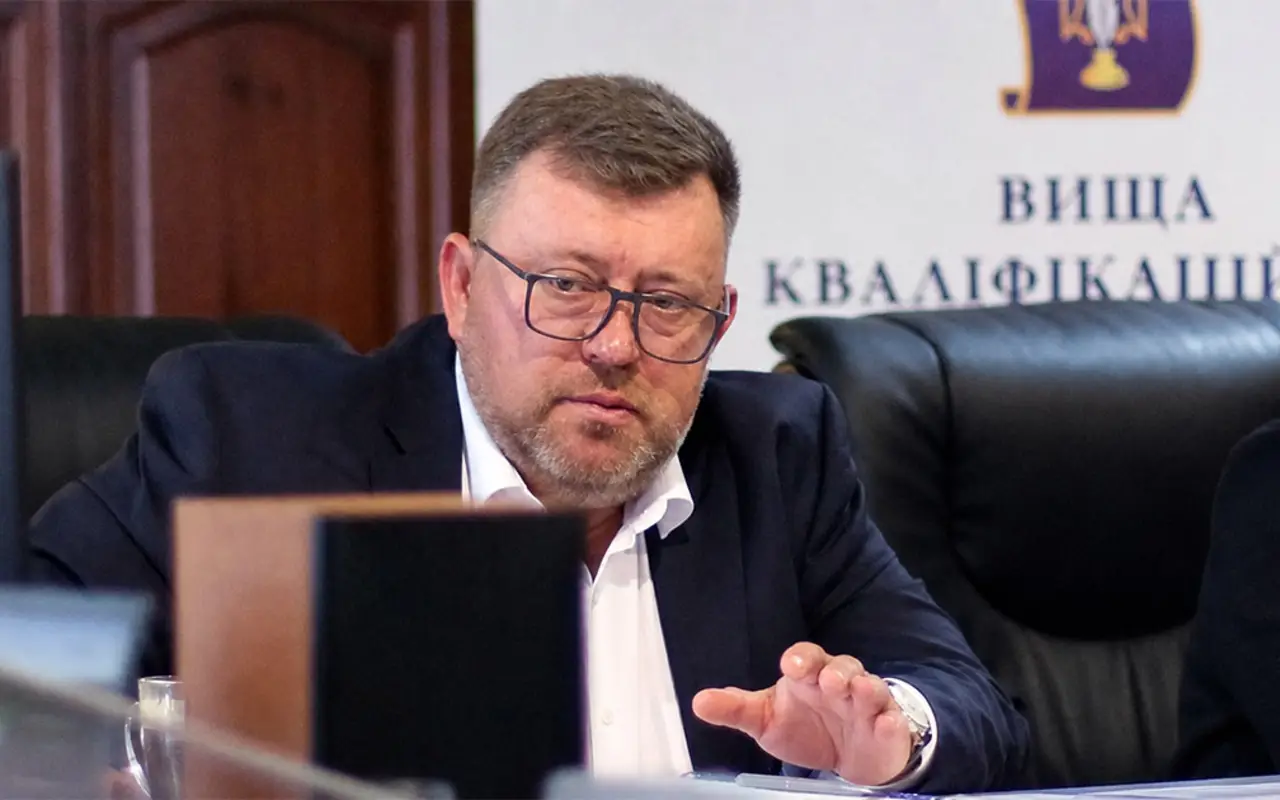
Efforts to develop advocacy must be brought to fruition — A. Misyats
The Ukrainian advocacy profession is currently going through a critical phase. Amid the war, it must ensure the continuity of legal aid, defend the independence of the profession, and improve qualification and disciplinary procedures in accordance with European standards. The work that has been started must be brought to a practical conclusion.
Publications

Vasyl Kolishnyi, «Law and Business» Supporting mental health should become part of the professional culture of the Bar, - H. Udovenko

Volodymyr Matsko Extradition during wartime: when the risks outweigh the request

Volodymyr Matsko Extradition as a systemic form of rights violations

Victoria Yakusha, Law and Business The anti-corruption vertical cannot «take care» of the Bar as an institution, - acting head of the HQDCB

Censor.net Protecting advocates – protecting justice: addressing concerns about the new law

Ihor Kolesnykov A BRIEF SUMMARY REGARDING THE APPLICATION OF THE ORDER ON EXTENDED CONFISCATION IN LATVIA REGARDING FINANCIAL ASSETS OF…

Valentyn Gvozdiy WORKING IN A WAR ZONE

Lydia Izovitova Formula of perfection

