






The UNBA warned of the risk of customs barriers for Ukrainian paper and furniture

Ukraine’s anti-deforestation rules are intended to preserve export access to the EU market. However, without paper and furniture on the list of goods, without effective sanctions, and with enforcement beginning only in 2030, these rules could hinder that goal.
This conclusion was reached by the UNBA Committee on agricultural, land and environmental law following an analysis of Draft Law No. 15352 dated June 25, 2026 «On the trade in goods linked to deforestation and/or forest degradation», which the Verkhovna Rada adopted as a basis.
According to the authors of the legislative initiative, the draft is intended to implement Regulation (EU) 2023/1115 (EUDR), which requires confirmation that certain types of raw materials (palm oil, livestock, soybeans, coffee, cocoa, timber, rubber) and products made from them are not linked to deforestation after December 31, 2020.
The document stipulates that operators and traders will collect geolocation data on production sites and conduct due diligence on goods. To this end, it proposes using electronic systems based on the State Agrarian Register and the exporter’s electronic account. The bill also proposes amending the Forest Code to ensure the effective organization and scientifically sound management of forestry, as well as to introduce a certificate of origin for timber and timber products through amendments to the laws «On the specifics of state regulation of business activities related to the sale and export of timber» and «On the list of permits in the sphere of economic activity».
The need for such changes stems from the need to maintain Ukrainian products’ access to the EU market and to comply with the conditions of the Ukraine Facility program.
UNBA acknowledged that the draft law is an important step toward European integration, while also pointing out a number of legal shortcomings.
The key concern relates to the list of goods. The draft law covers only certain commodity groups of the Ukrainian Classification of Goods for Foreign Economic Activity (UKT ZED), and wood products are included only within Group 44. The EU regulation, by contrast, explicitly covers: wood pulp (Group 47); paper and cardboard (Group 48); and furniture (Group 94). According to advocates, without these groups, Ukrainian pulp and paper and furniture products risk facing a de facto customs embargo.
The relevant Committee of the UNBA also drew attention to the rules for certifying the origin of timber. Under the draft law, the certificate would confirm only the legality of harvesting. However, EU regulations require proof that the forest was not destroyed after December 31, 2020. The UNBA proposes adding this criterion to the certificate and aligning it with the declaration of due diligence.
Separately, the UNBA expressed concerns regarding sanctions. The draft law provides only for fixed administrative fines. The EU regulation requires effective, proportionate, and dissuasive measures: confiscation of products and proceeds, bans on participation in public procurement, and fines of at least 4% of annual turnover.
It is also noted that the provisions on control (Articles 17–25) will not take effect until January 1, 2030. This conflicts with the National Program for the Adaptation of Legislation and Ukraine’s negotiating position. The date must be moved to 2027 or a postponement must be agreed upon with the European Commission.
In addition, the comments address support for small and medium-sized businesses, deadlines for notifying parties of non-compliance risks, the risk assessment scale, and simplified inspection procedures. The advocates also propose introducing a mechanism for submitting «reasoned concerns» and ensuring the compatibility of the exporter’s electronic portal with the EU’s information system.
The UNBA is convinced that addressing these shortcomings will ensure compliance with European standards, protect Ukrainian exports and contribute to a positive assessment of Ukraine in EU accession negotiations.
The full text of the comments and proposals can be viewed at this link.
Popular news
Rule of Law Roadmap
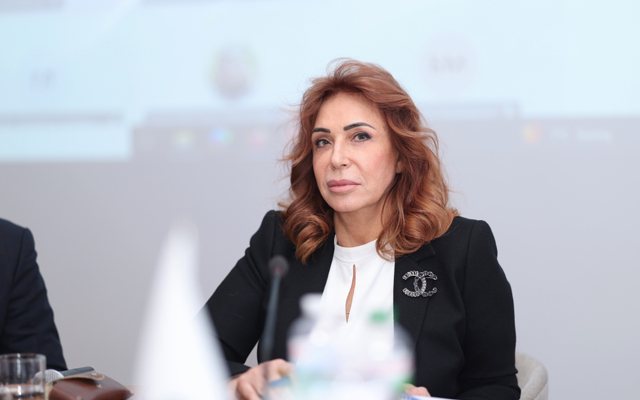
Lidiya Izovitova: reform of the advocacy profession should make the profession stronger and individuals better protected
The Ukrainian advocacy community is finalizing work on a new version of the relevant law. The roadmap on the rule of law has set the fourth quarter of 2026 as the deadline for achieving results in this area. The draft is intended to ensure safeguards for the practice of law through mechanisms of accountability for violations.
Support
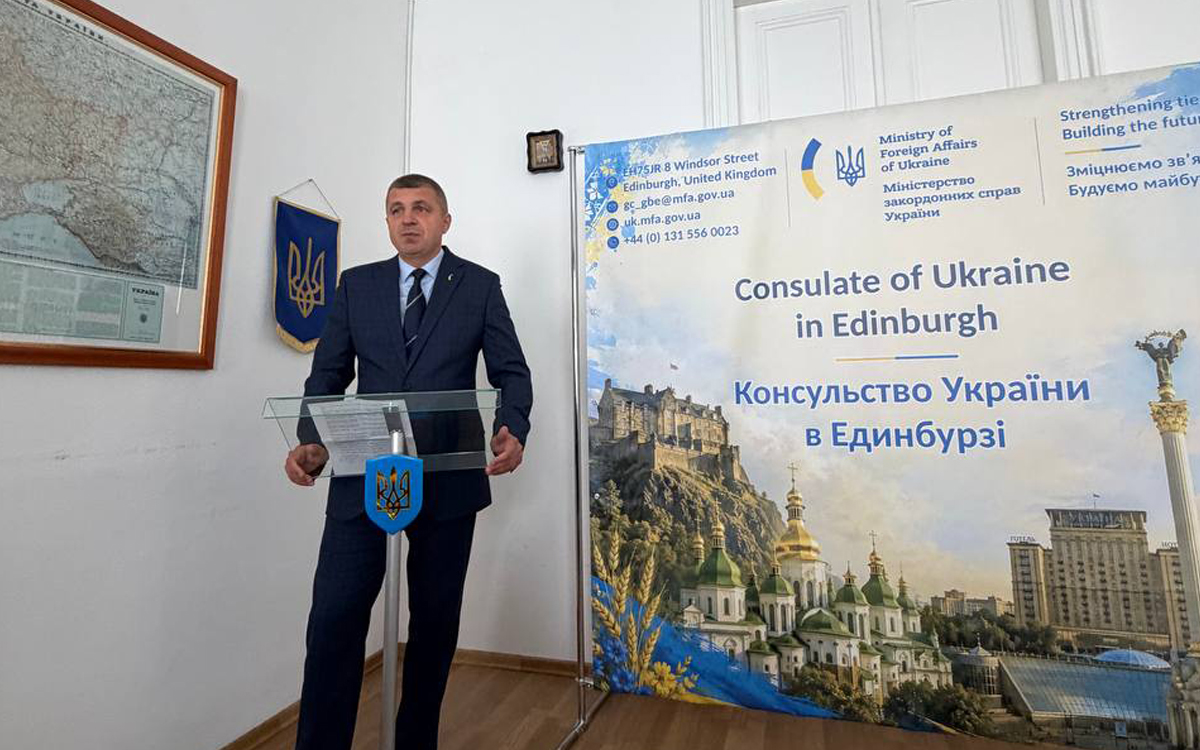
In Edinburgh expressed gratitude to those who are helping Ukrainian advocates and citizens
Since the start of the full-scale invasion, Scottish legal institutions and the Ukrainian community, with the participation of the UNBA, have been helping Ukrainian advocates obtain their qualifications and Ukrainians receive legal assistance. The parties are now planning joint professional and educational events.
Educational events
An advocate's meeting with a client outside the office: how to conduct it without giving away too much
If a client suggests meeting in a public place, keep in mind that any name or amount mentioned aloud could be overheard by bystanders. Therefore, it’s important to plan ahead regarding the table, seating arrangements, and the scope of the conversation.

Legislation
The UNBA explained what could undermine the plan to introduce plea agreements
Information regarding who pays whom, how much, and on what grounds under a plea agreement must be made public. However, as long as this information is classified as a state secret or personal data, the court will continue to be able to close proceedings and restrict access to judgments.

Interaction
The UNBA and the German Institute for Eastern Law will prepare joint legal opinions
Ukrainian advocates and German legal scholars will jointly prepare comparative legal studies, expert opinions, and professional events. The UNBA reached this agreement with the Institute for Eastern European Law in Regensburg, which has been researching the laws of Central and Eastern European countries for nearly 70 years.

Legislation
Proceedings against military personnel following AWOL require clear deadlines — UNBA
A soldier’s return to duty after AWOL does not necessarily mean the end of criminal proceedings. To ensure that the case does not remain at the pretrial investigation stage, a clear procedure for the investigator and prosecutor is required.
Educational events
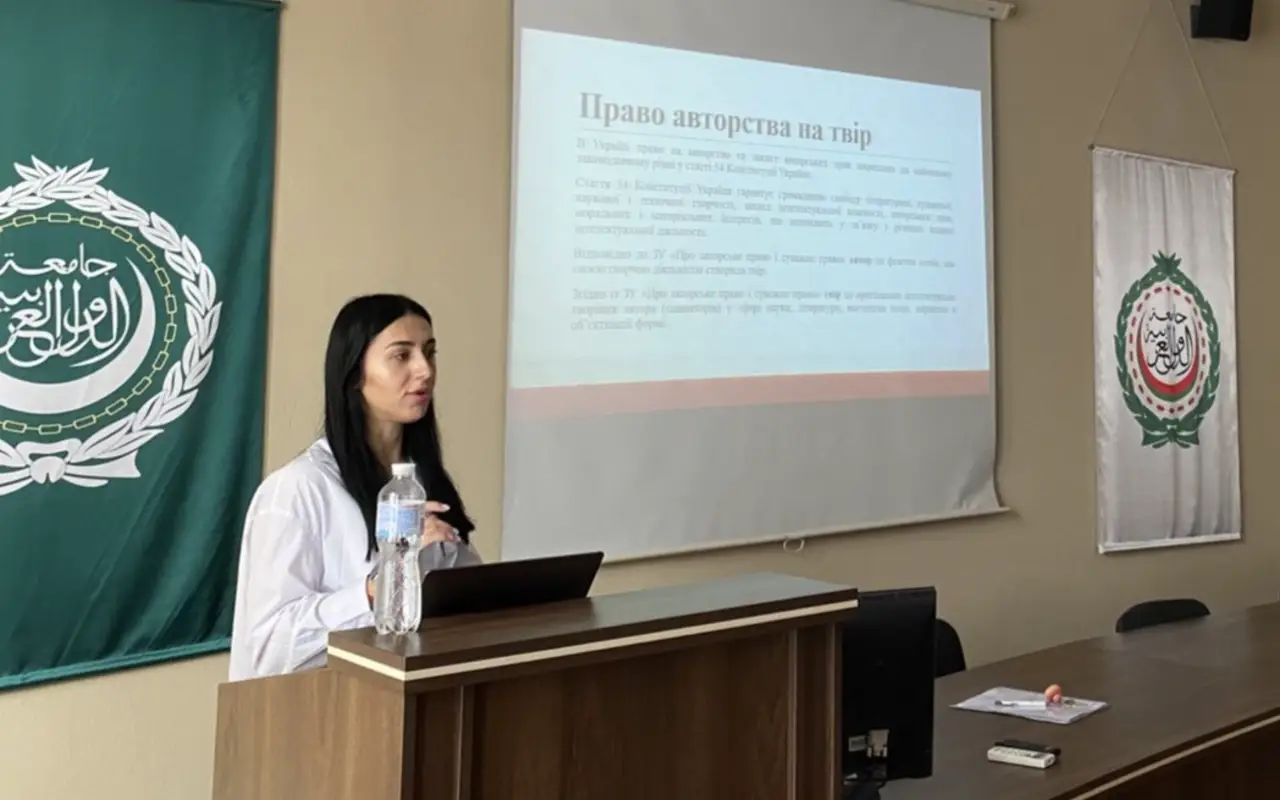
A one-time payment or royalties? Students were briefed on changes to copyright agreements
As a general rule, property rights to a work created by an employee are transferred to the employer, but the author retains the right to remuneration. European law requires that this remuneration be based on the actual income generated by the work, rather than being limited to a one-time payment.
Legislation
The UNBA warned of the risk of customs barriers for Ukrainian paper and furniture
Ukraine’s anti-deforestation rules are intended to preserve export access to the EU market. However, without paper and furniture on the list of goods, without effective sanctions, and with enforcement beginning only in 2030, these rules could hinder that goal.
Publications

Vasyl Kolishnyi, «Law and Business» Supporting mental health should become part of the professional culture of the Bar, - H. Udovenko

Volodymyr Matsko Extradition during wartime: when the risks outweigh the request

Volodymyr Matsko Extradition as a systemic form of rights violations

Victoria Yakusha, Law and Business The anti-corruption vertical cannot «take care» of the Bar as an institution, - acting head of the HQDCB

Censor.net Protecting advocates – protecting justice: addressing concerns about the new law

Ihor Kolesnykov A BRIEF SUMMARY REGARDING THE APPLICATION OF THE ORDER ON EXTENDED CONFISCATION IN LATVIA REGARDING FINANCIAL ASSETS OF…

Valentyn Gvozdiy WORKING IN A WAR ZONE

Lydia Izovitova Formula of perfection

