






Courts need scientific criteria for evaluating expert opinions – V. Fedchyshyna
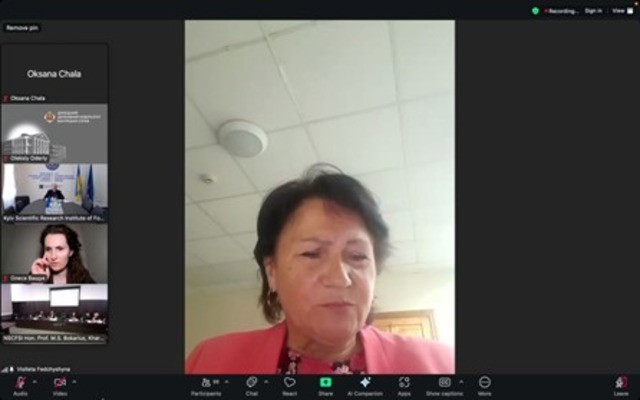
Ukraine has no clear requirements for verifying the accuracy of expert opinions. The court must assess them in terms of professionalism, logic, and validity, identify errors, and evaluate each piece of evidence, taking into account all the materials of the case.
This was pointed out by the chairwoman of the UNBA Committee on Expert Support for Advocacy, Violleta Fedchyshyna, during the International Scientific and Practical Conference «Current Issues of Forensic Examination and Criminalistics». The event was held on May 23 at the National Scientific Center «Institute of Forensic Expertise named after Honored Professor M.S. Bokarius».
The UNBA representative delivered a report on the topic «Scientific criteria for evaluating expert opinion». In particular, she recalled that the conclusion of a forensic expert, drawn up on the basis of special knowledge, is one of the sources of evidence. And it cannot be replaced by other evidence.
At the same time, the assessment of the objectivity and validity of the conclusion is the most controversial and debatable in the judicial process. After all, the specificity of the assessment of such evidence lies in the fact that the substantive sphere of opinion is assessed by a court that does not have special knowledge and, in fact, assesses the expert's conclusion only from the point of view of compliance with the principles of logical thinking and general knowledge. When appointing an expert examination, the court cannot decide on the methods and means to be used by the expert in the course of the investigation, as this choice belongs exclusively to the person with special knowledge.
At the same time, when evaluating evidence according to its own conviction, the court must correctly assess the evidence.
That is why, according to V. Fedchyshyna, the court needs scientific criteria for evaluating the facts presented in the expert's conclusion in the relevant field of specialization. This necessitates the creation of transparent approaches to providing methodological assistance and guidance to both courts and experts.
The conference «Current Issues of Forensic Examination and Criminalistics» was dedicated to the 150th anniversary of the birth of the renowned criminalist, Doctor of Science, Professor Rudolf Archibald Reis.
It was attended by forensic experts, scientists from higher education and research institutions, law enforcement officials, courts, and other specialists in the fields of law, criminalistics, and forensic science.
The participants discussed Reis's scientific legacy, which became the basis for modern methods of criminal investigation and the introduction of expert technologies. The focus was on topical issues of forensic science and criminalistics, the latest achievements in these fields, and ways for further development. Separate emphasis was placed on the importance of putting the results of theoretical research into practice and sharing experience and best practices among experts.
Popular news

Legal defence of military personnel
Guarantees in the event of detention and procedures for military personnel: recommendations from the UNBA Committee
Most often, military personnel turn to advocates regarding frozen bank accounts and delays in discharge. Step-by-step procedures have been prepared for such situations. A guide on one-time financial assistance has been provided for the families of those killed in action. And the new regulations governing the stay of mobilized individuals at TCCs require changes regarding guarantees of communication with an advocate.

Rule of Law Roadmap
Lidiya Izovitova: reform of the advocacy profession should make the profession stronger and individuals better protected
The Ukrainian advocacy community is finalizing work on a new version of the relevant law. The roadmap on the rule of law has set the fourth quarter of 2026 as the deadline for achieving results in this area. The draft is intended to ensure safeguards for the practice of law through mechanisms of accountability for violations.

Abroad
The first country to ratify the Convention on the Protection of the Professions of Lawyer
Bosnia and Herzegovina became the first country to ratify the Council of Europe Convention on the Protection of the Professions of Lawyer (CETS No. 226). The country signed the Convention on March 17, 2026, so it took just over seven months to ratify it.
Discussion
Civil security and guidelines for investors: representatives of the UNBA attend a forum in Prague
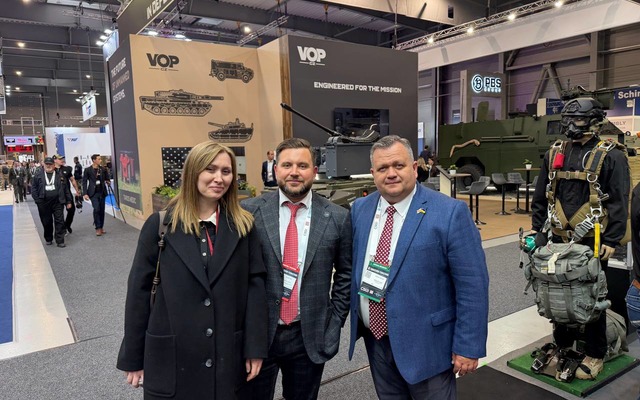
How to establish a business in Ukraine, protect investments, and comply with regulatory requirements — these were the issues that foreign companies in the security sector discussed with representatives of the UNBA during an international forum in Prague.
Legislation
An emergency search without a warrant? What changes are advocates proposing to the CPC
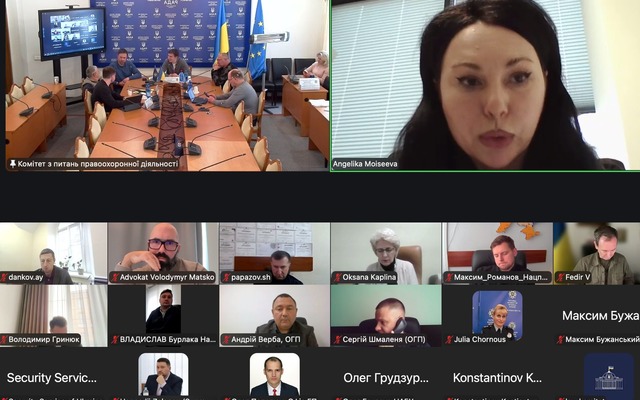
The Verkhovna Rada is preparing a consolidated draft of amendments to the Criminal Procedure Code regarding searches in urgent cases without a prior ruling by an investigating judge. The UNBA insists that judicial oversight following such a search must be effective, and that homeowners must be full participants in the procedure.
Discussion
Seizure does not mean return: how to get an exchange to return stolen crypto assets
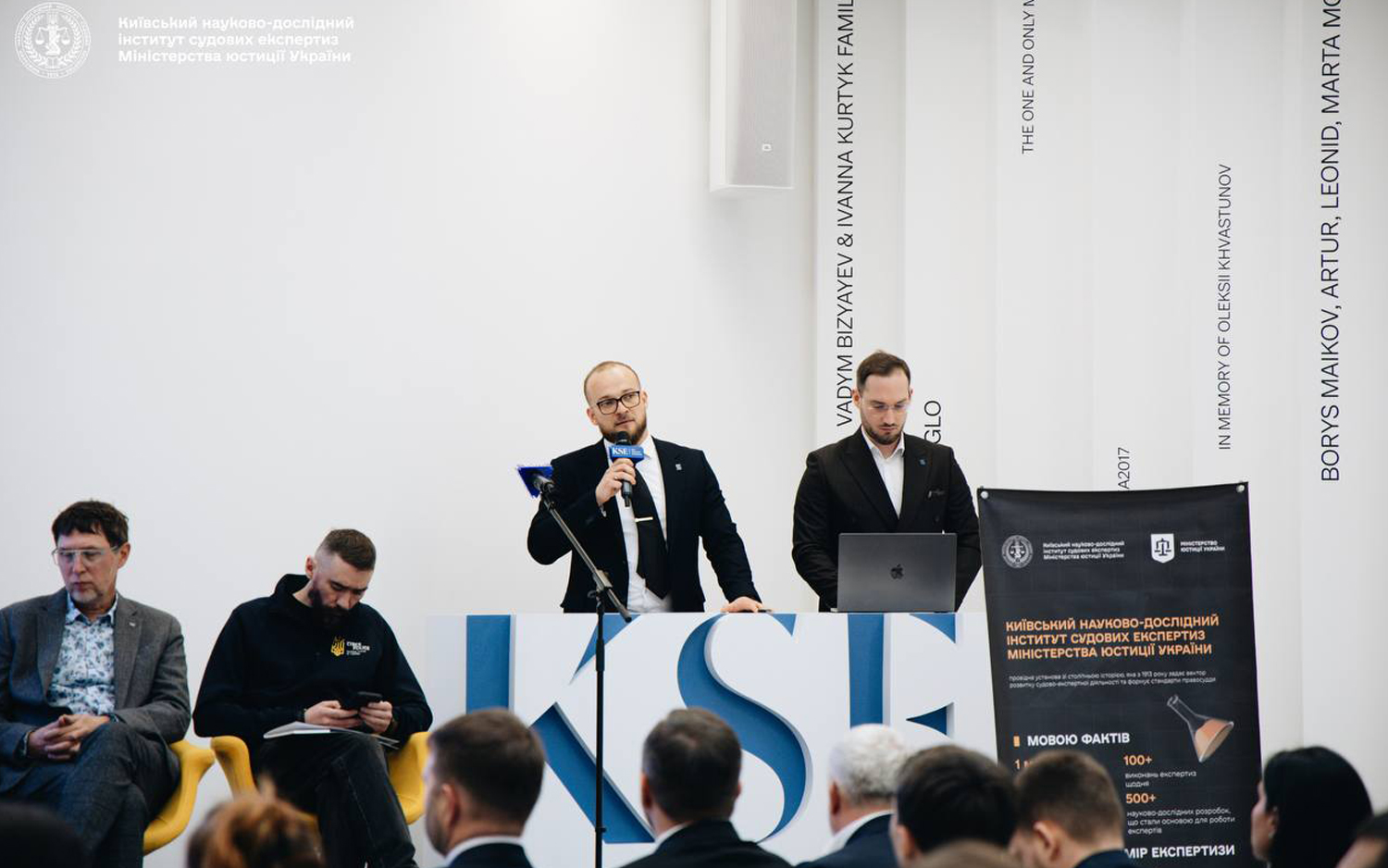
In cases involving cryptocurrency theft, the assets move faster than the criminal proceedings, so it is best to first freeze and seize them, and only then identify the perpetrator. However, even a seizure will not recover the funds unless the court order specifies exactly what the exchange or issuer must do.
Support
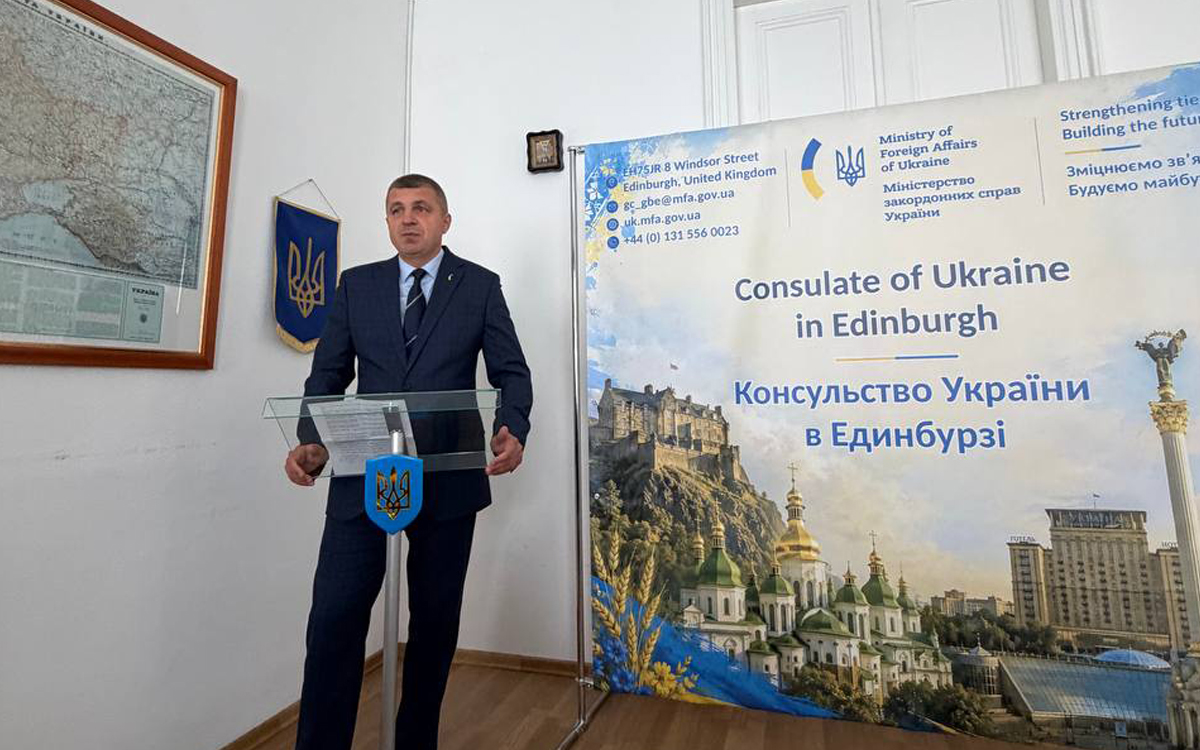
In Edinburgh expressed gratitude to those who are helping Ukrainian advocates and citizens
Since the start of the full-scale invasion, Scottish legal institutions and the Ukrainian community, with the participation of the UNBA, have been helping Ukrainian advocates obtain their qualifications and Ukrainians receive legal assistance. The parties are now planning joint professional and educational events.

Educational events
What to do when you need immediate protection in the LCIA
A dispute with a counterparty has been referred to the London Court of International Arbitration (LCIA), but it will take several weeks to appoint the arbitrators, and the client needs legal representation immediately? This can be achieved through an emergency arbitrator or expedited tribunal formation.
Publications

Vasyl Kolishnyi, «Law and Business» Supporting mental health should become part of the professional culture of the Bar, - H. Udovenko

Volodymyr Matsko Extradition during wartime: when the risks outweigh the request

Volodymyr Matsko Extradition as a systemic form of rights violations

Victoria Yakusha, Law and Business The anti-corruption vertical cannot «take care» of the Bar as an institution, - acting head of the HQDCB

Censor.net Protecting advocates – protecting justice: addressing concerns about the new law

Ihor Kolesnykov A BRIEF SUMMARY REGARDING THE APPLICATION OF THE ORDER ON EXTENDED CONFISCATION IN LATVIA REGARDING FINANCIAL ASSETS OF…

Valentyn Gvozdiy WORKING IN A WAR ZONE

Lydia Izovitova Formula of perfection

