


CISA regarding an advocate: ECHR pointed out the need to justify the proportionality of the goal
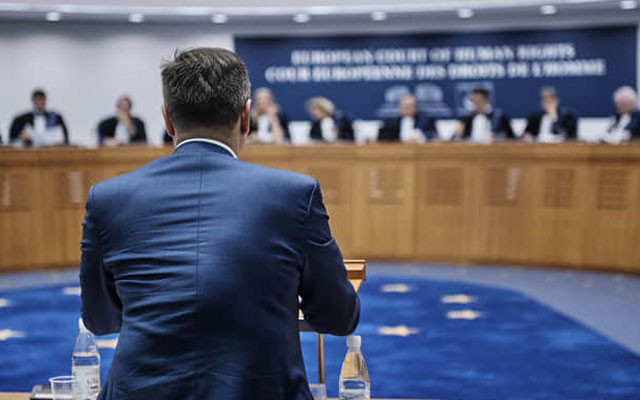
When a court authorizes covert actions in «general terms», without reference to the specific circumstances of the case, and simply duplicates the investigation's statements about «essential importance» and «no other option», such authorization does not serve as a real guarantee against arbitrary interference with privacy.
This was confirmed by the European Court of Human Rights in the case of Vykhor v. Ukraine (application No. 36618/14). The decision of 22 January 2026 was published on the official website of the ECHR.
In May 2013, criminal proceedings were initiated against an advocate for allegedly inciting a client to transfer money which, according to the prosecution, was «demanded» by the judicial and police authorities for a favorable resolution of a criminal case.
The investigating judge issued two rulings allowing covert investigative (search) measures to be used against the advocate. These measures included wiretapping his two mobile phones and audio and video surveillance. The judge noted that there were sufficient grounds to believe that during the covert investigative actions, information could be obtained that would be of significant importance for the prevention, early detection, and termination of criminal offenses. He also repeated the police's argument that it was impossible to obtain this information by other means.
The advocate learned that the key evidence in his case had been obtained precisely as a result of these covert measures. The prosecution materials contained transcripts of his telephone conversations and a recording of a meeting with a former client, made by law enforcement agencies on the basis of court authorizations. Copies of these authorizations were attached to the case file.
The advocate repeatedly filed various criminal, disciplinary, and civil complaints, challenging the legality and proportionality of the covert measures applied to him. In these appeals, he insisted, in particular, that the warrants had been issued without proper assessment of the grounds and that the interference violated the confidentiality of his private communications.
He also attempted to challenge the authorizations themselves, but the High Specialized Court of Ukraine for Civil and Criminal Cases refused to consider his complaints, stating that such decisions of the investigating judge were not subject to appeal.
He then lodged an application with the European Court of Human Rights, claiming, in particular, that the special investigative measures applied to him (interception of mobile communications and visual, audio, and video surveillance in public places) had violated his right to respect for private life.
The Strasbourg court rejected the arguments of Ukraine's representative that the applicant had not exhausted domestic legal remedies and found that the contested actions constituted an interference with the rights protected by Article 8 of the Convention for the Protection of Human Rights and Fundamental Freedoms.
Assessing the circumstances of the case through the prism of its approach to surveillance measures, the ECHR focused primarily on the content of the investigating judge's rulings authorising the covert actions. The European Court noted that these rulings were vague: they did not specify the circumstances of the criminal proceedings and essentially boiled down to a general statement about the possible «significant importance» of the information for the investigation and a repetition of the police's position that it was impossible to obtain it by other means.
Separately, the Court emphasized that there was no indication in the text of the rulings that the investigating judge had applied the criterion of «necessity in a democratic society» or verified the proportionality of the interference in light of the legitimate aim. In this context, the ECHR explicitly took into account that the applicant was a practicing advocate (such communications are subject to higher standards of confidentiality - ed.).
In these circumstances, the ECHR concluded that the authorization procedure in this case did not provide effective guarantees that the surveillance was indeed necessary and proportionate.
In addition, the Court found that there was no accessible post factum judicial review of the lawfulness or necessity of the covert measures used.
In view of all this, the ECHR found that the interference with the applicant's right to respect for private life and correspondence was not «in accordance with the law», found a violation of Article 8 of the Convention, and awarded the applicant €4,800 in compensation for non-pecuniary damage.
It should be recalled that, in accordance with Part 2 of Article 8 of the Convention, public authorities may not interfere with the exercise of this right, except where such interference is in accordance with the law and is necessary in a democratic society in the interests of national security or public safety, for the prevention of disorder or crime, for the protection of health or morals, or for the protection of the rights and freedoms of others.
Popular news
European integration
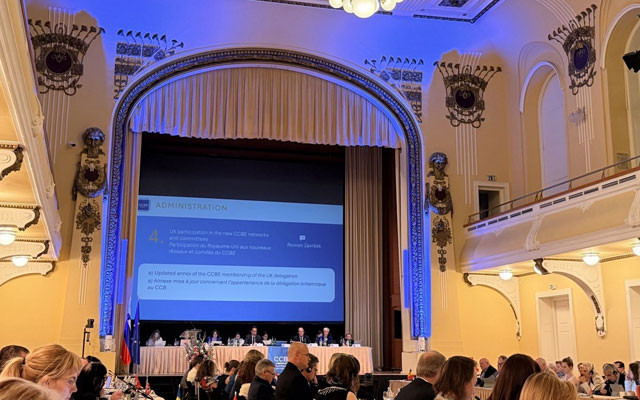
The UNBA presented the CCBE with an overview of legal reform and challenges
Reform of the legal profession, Ukraine’s European integration commitments, guarantees of the profession’s independence, and practices of bar self-governance in European countries — these issues were the subject of discussion at the Council of Bars and Law Societies of Europe (CCBE).

Rule of Law Roadmap
The UNBA is compiling the findings of the subgroups regarding the implementation of the Rule of Law Roadmap
Today, May 28, the Ukrainian National Bar Association hosted a meeting of the Coordination Bureau of the Working Group on the implementation of the Rule of Law Roadmap regarding the reform of the advocacy profession. Following a series of meetings by thematic subgroups, the work is now moving to the stage of consolidating proposals and preparing a coordinated package of recommendations.
Discussion
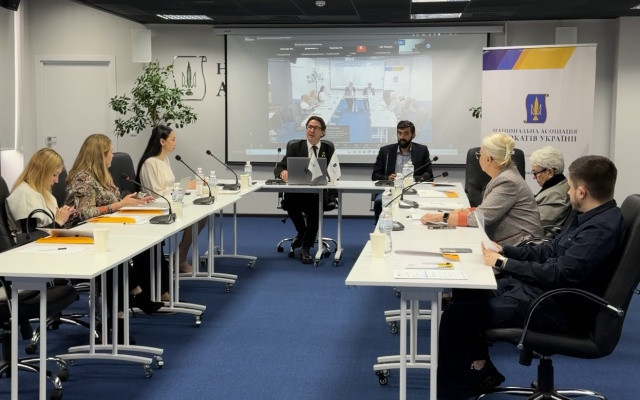
UNBA discussed removing barriers at border crossings for families with children with disabilities
Families of children with disabilities face additional requirements when traveling abroad, particularly regarding consular registration. What is happening and what changes are needed to remove these obstacles were discussed during the roundtable «Borders without barriers for families of children with disabilities».
Discussion
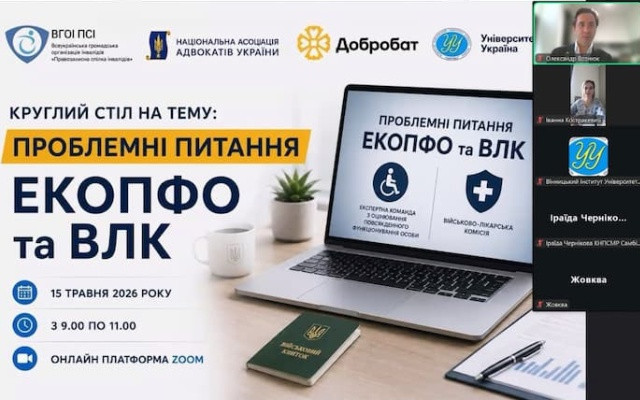
New rules, old problems: the UNBA discussed the work of the ETAIDF and MMC
The reform of medical-social assessment and military medical commissions has changed procedures but has not resolved practical issues. People face situations where documents are not issued, decisions are based on technicalities, assessments are delayed, and they struggle to demonstrate their actual health status in specific life situations.

Discussion
Co-parenting shouldn't be reduced to a 50/50 formula, — roundtable discussion
Following a divorce, joint custody can serve as a mechanism for ensuring equal parental rights. However, this model requires clear criteria and cannot be applied automatically without taking into account the child’s age, the level of conflict between the parents, the risk of violence, and the feasibility of enforcing the future decision.

Legislation
Penalties for errors in military registration require clear rules, – UNBA
The liability of officials for violations of military registration rules must be legally defined, proportionate, and effectively enforceable. Otherwise, the new fines will not protect citizens from registration errors but will create additional risks.

Educational events
How an advocate can find clients when starting a legal practice
Starting a law practice undoubtedly requires professional knowledge. At the same time, a clear understanding of one’s own area of specialization, clients, and communication channels is essential for success.

European integration
Lidiya Izovitova: In the context of European integration reforms, advocacy is a partner of the state, not a target of reform
The war has significantly altered the working conditions for advocates, while European integration has presented the profession with new institutional challenges. The ongoing negotiation process covers issues such as the rule of law, judicial independence, fundamental rights, justice, freedom and security.
Publications

Volodymyr Matsko Extradition during wartime: when the risks outweigh the request

Volodymyr Matsko Extradition as a systemic form of rights violations

Victoria Yakusha, Law and Business The anti-corruption vertical cannot «take care» of the Bar as an institution, - acting head of the HQDCB

Censor.net Protecting advocates – protecting justice: addressing concerns about the new law

Ihor Kolesnykov A BRIEF SUMMARY REGARDING THE APPLICATION OF THE ORDER ON EXTENDED CONFISCATION IN LATVIA REGARDING FINANCIAL ASSETS OF…

Valentyn Gvozdiy WORKING IN A WAR ZONE

Lydia Izovitova Formula of perfection

Sergiy Vylkov Our judicial system is so built that courts do not trust advocates